

A
212
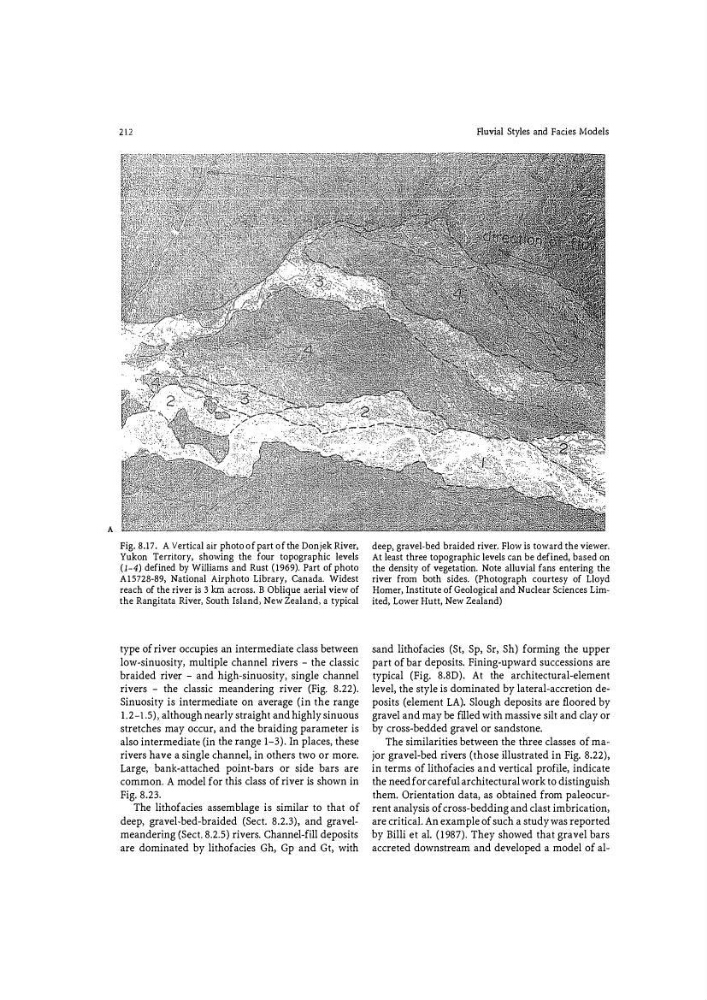
Fig. 8.17. A Vertical air photo of part of the Donjek River,
Yukon Territory, showing the four topographic levels
(1-4) defined by Williams and Rust (1969). Part of photo
A15728-89, National Airphoto Library, Canada. Widest
reach of the river is 3 km across. B Oblique aerial view of
the Rang.itata River, South Island, New Zealand, a typical
type of river occupies an intermediate class between
low-sinuosity) multiple channel rivers - the classic
braided river - and high-sinuosity, single channel
rivers - the classic meandering river (Fig. 8.22).
Sinuosity is intermediate on average (in the range
1.2-1.5), although nearly straight and highly sinuous
stretches may occur, and the braiding parameter is
also intermediate (in the range 1-3). In places, these
rivers have a single channel, in others two or more.
Large, bank-attached point-bars or side bars are
common. A model for this class of river is shown in
Fig. 8.23.
The lithofacies assemblage is similar to that of
deep, gravel-bed-braided (Sect. 8.2.3), and gravelmeandering (Sect. 8.2.5) rivers. Channel-fill deposits
are dominated by lithofacies Gh, Gp and Gt, with
Fluvial Styles and Fades Models
deep, gravel-bed braided river. Flow is toward the viewer.
At least three topographic levels can be defined, based on
the density of vegetation. Note alluvial fans entering the
river from both sides. (Photograph courtesy of Lloyd
Homer, Institute of Geological and Nuclear Sciences Limited, Lower Hutt, New Zealand)
sand lithofacies (St, Sp, Sr, Sh) forming the upper
part of bar deposits. Fining-upward successions are
typical (Fig. 8.8D). At the architectural-element
level, the style is dominated by lateral-accretion deposits (element LA). Slough deposits are fl oored by
gravel and may be filled with massive silt and clay or
by cross-bedded gravel or sandstone.
The similarities between the three classes of major gravel-bed rivers (those illustrated in Fig. 8.22),
in terms of lithofacies and vertical profile, indicate
the need for careful architectural work to distinguish
them. Orientation data, as obtained from paleocurw
rent analysis of cross-bedding and clast imbrication1
are criticaL An example of such a study was reported
by Billi et al. (1987). They showed that gravel bars
accreted downstream and developed a model of al-
212
Fig. 8.17. A Vertical air photo of part of the Donjek River,
Yukon Territory, showing the four topographic levels
(1-4) defined by Williams and Rust (1969). Part of photo
A15728-89, National Airphoto Library, Canada. Widest
reach of the river is 3 km across. B Oblique aerial view of
the Rang.itata River, South Island, New Zealand, a typical
type of river occupies an intermediate class between
low-sinuosity) multiple channel rivers - the classic
braided river - and high-sinuosity, single channel
rivers - the classic meandering river (Fig. 8.22).
Sinuosity is intermediate on average (in the range
1.2-1.5), although nearly straight and highly sinuous
stretches may occur, and the braiding parameter is
also intermediate (in the range 1-3). In places, these
rivers have a single channel, in others two or more.
Large, bank-attached point-bars or side bars are
common. A model for this class of river is shown in
Fig. 8.23.
The lithofacies assemblage is similar to that of
deep, gravel-bed-braided (Sect. 8.2.3), and gravelmeandering (Sect. 8.2.5) rivers. Channel-fill deposits
are dominated by lithofacies Gh, Gp and Gt, with
Fluvial Styles and Fades Models
deep, gravel-bed braided river. Flow is toward the viewer.
At least three topographic levels can be defined, based on
the density of vegetation. Note alluvial fans entering the
river from both sides. (Photograph courtesy of Lloyd
Homer, Institute of Geological and Nuclear Sciences Limited, Lower Hutt, New Zealand)
sand lithofacies (St, Sp, Sr, Sh) forming the upper
part of bar deposits. Fining-upward successions are
typical (Fig. 8.8D). At the architectural-element
level, the style is dominated by lateral-accretion deposits (element LA). Slough deposits are fl oored by
gravel and may be filled with massive silt and clay or
by cross-bedded gravel or sandstone.
The similarities between the three classes of major gravel-bed rivers (those illustrated in Fig. 8.22),
in terms of lithofacies and vertical profile, indicate
the need for careful architectural work to distinguish
them. Orientation data, as obtained from paleocurw
rent analysis of cross-bedding and clast imbrication1
are criticaL An example of such a study was reported
by Billi et al. (1987). They showed that gravel bars
accreted downstream and developed a model of al-