

0
2 3 4KM
Fig. 7.15. Formation of lakes on .a fluvial flo9dplain by
damming of the mouths of tributaries. Guatemala coast.
(Kuenzi et al. 1979)
l. Forest moor: well�drained swamp, characterized
by the presence of trees, and yielding vitriniteand fusinite�rich deposits.
2. Reed moor: poorly drained swamp1 resulting in
spore-rich coaL
3. Open moor: subaquatic, with sporinite, cannel
and boghead coals and carbonaceous shales.
The distribution of these environments within
one seam is shown in Fig. 7 .19. This cross section
illustrates the Harbour Seam> which is estimated to
have tal
increase in reed rrioor intervals in the upper half of
the seam indicates a gradual rise in the water table.
Figure 7.�0 is a detailed section through this seam,
showing details of coal petrography and palynology.
Note the dominance ofLycospora in the lower half of
the seam. This spore type was deriyed from the tree
Lepidodendron, and confirms the forested nature of
the swamp at that time. Punctatosporites, a herba<:eous plant, is characteristic of reed-moor coals, and
occurs near the top of the seam.
Diessel (1992) \I sed maceral-�erived ratios for investigating vegetation variations and mire type.
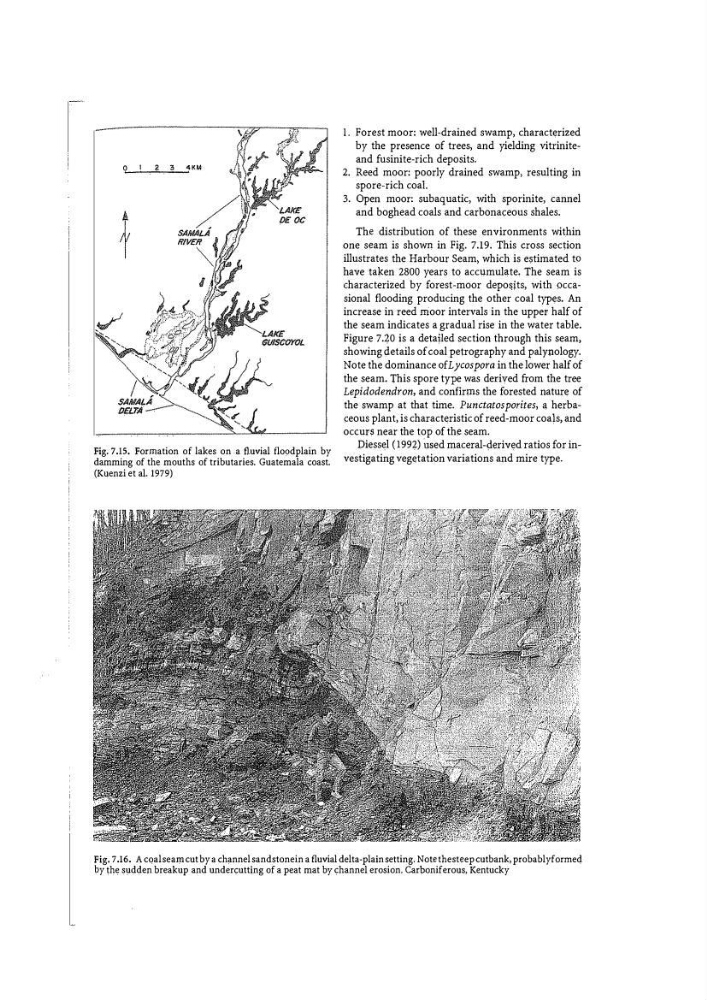
Fig. 7.16. A coal seam cut by a channel sandstonein a fluvial delta-plain setting. Note thest�ep cutbank, probablyformed
Py the sudden breakup and undercutting of a peat mat by channel erosion. Carboniferous, Kentucky
2 3 4KM
Fig. 7.15. Formation of lakes on .a fluvial flo9dplain by
damming of the mouths of tributaries. Guatemala coast.
(Kuenzi et al. 1979)
l. Forest moor: well�drained swamp, characterized
by the presence of trees, and yielding vitriniteand fusinite�rich deposits.
2. Reed moor: poorly drained swamp1 resulting in
spore-rich coaL
3. Open moor: subaquatic, with sporinite, cannel
and boghead coals and carbonaceous shales.
The distribution of these environments within
one seam is shown in Fig. 7 .19. This cross section
illustrates the Harbour Seam> which is estimated to
have tal
increase in reed rrioor intervals in the upper half of
the seam indicates a gradual rise in the water table.
Figure 7.�0 is a detailed section through this seam,
showing details of coal petrography and palynology.
Note the dominance ofLycospora in the lower half of
the seam. This spore type was deriyed from the tree
Lepidodendron, and confirms the forested nature of
the swamp at that time. Punctatosporites, a herba<:eous plant, is characteristic of reed-moor coals, and
occurs near the top of the seam.
Diessel (1992) \I sed maceral-�erived ratios for investigating vegetation variations and mire type.
Fig. 7.16. A coal seam cut by a channel sandstonein a fluvial delta-plain setting. Note thest�ep cutbank, probablyformed
Py the sudden breakup and undercutting of a peat mat by channel erosion. Carboniferous, Kentucky