

L
Introd uction
meander
sandst0ne
171
lake
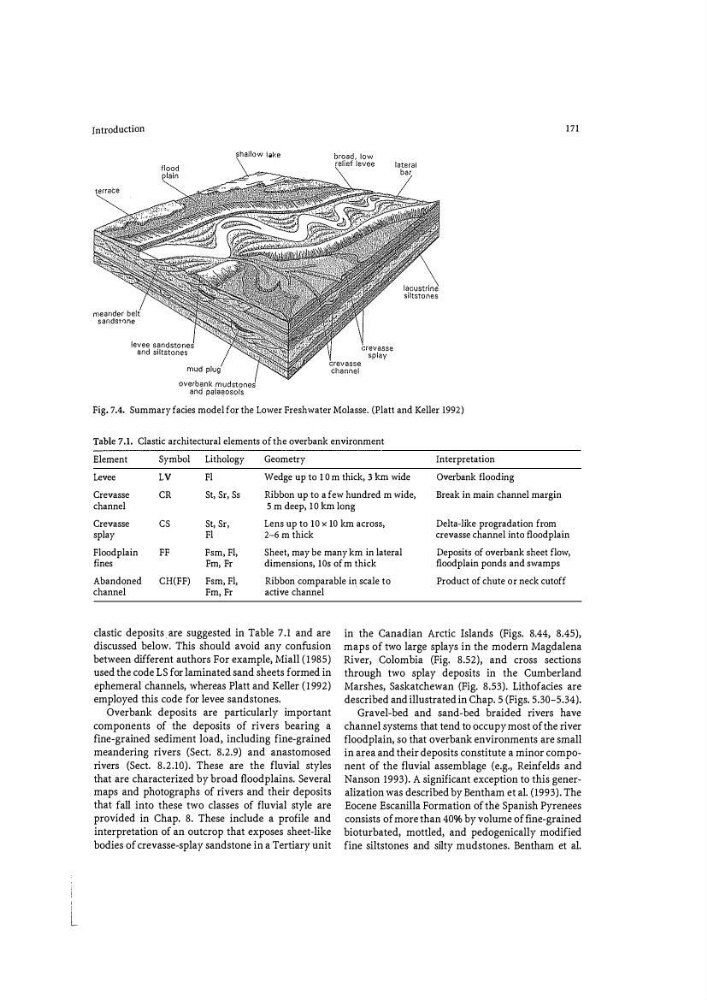
Fig. 7.4. Summary facies model for the Lower Freshwater Molasse. (Platt and Keller 1992)
Table 7.1. Clastic architectural elements of the overbank environment
Element
Symbol
Lithology
Geometry
Interpretation
Levee
LV
Fl
Wedge up to 10m thick, 3 km wide
Overbank flooding
Crevasse
CR
St, Sr, Ss
Ribbon up to a few hundred m wide,
Break in main channel margin
channel
5 m deep, l 0 km long
Crevasse
cs
St, Sr,
Lens up to 10 x 10 km across,
Delta�like progradation from
splay
Fl
2-6 m thick
crevasse channel into fl oodplain
Floodplain
FF
Fsm, Fl,
Sheet, may be many km in lateral
Deposits of overbank sheet flow,
fines
Fm, Fr
dimensions, 1 Os of m thick
floodplain ponds and swamps
Abandoned
CH(FF)
Fsm, Fl,
Ribbon comparable il'l; scale to
Product of chute or neck cutoff
channel
Fm, Fr
active channel
clastic deposits .are suggested in Table 7.1 and are
discussed below. This should avoid any confusion
between different authors For example, Miall (1985)
used the code LS for laminated sand sheets formed in
ephemeral channels, whereas Platt and Keller (1992)
employed this code for levee sandstones.
Overbank deposits are particularly important
components of the deposits of rivers bearing a
fine-grained sediment load, including fine-grained
meandering rivers (Sect. 8.2.9) and anastomosed
rivers (Sect. 8.2.10). These are the fluvial styles
that are characterized by broad floodplains. Several
maps and photographs of rivers and their deposits
that fall into these two classes of fluvial style are
provided in Chap. 8. These include a profile and
interpretation of an outcrop that exposes sheet-like
bodies of crevasse-splay sandstone in a Tertiary unit
in the Canadian Arctic Islands (Figs. 8.44, 8.45),
maps of two large splays in the modern Magdalena
River, Colombia (Fig. 8.52), and cross sections
through two splay deposits in the Cumberland
Marshes, Saskatchewan (Fig. 8.53). Lithofacies are
described and illustrated in Chap. 5 (Figs. 5.30-5.34).
Gravel-bed and sand-bed braided rivers have
channel systems that tend to occupy most of the river
floodplain, so that overbank environments are small
in area and their deposits constitute a minor component of the fluvial assemblage (e.g., Reinfelds and
Nanson 1993). A significant exception to this generalization was described by Bentham et al. (1993). The
Eocene Escanilla Formation of the Spanish Pyrenees
consists of more than 40% by volume of fi ne-grained
bioturbated, mottled, and pedogenically modified
fine siltstones and silty mudstones. Bentham et al.
Introd uction
meander
sandst0ne
171
lake
Fig. 7.4. Summary facies model for the Lower Freshwater Molasse. (Platt and Keller 1992)
Table 7.1. Clastic architectural elements of the overbank environment
Element
Symbol
Lithology
Geometry
Interpretation
Levee
LV
Fl
Wedge up to 10m thick, 3 km wide
Overbank flooding
Crevasse
CR
St, Sr, Ss
Ribbon up to a few hundred m wide,
Break in main channel margin
channel
5 m deep, l 0 km long
Crevasse
cs
St, Sr,
Lens up to 10 x 10 km across,
Delta�like progradation from
splay
Fl
2-6 m thick
crevasse channel into fl oodplain
Floodplain
FF
Fsm, Fl,
Sheet, may be many km in lateral
Deposits of overbank sheet flow,
fines
Fm, Fr
dimensions, 1 Os of m thick
floodplain ponds and swamps
Abandoned
CH(FF)
Fsm, Fl,
Ribbon comparable il'l; scale to
Product of chute or neck cutoff
channel
Fm, Fr
active channel
clastic deposits .are suggested in Table 7.1 and are
discussed below. This should avoid any confusion
between different authors For example, Miall (1985)
used the code LS for laminated sand sheets formed in
ephemeral channels, whereas Platt and Keller (1992)
employed this code for levee sandstones.
Overbank deposits are particularly important
components of the deposits of rivers bearing a
fine-grained sediment load, including fine-grained
meandering rivers (Sect. 8.2.9) and anastomosed
rivers (Sect. 8.2.10). These are the fluvial styles
that are characterized by broad floodplains. Several
maps and photographs of rivers and their deposits
that fall into these two classes of fluvial style are
provided in Chap. 8. These include a profile and
interpretation of an outcrop that exposes sheet-like
bodies of crevasse-splay sandstone in a Tertiary unit
in the Canadian Arctic Islands (Figs. 8.44, 8.45),
maps of two large splays in the modern Magdalena
River, Colombia (Fig. 8.52), and cross sections
through two splay deposits in the Cumberland
Marshes, Saskatchewan (Fig. 8.53). Lithofacies are
described and illustrated in Chap. 5 (Figs. 5.30-5.34).
Gravel-bed and sand-bed braided rivers have
channel systems that tend to occupy most of the river
floodplain, so that overbank environments are small
in area and their deposits constitute a minor component of the fluvial assemblage (e.g., Reinfelds and
Nanson 1993). A significant exception to this generalization was described by Bentham et al. (1993). The
Eocene Escanilla Formation of the Spanish Pyrenees
consists of more than 40% by volume of fi ne-grained
bioturbated, mottled, and pedogenically modified
fine siltstones and silty mudstones. Bentham et al.