

>2 8
24-28
20-24 !Ill
<2 0 -
lZ2l
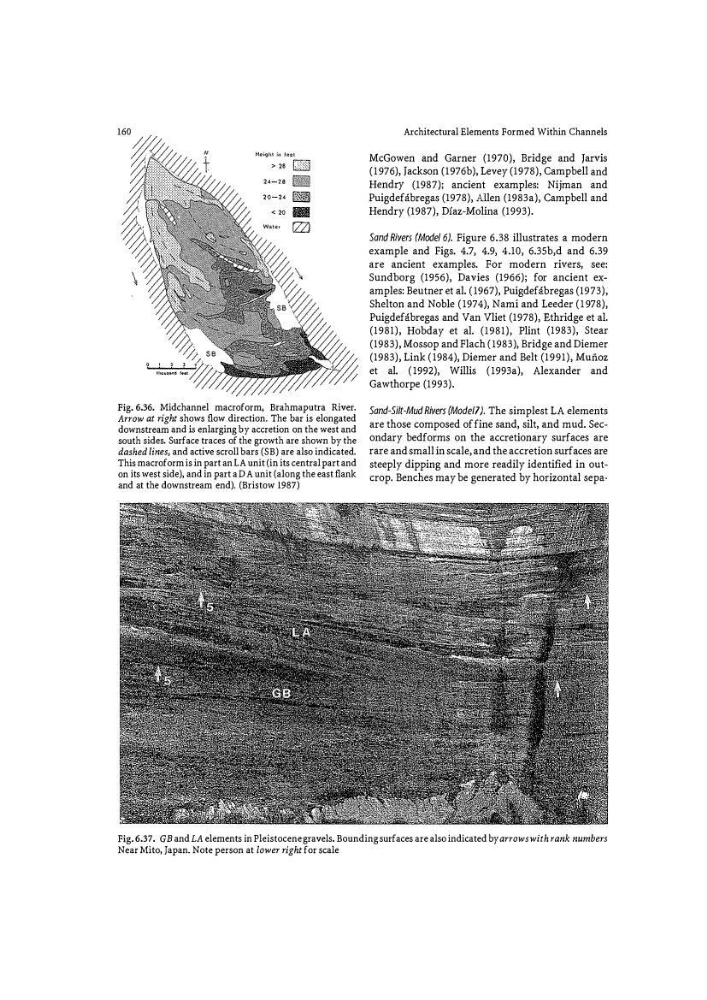
Fig. 6.36. Midchannel macroform, Brahmaputra River.
Arrow at right shows flow direction. The bar is elongated
downstream and is enlarging by accretion on the west and
south sides. Surface traces of the growth are shown by the
dashed lines, and active-scroll bars (SB) are also indicated.
This macroform is in part an LA unit (in its central part and
on its west side), and in part aDA unit (along the east flank
and at the downstream end). (Bristow 1987)
Architectural Elements Formed Within Channels
McGowen and Garner (1970), Bridge and Jarvis
(1976), Jackson (1976b), Levey (1978), Campbell and
Hendry (1987); ancient examples: Nijman and
Puigdefabregas (1978), Allen (1983a), Campbell and
Hendry (1987), Dfaz-Molina (1993).
Sand Rivers (Mode/ 6). Figure 6.38 illustrates a modern
example and Figs. 4.7, 4.9, 4.10, 6.35b,d and 6.39
are ancient examples. For modern rivers, see:
Sundborg (1956), Davies (1966); for ancient examples: Beutner et al. ( 1967), Puigdefabregas (1973),
Shelton and Noble (1974), Nami and Leeder (1978),
Puigdefabregas and Van Vliet (1978), Ethridge et a!.
(1981), Hobday et al. (1981), Plint (1983), Stear
(1983), Mossop and Flach ( 1983 ), Bridge and Diemer
(1983), Link (1984), Diemer and Belt (1991), Munoz
et al. (1992), Willis (1993a), Alexander and
Gawthorpe (1993).
Sand-Silt-Mud Rivers (Modell). The simplest LA elements
are those composed of fine sand, silt, and mud. Secondary bedforms on the accretionary surfaces are
rare and small in scale, and the accretion surfaces are
steeply dipping and more readily identified in outcrop. Benches may be generated by horizontal sepaFig. 6.37. GB and LA elements in Pleistocene gravels. Bounding surfaces are also indicated by arrows with rank numbers
Near Mito, Japan. Note person at lower right for scale
24-28
20-24 !Ill
<2 0 -
lZ2l
Fig. 6.36. Midchannel macroform, Brahmaputra River.
Arrow at right shows flow direction. The bar is elongated
downstream and is enlarging by accretion on the west and
south sides. Surface traces of the growth are shown by the
dashed lines, and active-scroll bars (SB) are also indicated.
This macroform is in part an LA unit (in its central part and
on its west side), and in part aDA unit (along the east flank
and at the downstream end). (Bristow 1987)
Architectural Elements Formed Within Channels
McGowen and Garner (1970), Bridge and Jarvis
(1976), Jackson (1976b), Levey (1978), Campbell and
Hendry (1987); ancient examples: Nijman and
Puigdefabregas (1978), Allen (1983a), Campbell and
Hendry (1987), Dfaz-Molina (1993).
Sand Rivers (Mode/ 6). Figure 6.38 illustrates a modern
example and Figs. 4.7, 4.9, 4.10, 6.35b,d and 6.39
are ancient examples. For modern rivers, see:
Sundborg (1956), Davies (1966); for ancient examples: Beutner et al. ( 1967), Puigdefabregas (1973),
Shelton and Noble (1974), Nami and Leeder (1978),
Puigdefabregas and Van Vliet (1978), Ethridge et a!.
(1981), Hobday et al. (1981), Plint (1983), Stear
(1983), Mossop and Flach ( 1983 ), Bridge and Diemer
(1983), Link (1984), Diemer and Belt (1991), Munoz
et al. (1992), Willis (1993a), Alexander and
Gawthorpe (1993).
Sand-Silt-Mud Rivers (Modell). The simplest LA elements
are those composed of fine sand, silt, and mud. Secondary bedforms on the accretionary surfaces are
rare and small in scale, and the accretion surfaces are
steeply dipping and more readily identified in outcrop. Benches may be generated by horizontal sepaFig. 6.37. GB and LA elements in Pleistocene gravels. Bounding surfaces are also indicated by arrows with rank numbers
Near Mito, Japan. Note person at lower right for scale