

Lateral-Accretion Deposits (Element LA)
CD
®
t '
®
!'
c::: :: ::
---- -
2
t '
0
�
®
• --.
•
"
!'
t
!'
C:
I V.E. �2
6.7 Lateral-Accretion Deposits (Element LA)
Where the main flow of the channel is directed away
from the bank, as on the inside of a meander, surface
flow impinges on the outer bank, leading to a «setup"
(raised water level as a result of press U re against the
bank), and active cutbank erosion (Fig. 6.33). The
flow turns downward, developing a helical overturn
pattern. The return flow, at depth, passes obliquely
up the bed of the inner bank. Because of the reduced
shear stress associated with this current, significant
sedimentation takes place, and the bank accretes
laterally at a higb angle to the principal flow direction (Fig. 2.20). The helical flow pattern decays as the
flow emerges from the bend, and is replaced by a
helical overturn in the opposite direction as the flow
impinges on the cutbank of the next bend downstream. Sediment removed from the cutbank is incorporated in the overall sediment load of the river.
Large slump blocks may accumulate in the deepest
part of the channel as a lag deposit, whereas material
broken down into individual grains is incorporated
into the bed load and suspension load and is swept
downstream, much of it becoming deposited in
bedforms and bars.
Depending on the grain size of the sediment load,
and the meander geometry, transverse flow across
the accreting point bar surface may take several
forms. Large or small gravel or sand bedforms migrate subparallel to the strike of the accretion surface, with larger mesoforms C'transverse bars")
155
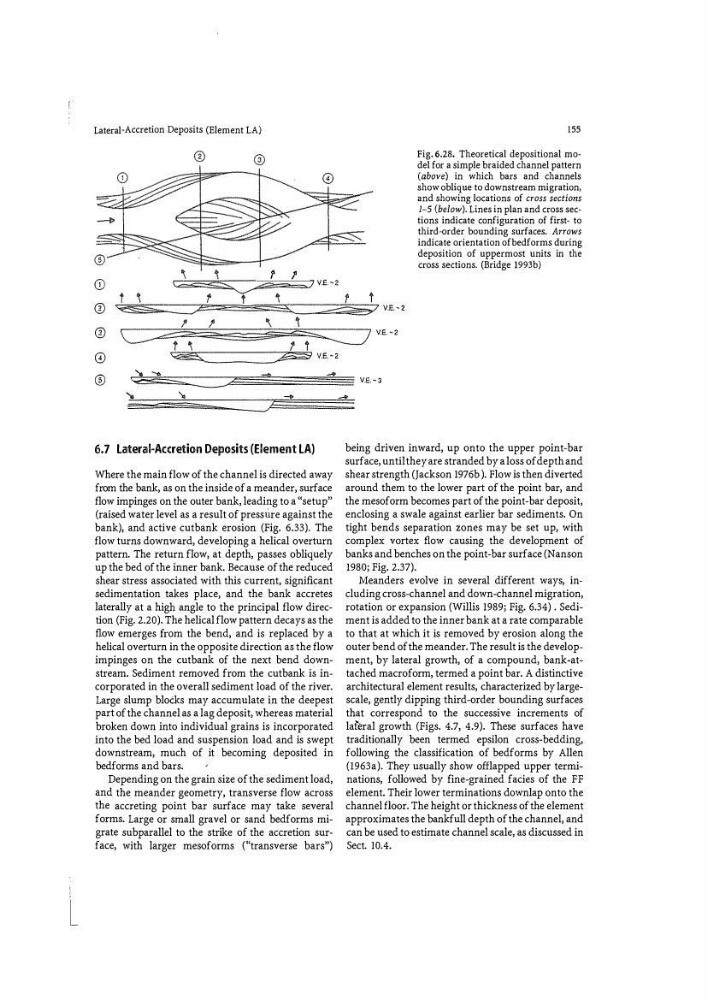
Fig. 6-28. Theoretical depositional model for a simple braided channel pattern
(above) in which bars and channels
show oblique to downstream migration,
and showing locations of cross sections
1-5 (below). Lines in plan and cross sections indicate configuration of first- to
third�order bounding surfaces. Arrows
indicate orientation of bedforms during
deposition of uppermost units in the
cross sections. (Bridge 1993b)
being driven inward, up onto the upper point-bar
surface, until they are stranded by a loss of depth and
shear strength (Jackson 1976b ). Flow is then diverted
around them to the lower part of the point bar, and
the mesoform becomes part of the point-bar deposit,
enclosing a swale against earlier bar sediments. On
tight bends separation zones may be set up, with
complex vortex flow causing the development of
banks and benches on the point-bar surface (Nanson
1980; Fig. 2.37).
Meanders evolve in several different ways, in�
eluding cross-channel and down-channel migration,
rotation or expansion (Willis 1989; Fig. 6.34) . Sediment is added to the inner bank at a rate comparable
to that at which it is removed by erosion along the
outer bend of the meander. The result is the development, by lateral growth, of a compound, bank-attached macro form, termed a point bar. A distinctive
architectural element results, characterized by largescale, gently dipping third-order bounding surfaces
that correspond to the successive increments of
la te ral growth (Figs. 4.7, 4.9). These surfaces have
traditionally been termed epsilon cross-bedding,
following the classification of bedforms by Allen
(1963a). They usually show offlapped upper terminations, followed by fine-grained facies of the FF
element. Their lower terminations downlap onto the
channel floor. The height or thickness of the element
approximates the bankfull depth of the channel, and
can be used to estimate channel scale, as discussed in
Sect. 10.4.
CD
®
t '
®
!'
c::: :: ::
---- -
2
t '
0
�
®
• --.
•
"
!'
t
!'
C:
I V.E. �2
6.7 Lateral-Accretion Deposits (Element LA)
Where the main flow of the channel is directed away
from the bank, as on the inside of a meander, surface
flow impinges on the outer bank, leading to a «setup"
(raised water level as a result of press U re against the
bank), and active cutbank erosion (Fig. 6.33). The
flow turns downward, developing a helical overturn
pattern. The return flow, at depth, passes obliquely
up the bed of the inner bank. Because of the reduced
shear stress associated with this current, significant
sedimentation takes place, and the bank accretes
laterally at a higb angle to the principal flow direction (Fig. 2.20). The helical flow pattern decays as the
flow emerges from the bend, and is replaced by a
helical overturn in the opposite direction as the flow
impinges on the cutbank of the next bend downstream. Sediment removed from the cutbank is incorporated in the overall sediment load of the river.
Large slump blocks may accumulate in the deepest
part of the channel as a lag deposit, whereas material
broken down into individual grains is incorporated
into the bed load and suspension load and is swept
downstream, much of it becoming deposited in
bedforms and bars.
Depending on the grain size of the sediment load,
and the meander geometry, transverse flow across
the accreting point bar surface may take several
forms. Large or small gravel or sand bedforms migrate subparallel to the strike of the accretion surface, with larger mesoforms C'transverse bars")
155
Fig. 6-28. Theoretical depositional model for a simple braided channel pattern
(above) in which bars and channels
show oblique to downstream migration,
and showing locations of cross sections
1-5 (below). Lines in plan and cross sections indicate configuration of first- to
third�order bounding surfaces. Arrows
indicate orientation of bedforms during
deposition of uppermost units in the
cross sections. (Bridge 1993b)
being driven inward, up onto the upper point-bar
surface, until they are stranded by a loss of depth and
shear strength (Jackson 1976b ). Flow is then diverted
around them to the lower part of the point bar, and
the mesoform becomes part of the point-bar deposit,
enclosing a swale against earlier bar sediments. On
tight bends separation zones may be set up, with
complex vortex flow causing the development of
banks and benches on the point-bar surface (Nanson
1980; Fig. 2.37).
Meanders evolve in several different ways, in�
eluding cross-channel and down-channel migration,
rotation or expansion (Willis 1989; Fig. 6.34) . Sediment is added to the inner bank at a rate comparable
to that at which it is removed by erosion along the
outer bend of the meander. The result is the development, by lateral growth, of a compound, bank-attached macro form, termed a point bar. A distinctive
architectural element results, characterized by largescale, gently dipping third-order bounding surfaces
that correspond to the successive increments of
la te ral growth (Figs. 4.7, 4.9). These surfaces have
traditionally been termed epsilon cross-bedding,
following the classification of bedforms by Allen
(1963a). They usually show offlapped upper terminations, followed by fine-grained facies of the FF
element. Their lower terminations downlap onto the
channel floor. The height or thickness of the element
approximates the bankfull depth of the channel, and
can be used to estimate channel scale, as discussed in
Sect. 10.4.