

146
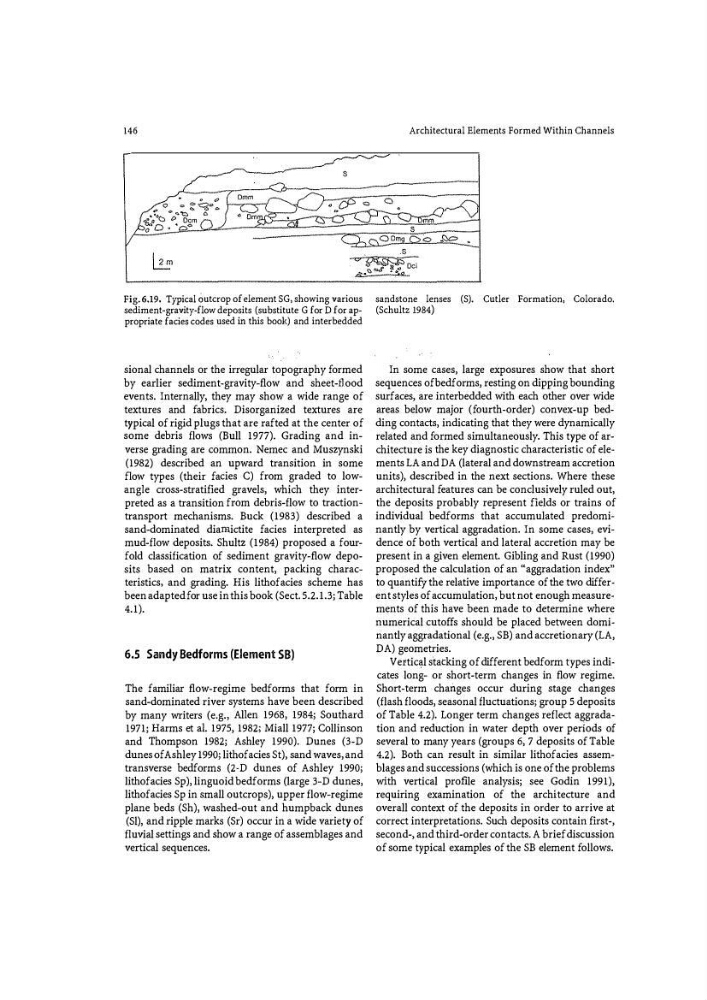
Fig. 6.19. Typical O utcrop of element SG, showing various
sediment�gravity·flow deposits (substitute G for D for appropriate facies codes used in this book) and interbedded
sional channels or the irregular topography fo rmed
by earlier sediment-gravity-flow and sheet-flood
events. Internally, they may show a wide range of
textures and fa brics. Disorganized textures are
typical of rigid plugs that are rafted at the center of
some debris flows (Bull 1977). Grading and inverse grading are common. Nemec and Muszynski
(1982) described an upward transition in some
flow types (their facies C) from graded to lowangle cross-stratified gravels, which they interpreted as a transition from debris-flow to tractiontransport mechanisms. Buck (1983) described a
sand-dominated diamictite facies interpreted as
mud-flow deposits. Shultz (1984) proposed a fourfold classification of sediment gravity-flow deposits based on matrix content, packing characteristics, and grading. His lithofacies scheme has
been adapted for use in this book (Sect. 5.2.1.3; Table
4.1).
6.5 Sandy Bedforms (Element SB)
The familiar flow-regime bedforms that form in
sand-dominated river systems have been described
by many writers (e.g., Allen 1968, 1984; Southard
1971; Harms et a!. 1975, 1982; Miall 1977; Collinson
and Thompson 1982; Ashley 1990). Dunes (3-D
dunes of Ashley 1990; lithofacies St), sand waves, and
transverse bedforms (2-D dunes of Ashley 1990;
lithofacies Sp), linguoid bedforms (large 3-D dunes,
lithofacies Sp in small outcrops), upper flow-regime
plane beds (Sh), washed-out and humpback dunes
(Sl), and ripple marks (Sr) occur in a wide variety of
fluvial settings and show a range of assemblages and
vertical sequences.
Architectural Elements Formed Within Channels
sandstone lenses (S). Cutler Formation, Colorado.
(Schultz 1984)
In some cases, large exposures show that short
sequences ofbedforms, resting on dipping bounding
surfaces, are interbedded with each other over wide
areas below major (fourth-order) convex-up bedding contacts, indicating that they were dynamically
related and fo rmed simultaneously. This type of architecture is the key diagnostic characteristic of elements LA and DA (lateral and downstream accretion
units), described in the next sections. Where these
architectural fe atures can be conclusively ruled out,
the deposits probably represent fields or trains of
individual bedforms that accumulated predominantly by vertical aggradation. In some cases, evidence of both vertical and lateral accretiOn may be
present in a given element. Gibling and Rust (1990)
proposed the calculation of an "aggradation index"
to quantify the relative importance of the two different styles of accumulation, but not enough measurements of this have been made to determine where
numerical cutoffs should be placed between dominantly aggradational (e.g., SB) and accretionary (LA,
DA) geometries.
Vertical stacking of different bedform types indicates long- or short-term changes in flow regime.
Short-term chailges occur during stage changes
(flash floods, seasonal fluctuations; group 5 deposits
of Table 4.2). Longer term changes reflect aggradation and reduction in water depth over periods of
several to many years (groups 6, 7 deposits of Table
4.2). Both can result in similar lithofacies assemblages and successions (which is one of the problems
with vertical proftle analysis; see Godin 1991),
requiring examination of the architecture and
overall context of the deposits in order to arrive at
correct interpretations. Such deposits contain first-,
second-, and third-order contacts. A brief discussion
of some typical examples of the SB element fo llows.
Fig. 6.19. Typical O utcrop of element SG, showing various
sediment�gravity·flow deposits (substitute G for D for appropriate facies codes used in this book) and interbedded
sional channels or the irregular topography fo rmed
by earlier sediment-gravity-flow and sheet-flood
events. Internally, they may show a wide range of
textures and fa brics. Disorganized textures are
typical of rigid plugs that are rafted at the center of
some debris flows (Bull 1977). Grading and inverse grading are common. Nemec and Muszynski
(1982) described an upward transition in some
flow types (their facies C) from graded to lowangle cross-stratified gravels, which they interpreted as a transition from debris-flow to tractiontransport mechanisms. Buck (1983) described a
sand-dominated diamictite facies interpreted as
mud-flow deposits. Shultz (1984) proposed a fourfold classification of sediment gravity-flow deposits based on matrix content, packing characteristics, and grading. His lithofacies scheme has
been adapted for use in this book (Sect. 5.2.1.3; Table
4.1).
6.5 Sandy Bedforms (Element SB)
The familiar flow-regime bedforms that form in
sand-dominated river systems have been described
by many writers (e.g., Allen 1968, 1984; Southard
1971; Harms et a!. 1975, 1982; Miall 1977; Collinson
and Thompson 1982; Ashley 1990). Dunes (3-D
dunes of Ashley 1990; lithofacies St), sand waves, and
transverse bedforms (2-D dunes of Ashley 1990;
lithofacies Sp), linguoid bedforms (large 3-D dunes,
lithofacies Sp in small outcrops), upper flow-regime
plane beds (Sh), washed-out and humpback dunes
(Sl), and ripple marks (Sr) occur in a wide variety of
fluvial settings and show a range of assemblages and
vertical sequences.
Architectural Elements Formed Within Channels
sandstone lenses (S). Cutler Formation, Colorado.
(Schultz 1984)
In some cases, large exposures show that short
sequences ofbedforms, resting on dipping bounding
surfaces, are interbedded with each other over wide
areas below major (fourth-order) convex-up bedding contacts, indicating that they were dynamically
related and fo rmed simultaneously. This type of architecture is the key diagnostic characteristic of elements LA and DA (lateral and downstream accretion
units), described in the next sections. Where these
architectural fe atures can be conclusively ruled out,
the deposits probably represent fields or trains of
individual bedforms that accumulated predominantly by vertical aggradation. In some cases, evidence of both vertical and lateral accretiOn may be
present in a given element. Gibling and Rust (1990)
proposed the calculation of an "aggradation index"
to quantify the relative importance of the two different styles of accumulation, but not enough measurements of this have been made to determine where
numerical cutoffs should be placed between dominantly aggradational (e.g., SB) and accretionary (LA,
DA) geometries.
Vertical stacking of different bedform types indicates long- or short-term changes in flow regime.
Short-term chailges occur during stage changes
(flash floods, seasonal fluctuations; group 5 deposits
of Table 4.2). Longer term changes reflect aggradation and reduction in water depth over periods of
several to many years (groups 6, 7 deposits of Table
4.2). Both can result in similar lithofacies assemblages and successions (which is one of the problems
with vertical proftle analysis; see Godin 1991),
requiring examination of the architecture and
overall context of the deposits in order to arrive at
correct interpretations. Such deposits contain first-,
second-, and third-order contacts. A brief discussion
of some typical examples of the SB element fo llows.