

sedimentHGravity-Fiow Deposits (Element SG)
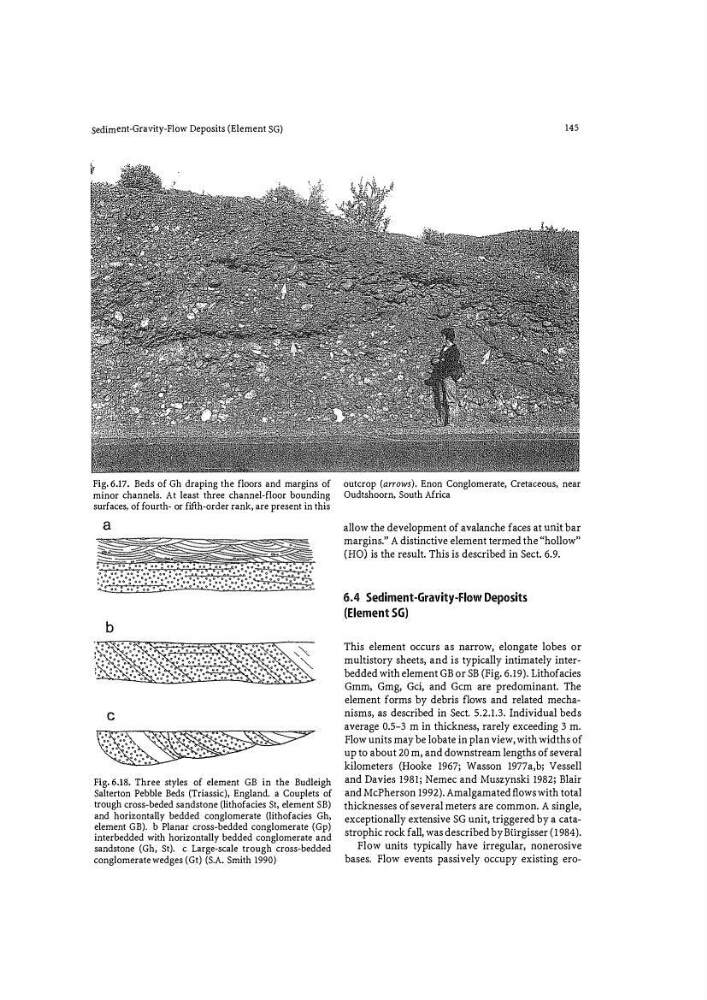
Fig. 6.17. Beds of Gh draping the floors and margins of
minor channels. At least three channel-floor bounding
surfaces, of fo urth- or fifth-order rank, are present in this
a
c
Fig. 6.18. Three styles of element GB in the Budleigh
Salterton Pebble Beds (Triassic), England. a Couplets of
trough cross-beded sandstone (lithofacies St, element SB)
and horizontally bedded conglomerate (lithofacies Gh,
element GB). b Planar cross-bedded conglomerate (Gp)
interbedded with horizontally bedded conglomerate and
sandstone (Gh, St). c Large-scale trough cross-bedded
conglomerate wedges (Gt) (S.A. Smith 1990)
145
outcrop (arrows). Enon Conglomerate, Cretaceous, near
Oudtshoorn, South Africa
allow the development of avalanche faces at unit bar
margins." A distinctive element termed the «hollow''
(!-!0) is the result. This is described in Sect. 6.9.
6.4 Sediment-Gravity-Flow Deposits
(Element SG)
This element occurs as narrow, elongate lobes or
multistory sheets, and is typically intimately interbedded with element GB or SB (Fig. 6.19). Lithofacies
Gmm, Gmg, Gci, and Gem are predominant. The
element forms by debris flows and related mechanisms, as described in Sect. 5.2.1.3. Individual beds
average 0.5-3 m in thickness, rarely exceeding 3 m.
Flow units may be lobate in plan view, with widths of
up to about 20 m, and downstream lengths of several
kilometers (Hooke 1967; Wasson 1977a,b; Vessell
and Davies 1981; Nemec and Muszynski 1982; Blair
and McPherson 1992). Amalgamated flows with total
thicknesses of several meters are common. A single,
exceptionally extensive SG unit, triggered by a catastrophic rock fall, was described by Biirgisser (1984).
Flow units typically have irregular, nonerosive
bases. Flow events passively occupy existing ero-
Fig. 6.17. Beds of Gh draping the floors and margins of
minor channels. At least three channel-floor bounding
surfaces, of fo urth- or fifth-order rank, are present in this
a
c
Fig. 6.18. Three styles of element GB in the Budleigh
Salterton Pebble Beds (Triassic), England. a Couplets of
trough cross-beded sandstone (lithofacies St, element SB)
and horizontally bedded conglomerate (lithofacies Gh,
element GB). b Planar cross-bedded conglomerate (Gp)
interbedded with horizontally bedded conglomerate and
sandstone (Gh, St). c Large-scale trough cross-bedded
conglomerate wedges (Gt) (S.A. Smith 1990)
145
outcrop (arrows). Enon Conglomerate, Cretaceous, near
Oudtshoorn, South Africa
allow the development of avalanche faces at unit bar
margins." A distinctive element termed the «hollow''
(!-!0) is the result. This is described in Sect. 6.9.
6.4 Sediment-Gravity-Flow Deposits
(Element SG)
This element occurs as narrow, elongate lobes or
multistory sheets, and is typically intimately interbedded with element GB or SB (Fig. 6.19). Lithofacies
Gmm, Gmg, Gci, and Gem are predominant. The
element forms by debris flows and related mechanisms, as described in Sect. 5.2.1.3. Individual beds
average 0.5-3 m in thickness, rarely exceeding 3 m.
Flow units may be lobate in plan view, with widths of
up to about 20 m, and downstream lengths of several
kilometers (Hooke 1967; Wasson 1977a,b; Vessell
and Davies 1981; Nemec and Muszynski 1982; Blair
and McPherson 1992). Amalgamated flows with total
thicknesses of several meters are common. A single,
exceptionally extensive SG unit, triggered by a catastrophic rock fall, was described by Biirgisser (1984).
Flow units typically have irregular, nonerosive
bases. Flow events passively occupy existing ero-