

Channels (Element CH)
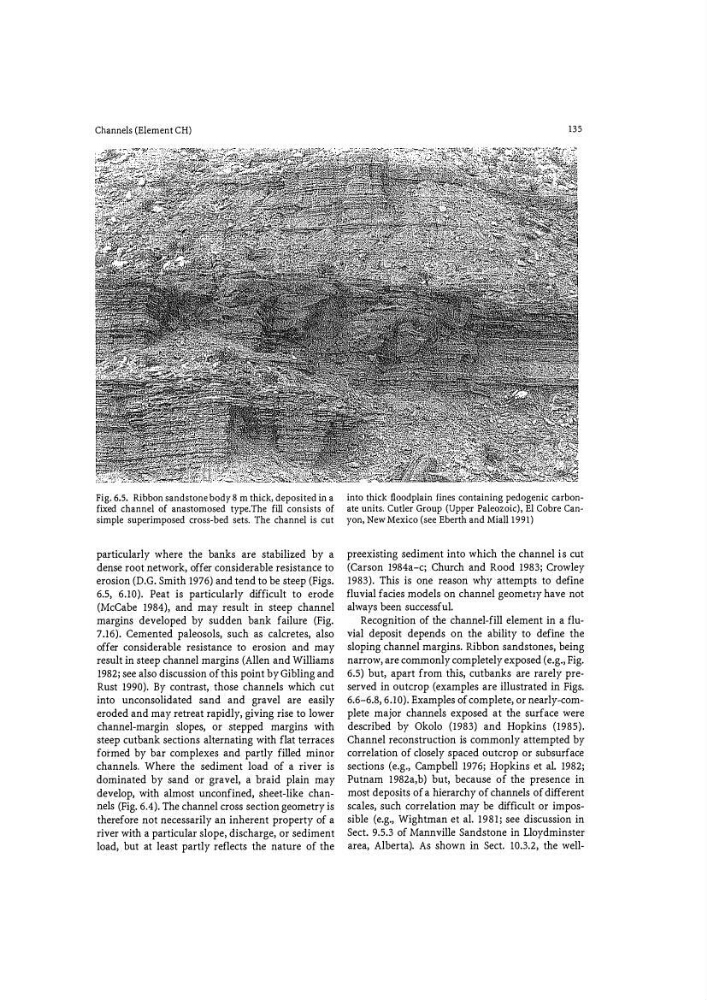
Fig. 6.5. Ribbon sandstone body 8 m thick, deposited in a
fixed channel of anastomosed type.The fill consists of
simple superimposed cross-bed sets. The channel is cut
particularly where the banks are stabilized by a
dense root network, offer considerable resistance to
erosion (D.G. Smith 1976) and tend to be steep (Figs.
6.5, 6.10). Peat is particularly difficult to erode
(McCabe 1984), and may result in steep channel
margins developed by sudden bank failure (Fig.
7.16). Cemented paleosols, such as calcretes, also
offer considerable resistance to erosion and may
result in steep channel margins (Allen and Williams
1982; see also discussion of this point by Gibling and
Rust 1990). By contrast, those channels which cut
into unconsolidated sand and gravel are easily
eroded and may retreat rapidly, giving rise to lower
channel-margin slopes, or stepped margins with
steep cutbank sections alternating with flat terraces
formed by bar complexes and partly filled minor
channels. Where the sediment load of a river is
dominated by sand or gravel, a braid plain may
develop, with almost unconfined, sheet-like channels (Fig. 6.4). The channel cross section geometry is
therefore not necessarily an inherent property of a
river with a particular slope, discharge, or sediment
load, but at least partly reflects the nature of the
135
into thick fl oodplain fines containing pedogenic carbonate units. Cutler Group (Upper Paleozoic), El Cobre Canyon, New Mexico (see Eberth and Miall 1991)
preexisting sediment into which the channel is cut
(Carson 1984a-c; Church and Rood 1983; Crowley
1983). This is one reason why attempts to define
fluvial facies models on channel geometry have not
always been successful.
Recognition of the channel-fill element in a fluvial deposit depends on the ability to define the
sloping channel margins. Ribbon sandstones, being
narrow, are commonly completely exposed (e.g., Fig.
6.5) but, apart from this, cutbanks are rarely pre"
served in outcrop (examples are illustrated in Figs.
6.6-6.8, 6.10). Examples of complete, or nearly-complete major channels exposed at the surface were
described by Okolo (1983) and Hopkins (1985).
Channel reconstruction is commonly attempted by
correlation of closely spaced outcrop or subsurface
sections (e.g., Campbell 1976; Hopkins et al. 1982;
Putnam 1982a,b) but, because of the presence in
most deposits of a hierarchy of channels of different
scales, such correlation may be difficult or impossible (e.g., Wightman et al. 1981; see discussion in
Sect. 9.5.3 of Mannville Sandstone in Lloydminster
area, Alberta). As shown in Sect. !0.3.2, the well-
Fig. 6.5. Ribbon sandstone body 8 m thick, deposited in a
fixed channel of anastomosed type.The fill consists of
simple superimposed cross-bed sets. The channel is cut
particularly where the banks are stabilized by a
dense root network, offer considerable resistance to
erosion (D.G. Smith 1976) and tend to be steep (Figs.
6.5, 6.10). Peat is particularly difficult to erode
(McCabe 1984), and may result in steep channel
margins developed by sudden bank failure (Fig.
7.16). Cemented paleosols, such as calcretes, also
offer considerable resistance to erosion and may
result in steep channel margins (Allen and Williams
1982; see also discussion of this point by Gibling and
Rust 1990). By contrast, those channels which cut
into unconsolidated sand and gravel are easily
eroded and may retreat rapidly, giving rise to lower
channel-margin slopes, or stepped margins with
steep cutbank sections alternating with flat terraces
formed by bar complexes and partly filled minor
channels. Where the sediment load of a river is
dominated by sand or gravel, a braid plain may
develop, with almost unconfined, sheet-like channels (Fig. 6.4). The channel cross section geometry is
therefore not necessarily an inherent property of a
river with a particular slope, discharge, or sediment
load, but at least partly reflects the nature of the
135
into thick fl oodplain fines containing pedogenic carbonate units. Cutler Group (Upper Paleozoic), El Cobre Canyon, New Mexico (see Eberth and Miall 1991)
preexisting sediment into which the channel is cut
(Carson 1984a-c; Church and Rood 1983; Crowley
1983). This is one reason why attempts to define
fluvial facies models on channel geometry have not
always been successful.
Recognition of the channel-fill element in a fluvial deposit depends on the ability to define the
sloping channel margins. Ribbon sandstones, being
narrow, are commonly completely exposed (e.g., Fig.
6.5) but, apart from this, cutbanks are rarely pre"
served in outcrop (examples are illustrated in Figs.
6.6-6.8, 6.10). Examples of complete, or nearly-complete major channels exposed at the surface were
described by Okolo (1983) and Hopkins (1985).
Channel reconstruction is commonly attempted by
correlation of closely spaced outcrop or subsurface
sections (e.g., Campbell 1976; Hopkins et al. 1982;
Putnam 1982a,b) but, because of the presence in
most deposits of a hierarchy of channels of different
scales, such correlation may be difficult or impossible (e.g., Wightman et al. 1981; see discussion in
Sect. 9.5.3 of Mannville Sandstone in Lloydminster
area, Alberta). As shown in Sect. !0.3.2, the well-