

Sand Facies
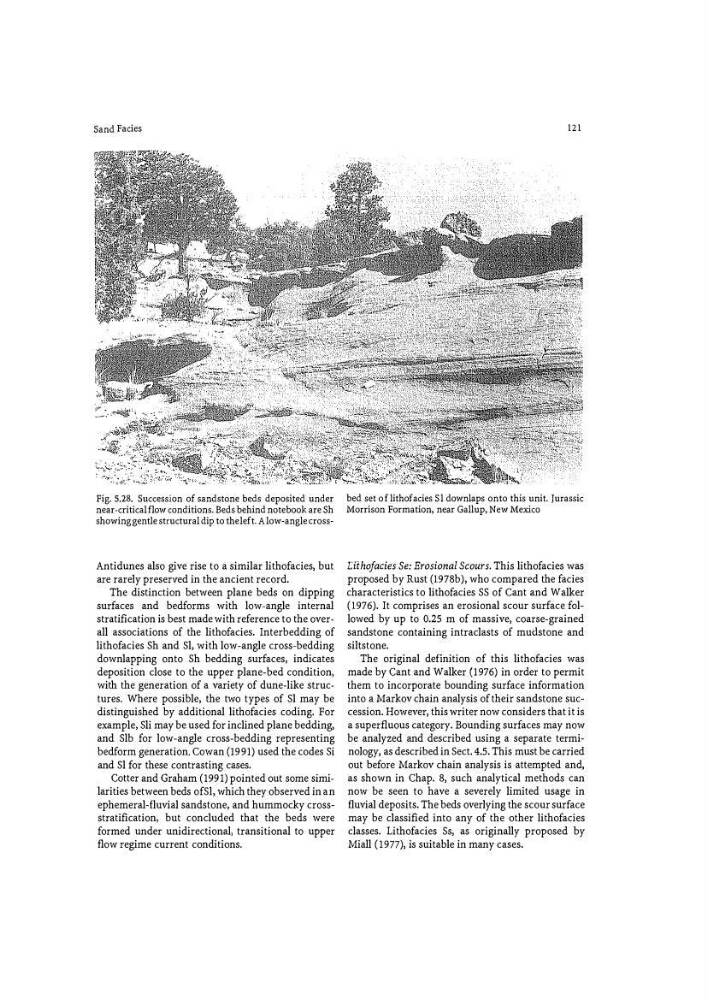
Fig. 5.28. Succession of sandstone beds deposited under
near*critical flow conditions. Beds behind notebook are Sh
showing gentle structural dip to the left. A low-angle crossAntidunes also give rise to a similar lithofacies, but
are rarely preserved in the ancient record.
The distinction between plane beds on dipping
surfaces and bedforms with low-angle internal
stratification is best made with reference to the overall associations of the lithofacies. Interbedding of
lithofacies Sh and Sl, with low-angle cross-bedding
downlapping onto Sh bedding surfaces, indicates
deposition close to the upper plane-bed condition)
with the generation of a variety of dune-like structures. Where possible, the two types of Sl may be
distinguished by additional lithofacies coding. For
example, Sli may be used for inclined plane bedding,
and Slb for low-angle cross-bedding representing
bedform generation. Cowan (!99!) used the codes Si
and Sl for these contrasting cases.
Cotter and Graham (1991) pointed out some similarities between beds ofSl, which they observed in an
ephemeral-fluvial sandstone, and hummocky crossstratification) but concluded that the beds were
formed under unidirectional, transitional to upper
flow regime current conditions.
121
bed set of lithofacies Sl downlaps onto this unit. Jurassic
Morrison Formation, near Gallup, New Mexico
Lithofacies Se: Erosional Scours. This lithofacies was
proposed by Rust (!978b), who compared the facies
characteristics to lithofacies SS of Cant and Walker
(1976). It comprises an erosional scour surface followed by up to 0.25 m of massive, coarse-grained
sandstone containing intraclasts of mudstone and
siltstone.
The original definition of this lithofacies was
made by Cant and Walker {!976) in order to permit
them to incorporate bounding surface information
into a Markov chain analysis of their sandstone succession. However, this vvriter now considers that it is
a superfluous category. Bounding surfaces may now
be analyzed and described using a separate terminology, as described in Sect. 4.5. This must be carried
out before Markov chain analysis is attempted and,
as shown in Chap. 8, such analytical methods can
now be seen to have a severely limited usage in
fluvial deposits. The beds overlying the scour surface
may be classified into any of the other lithofacies
classes. Lithofacies Ss, as originally proposed by
Miall (1977), is suitable in many cases.
Fig. 5.28. Succession of sandstone beds deposited under
near*critical flow conditions. Beds behind notebook are Sh
showing gentle structural dip to the left. A low-angle crossAntidunes also give rise to a similar lithofacies, but
are rarely preserved in the ancient record.
The distinction between plane beds on dipping
surfaces and bedforms with low-angle internal
stratification is best made with reference to the overall associations of the lithofacies. Interbedding of
lithofacies Sh and Sl, with low-angle cross-bedding
downlapping onto Sh bedding surfaces, indicates
deposition close to the upper plane-bed condition)
with the generation of a variety of dune-like structures. Where possible, the two types of Sl may be
distinguished by additional lithofacies coding. For
example, Sli may be used for inclined plane bedding,
and Slb for low-angle cross-bedding representing
bedform generation. Cowan (!99!) used the codes Si
and Sl for these contrasting cases.
Cotter and Graham (1991) pointed out some similarities between beds ofSl, which they observed in an
ephemeral-fluvial sandstone, and hummocky crossstratification) but concluded that the beds were
formed under unidirectional, transitional to upper
flow regime current conditions.
121
bed set of lithofacies Sl downlaps onto this unit. Jurassic
Morrison Formation, near Gallup, New Mexico
Lithofacies Se: Erosional Scours. This lithofacies was
proposed by Rust (!978b), who compared the facies
characteristics to lithofacies SS of Cant and Walker
(1976). It comprises an erosional scour surface followed by up to 0.25 m of massive, coarse-grained
sandstone containing intraclasts of mudstone and
siltstone.
The original definition of this lithofacies was
made by Cant and Walker {!976) in order to permit
them to incorporate bounding surface information
into a Markov chain analysis of their sandstone succession. However, this vvriter now considers that it is
a superfluous category. Bounding surfaces may now
be analyzed and described using a separate terminology, as described in Sect. 4.5. This must be carried
out before Markov chain analysis is attempted and,
as shown in Chap. 8, such analytical methods can
now be seen to have a severely limited usage in
fluvial deposits. The beds overlying the scour surface
may be classified into any of the other lithofacies
classes. Lithofacies Ss, as originally proposed by
Miall (1977), is suitable in many cases.