

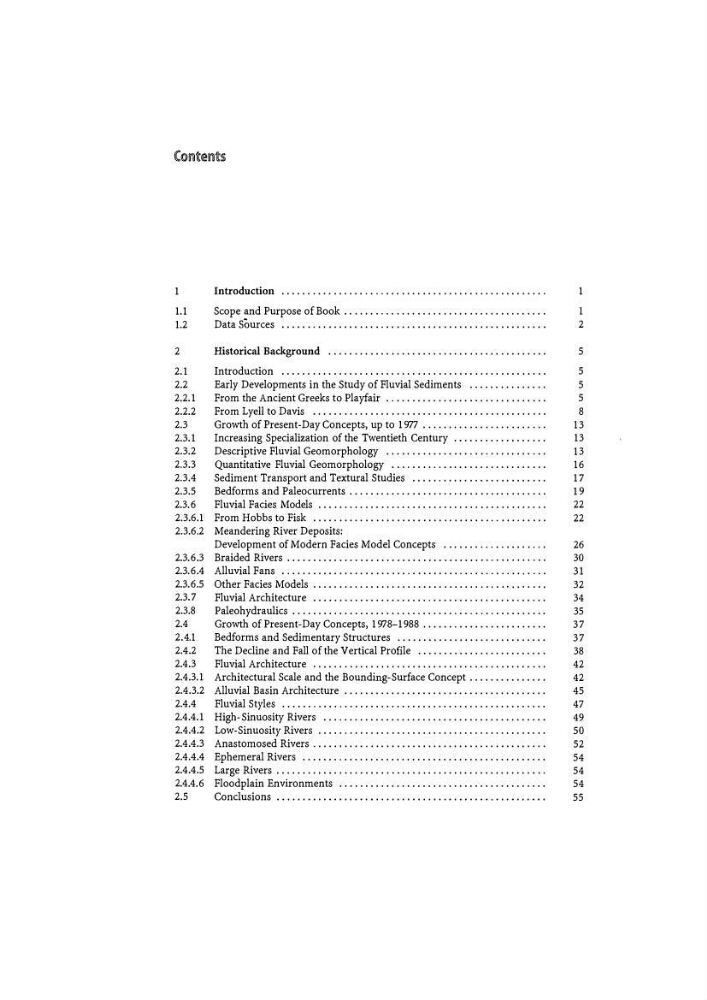
1
Introduction . . . . . . . . . . . . . . . . . . . . . . . . . . . . . . . . . . . . . . . . . . . . . . . . . . .
1
1. 1
Scope and Purpose of Book . . . . . . . . . . . . . . . . . . . . . . . . . . . . . . . . . . . . . . .
I
1. 2
Data sOurces . . . . . . . . . . . . . . . . . . . . . . . . . . . . . . . . . . . . . . . . . . . . . . . . . . .
2
2
Historical Background . . . . . . . . . . . . . . . . . . . . . . . . . . . . . . . . . . . . . . . . . .
5
2.1
Introduction . . . . . . . . . . . . . . . . . . . . . . . . . . . . . . . . . . . . . . . . . . . . . . . . . . .
5
2.2
Early Developments in the Study of Fluvial Sediments . . . . . . . . . . . . . . .
5
2.2.1
From the Ancient Greeks to Playfair . . . . . . . . . . . . . . . . . . . . . . . . . . . . . . .
5
2.2.2
From Lyell to Davis . . . . . . . . . . . . . . . . . . . . . . . . . . . . . . . . . . . . . . . . . . . . .
8
2.3
Growth ofrresent-Day Concepts, up to 1977 . . . . . . . . . . . . . . . . . . . . . . . •
13
2.3.1
Increasing Specialization of the Twentieth Century . .......... , . . . . . .
13
2.3.2
Descriptive Fluvial Geomorphology . . . . . . . . . . . . . . . . . . . . . . . . . . . . . . .
13
2.3.3
Quantitative Fluvial Geomorphology . . . . . . . . . . . . . . . . . . . . . . . . . . . . . .
16
2.3.4
Sediment Transport and Textural Studies . . . . . . . . . . . . . . . . . . . . . . . . . .
17
2.3.5
Bedforms and Paleocurrents . . . . . . . . . . . . . . . . . . . . . . . . . . . . . . . . . . . . . .
19
2.3.6
Fluvial Facies Models . . . . . . . . . . . . . . . . . . . . . . . . . . . . . . . . . . . . . . . . . . . .
22
2.3.6.1 From Hobbs to Fisk . . . . . . . . . . . . . . . . . . . . . . . . . . . . . . . . . . . . . . . . . . . . .
22
2.3.6.2 Meandering River Deposits:
Development of Modern Facies Model Concepts . . . . . . . . . . . . . . . . . . . .
26
2.3.6.3 Braided Rivers . . . . . . . . . . . . . . . . . . . . . . . . . . . . . . . . . . . . . . . . . . . . . . . . . .
30
2.3.6.4 Alluvial Fans . . . . . . . . . . . . . . . . . . . . . . . . . . . . . . . . . . . . . . . . . . . . . . . . . . .
31
2.3.6.5 Other Facies Models . . . . . . . . . . . . . . . . . . . . . . . . . . . . . . . . . . . . . . . . . . . . .
32
2.3.7
2.3.8
2.4
2.4.1
2.4.2
2.4.3
2.4.3.1
2.4.3.2
2.4.4
2.4.4.1
2.4.4.2
2.4.4.3
2.4.4.4
2.4.4.5
2.4.4.6
2.5
Fluvial Architecture ................................ , . . ... .. . .. . .
Paleohydraulics ................................................ .
Growth of Present-Day Concepts, 197 8-19 88 ...... . ................ .
Bedforms and Sedimentary Structures ............................ .
The Decline and Fall of the Vertical Profile ........................ .
Fluvial Architecture , . . ... .. ... . . , ... . ... ... .. , . , ..... . . .. .... . . .
Architectural Scale and the Bounding-Surface Concept .............. .
Alluvial Basin Architecture ...................................... .
Fluvial Styles .................................................. .
High-Sinuosity Rivers .......................................... .
Low-Sinuosity Rivers ........ , . . . ... ... ... .. ....... . . . . ..... . . . . .
Anastomosed Rivers ..... , . . . . ... . . . . . . ... ... . . ... . . .. . ... . .. ... .
Ephemeral Rivers .............................................. .
Large Rivers ........ , .. . . . . .. . . .. .. ... .. .. . . .... ... .......... . . .
Floodplain Environments ....................................... .
Conclusions ................................................... .
34
35
37
37
38
42
42
45
47
49
50
52
54
54
54
55
Introduction . . . . . . . . . . . . . . . . . . . . . . . . . . . . . . . . . . . . . . . . . . . . . . . . . . .
1
1. 1
Scope and Purpose of Book . . . . . . . . . . . . . . . . . . . . . . . . . . . . . . . . . . . . . . .
I
1. 2
Data sOurces . . . . . . . . . . . . . . . . . . . . . . . . . . . . . . . . . . . . . . . . . . . . . . . . . . .
2
2
Historical Background . . . . . . . . . . . . . . . . . . . . . . . . . . . . . . . . . . . . . . . . . .
5
2.1
Introduction . . . . . . . . . . . . . . . . . . . . . . . . . . . . . . . . . . . . . . . . . . . . . . . . . . .
5
2.2
Early Developments in the Study of Fluvial Sediments . . . . . . . . . . . . . . .
5
2.2.1
From the Ancient Greeks to Playfair . . . . . . . . . . . . . . . . . . . . . . . . . . . . . . .
5
2.2.2
From Lyell to Davis . . . . . . . . . . . . . . . . . . . . . . . . . . . . . . . . . . . . . . . . . . . . .
8
2.3
Growth ofrresent-Day Concepts, up to 1977 . . . . . . . . . . . . . . . . . . . . . . . •
13
2.3.1
Increasing Specialization of the Twentieth Century . .......... , . . . . . .
13
2.3.2
Descriptive Fluvial Geomorphology . . . . . . . . . . . . . . . . . . . . . . . . . . . . . . .
13
2.3.3
Quantitative Fluvial Geomorphology . . . . . . . . . . . . . . . . . . . . . . . . . . . . . .
16
2.3.4
Sediment Transport and Textural Studies . . . . . . . . . . . . . . . . . . . . . . . . . .
17
2.3.5
Bedforms and Paleocurrents . . . . . . . . . . . . . . . . . . . . . . . . . . . . . . . . . . . . . .
19
2.3.6
Fluvial Facies Models . . . . . . . . . . . . . . . . . . . . . . . . . . . . . . . . . . . . . . . . . . . .
22
2.3.6.1 From Hobbs to Fisk . . . . . . . . . . . . . . . . . . . . . . . . . . . . . . . . . . . . . . . . . . . . .
22
2.3.6.2 Meandering River Deposits:
Development of Modern Facies Model Concepts . . . . . . . . . . . . . . . . . . . .
26
2.3.6.3 Braided Rivers . . . . . . . . . . . . . . . . . . . . . . . . . . . . . . . . . . . . . . . . . . . . . . . . . .
30
2.3.6.4 Alluvial Fans . . . . . . . . . . . . . . . . . . . . . . . . . . . . . . . . . . . . . . . . . . . . . . . . . . .
31
2.3.6.5 Other Facies Models . . . . . . . . . . . . . . . . . . . . . . . . . . . . . . . . . . . . . . . . . . . . .
32
2.3.7
2.3.8
2.4
2.4.1
2.4.2
2.4.3
2.4.3.1
2.4.3.2
2.4.4
2.4.4.1
2.4.4.2
2.4.4.3
2.4.4.4
2.4.4.5
2.4.4.6
2.5
Fluvial Architecture ................................ , . . ... .. . .. . .
Paleohydraulics ................................................ .
Growth of Present-Day Concepts, 197 8-19 88 ...... . ................ .
Bedforms and Sedimentary Structures ............................ .
The Decline and Fall of the Vertical Profile ........................ .
Fluvial Architecture , . . ... .. ... . . , ... . ... ... .. , . , ..... . . .. .... . . .
Architectural Scale and the Bounding-Surface Concept .............. .
Alluvial Basin Architecture ...................................... .
Fluvial Styles .................................................. .
High-Sinuosity Rivers .......................................... .
Low-Sinuosity Rivers ........ , . . . ... ... ... .. ....... . . . . ..... . . . . .
Anastomosed Rivers ..... , . . . . ... . . . . . . ... ... . . ... . . .. . ... . .. ... .
Ephemeral Rivers .............................................. .
Large Rivers ........ , .. . . . . .. . . .. .. ... .. .. . . .... ... .......... . . .
Floodplain Environments ....................................... .
Conclusions ................................................... .
34
35
37
37
38
42
42
45
47
49
50
52
54
54
54
55