

92
elaborations of this original classifi cation and, as
Fielding (l993b) pointed out, researchers may need
to erect their own classification to better reflect the
characteristics of the fluvial unit being investigated.
Thus, Cowan (1991) defi ned a completely new element, the scour hollow, based a' n his work in the
Morrison Formation of New Mexico, and Eberth and
Mia!! (1991) showed how detailed work on a specific
unit, in this case the Cutler Formation of New
Mexico, could yield a useful subdivision of some of
the more important elements. Miall's (1985) original
element classjfication} as modified by recent work, is
given in Table 4,3, A classification of the architectural elements in the Cutler Group is given in Table
4.4. A standard classifi�ation of architectural elements in th� overbank environment is proposed in
Table 7.1 (details of these various element types are
given in Chaps. 6 and 7).
Other element classifi cations have been used by
other workers. For example, Lang (1993) subdivided
element GB into four element types, and developed
his own subdivisions of sandy channel-flll and floodplain deposits. Brierley (1991) developed the following classification based on surfaces studies of a
modern river floodpl�in. Corresponding element
codes of this book are given in the third column.
LA Lateral Accretion
"' -·····--"··--'· ·-·: . ... -- -· · ..... , . . ,.,. ·- Sg
Sp
St
S<
Gm
Sh
SG Sediment Gravity Flow
GB Gravel Bar and Bed Form
.-..-o..--- ---sr
St
SB Sand Bed Form
DA Downstream Accretion
LS Laminated S ( 0.2- 2.0m
FF Overbank Fines
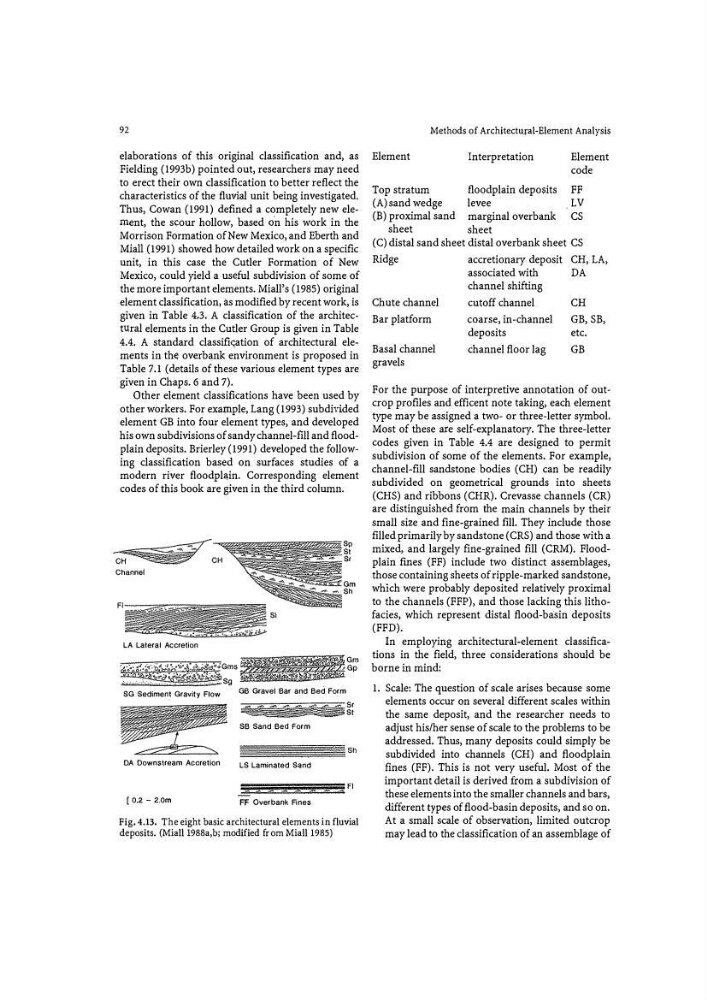
Fig. 4.13. The eight basic architectural elements in fluvial
deposits. (Miall l988a,b; modified from Miall l985)
Methods of Architectu ral�Element Analysis
Element
Interpretation
Element
code
Top stratum
floodplain depo1its FF
(A) sand wedge
levee
LV
(B) proximal sand marginal overbank
CS
sheet
sheet
(C) distal sand sheet distal overbank sheet CS
Ridge
accretionary deposit CH, LA,
Chute channel
Bar platform
Basal channel
gravels
associated with
DA
channel shifting
cutoff channel
CH
coarse, in�channel
GB, SB,
deposits
etc.
channel floor lag
GB
For the purpose of interpretive annotation of out�
crop profiles and efficent note taking, each element
type may be assigned a two- or three-letter symbol.
Most of these a;e self-explanatory. The three-letter
codes given in Table 4.4 are designed to permit
subdivision of some of the elements. For example,
channel-fill sandstone bodies (Cl-I) can be readily
subdivided on geometrical grounds into sheets
(CHS) and ribbons (CHR). Crevasse channels (CR)
are distinguished from the main channels by their
small size and fine-grained flll. They include those
filled primarily by sandstone (CRS) and those with a
mixed, and largely fine-grained fill (CRM). Floodplain fmes (FF) include two distinct assemblages,
those containing sheets of ripple� marked sandstone,
which were probably deposited relatively proximal
to the channels (FFP), and those lacking this lithofacies, which represent distal flood-basin deposits
(FFD).
In employing architectural-element classifications in the field, three considerations should be
borne in mind:
1. Scale: The question of scale arises because some
elements occur on several different scales within
the same deposit, and the researcher needs to
adjust his/her sense of scale to the problems to be
addressed. Thus, many deposits could simply be
subdivided into channels ( CH) and floodplain
fines (FF). This is not very useful. Most of the
important detail is derived from a subdivision of
these elements into the smaller channels and bars,
different types of flood-basin deposits, and so on.
At a small scale of observation, limited outcrop
may lead to the classification of an assemblage of
elaborations of this original classifi cation and, as
Fielding (l993b) pointed out, researchers may need
to erect their own classification to better reflect the
characteristics of the fluvial unit being investigated.
Thus, Cowan (1991) defi ned a completely new element, the scour hollow, based a' n his work in the
Morrison Formation of New Mexico, and Eberth and
Mia!! (1991) showed how detailed work on a specific
unit, in this case the Cutler Formation of New
Mexico, could yield a useful subdivision of some of
the more important elements. Miall's (1985) original
element classjfication} as modified by recent work, is
given in Table 4,3, A classification of the architectural elements in the Cutler Group is given in Table
4.4. A standard classifi�ation of architectural elements in th� overbank environment is proposed in
Table 7.1 (details of these various element types are
given in Chaps. 6 and 7).
Other element classifi cations have been used by
other workers. For example, Lang (1993) subdivided
element GB into four element types, and developed
his own subdivisions of sandy channel-flll and floodplain deposits. Brierley (1991) developed the following classification based on surfaces studies of a
modern river floodpl�in. Corresponding element
codes of this book are given in the third column.
LA Lateral Accretion
"' -·····--"··--'· ·-·: . ... -- -· · ..... , . . ,.,. ·- Sg
Sp
St
S<
Gm
Sh
SG Sediment Gravity Flow
GB Gravel Bar and Bed Form
.-..-o..--- ---sr
St
SB Sand Bed Form
DA Downstream Accretion
LS Laminated S ( 0.2- 2.0m
FF Overbank Fines
Fig. 4.13. The eight basic architectural elements in fluvial
deposits. (Miall l988a,b; modified from Miall l985)
Methods of Architectu ral�Element Analysis
Element
Interpretation
Element
code
Top stratum
floodplain depo1its FF
(A) sand wedge
levee
LV
(B) proximal sand marginal overbank
CS
sheet
sheet
(C) distal sand sheet distal overbank sheet CS
Ridge
accretionary deposit CH, LA,
Chute channel
Bar platform
Basal channel
gravels
associated with
DA
channel shifting
cutoff channel
CH
coarse, in�channel
GB, SB,
deposits
etc.
channel floor lag
GB
For the purpose of interpretive annotation of out�
crop profiles and efficent note taking, each element
type may be assigned a two- or three-letter symbol.
Most of these a;e self-explanatory. The three-letter
codes given in Table 4.4 are designed to permit
subdivision of some of the elements. For example,
channel-fill sandstone bodies (Cl-I) can be readily
subdivided on geometrical grounds into sheets
(CHS) and ribbons (CHR). Crevasse channels (CR)
are distinguished from the main channels by their
small size and fine-grained flll. They include those
filled primarily by sandstone (CRS) and those with a
mixed, and largely fine-grained fill (CRM). Floodplain fmes (FF) include two distinct assemblages,
those containing sheets of ripple� marked sandstone,
which were probably deposited relatively proximal
to the channels (FFP), and those lacking this lithofacies, which represent distal flood-basin deposits
(FFD).
In employing architectural-element classifications in the field, three considerations should be
borne in mind:
1. Scale: The question of scale arises because some
elements occur on several different scales within
the same deposit, and the researcher needs to
adjust his/her sense of scale to the problems to be
addressed. Thus, many deposits could simply be
subdivided into channels ( CH) and floodplain
fines (FF). This is not very useful. Most of the
important detail is derived from a subdivision of
these elements into the smaller channels and bars,
different types of flood-basin deposits, and so on.
At a small scale of observation, limited outcrop
may lead to the classification of an assemblage of