

42
F. Dong et al.
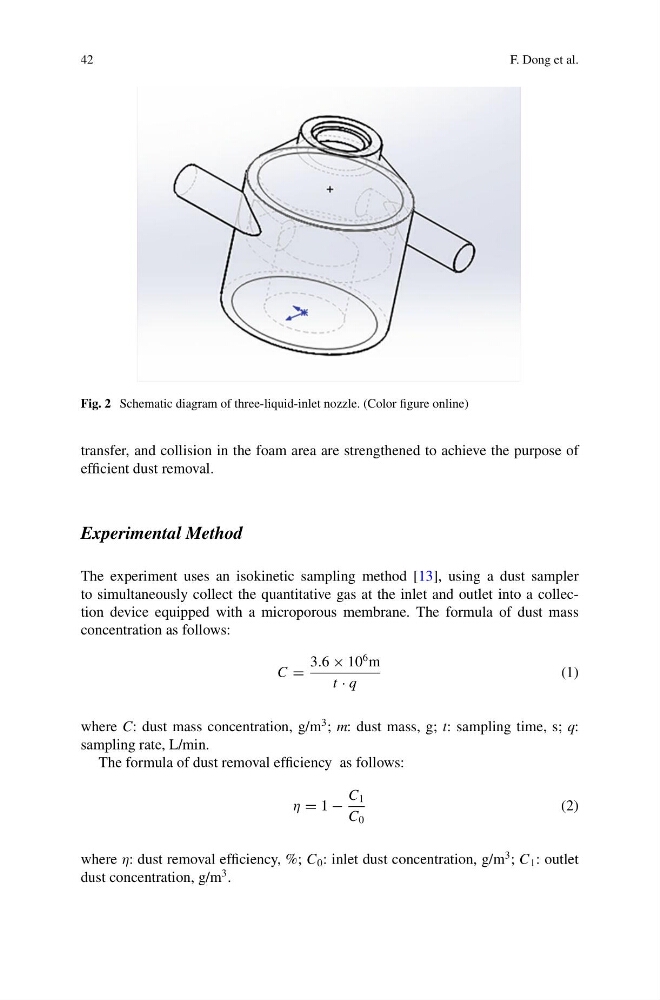
Fig. 2 Schematic diagram of three-liquid-inlet nozzle. (Color figure online)
transfer, and collision in the foam area are strengthened to achieve the purpose of
efficient dust removal.
Experimental Method
The experiment uses an isokinetic sampling method [13], using a dust sampler
to simultaneously collect the quantitative gas at the inlet and outlet into a collection device equipped with a microporous membrane. The formula of dust mass
concentration as follows:
C =
3.6 × 10
6 m
t · q
(1)
where C: dust mass concentration, g/m
3 ; m: dust mass, g; t: sampling time, s; q:
sampling rate, L/min.
The formula of dust removal efficiency as follows:
η = 1 −
C 1
C 0
(2)
where η: dust removal efficiency, %; C 0 : inlet dust concentration, g/m
3 ; C 1 : outlet
dust concentration, g/m
3 .
F. Dong et al.
Fig. 2 Schematic diagram of three-liquid-inlet nozzle. (Color figure online)
transfer, and collision in the foam area are strengthened to achieve the purpose of
efficient dust removal.
Experimental Method
The experiment uses an isokinetic sampling method [13], using a dust sampler
to simultaneously collect the quantitative gas at the inlet and outlet into a collection device equipped with a microporous membrane. The formula of dust mass
concentration as follows:
C =
3.6 × 10
6 m
t · q
(1)
where C: dust mass concentration, g/m
3 ; m: dust mass, g; t: sampling time, s; q:
sampling rate, L/min.
The formula of dust removal efficiency as follows:
η = 1 −
C 1
C 0
(2)
where η: dust removal efficiency, %; C 0 : inlet dust concentration, g/m
3 ; C 1 : outlet
dust concentration, g/m
3 .