

140
B.-W. Liu et al.
0
1
2
3
4
5
6
7
0
10
20
30
40
50
60
70
80
90
100
110
120
130
140
150
Number of bubbles
Diameter(mean)/mm
CBY
SSB
SSB-D
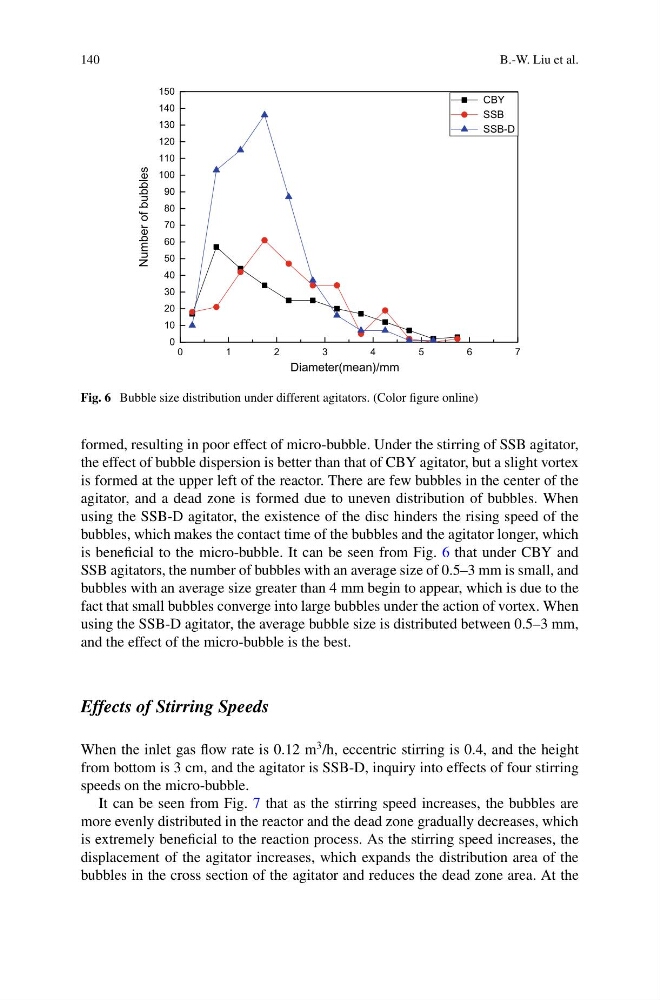
Fig. 6 Bubble size distribution under different agitators. (Color figure online)
formed, resulting in poor effect of micro-bubble. Under the stirring of SSB agitator,
the effect of bubble dispersion is better than that of CBY agitator, but a slight vortex
is formed at the upper left of the reactor. There are few bubbles in the center of the
agitator, and a dead zone is formed due to uneven distribution of bubbles. When
using the SSB-D agitator, the existence of the disc hinders the rising speed of the
bubbles, which makes the contact time of the bubbles and the agitator longer, which
is beneficial to the micro-bubble. It can be seen from Fig. 6 that under CBY and
SSB agitators, the number of bubbles with an average size of 0.5–3 mm is small, and
bubbles with an average size greater than 4 mm begin to appear, which is due to the
fact that small bubbles converge into large bubbles under the action of vortex. When
using the SSB-D agitator, the average bubble size is distributed between 0.5–3 mm,
and the effect of the micro-bubble is the best.
Effects of Stirring Speeds
When the inlet gas flow rate is 0.12 m
3 /h, eccentric stirring is 0.4, and the height
from bottom is 3 cm, and the agitator is SSB-D, inquiry into effects of four stirring
speeds on the micro-bubble.
It can be seen from Fig. 7 that as the stirring speed increases, the bubbles are
more evenly distributed in the reactor and the dead zone gradually decreases, which
is extremely beneficial to the reaction process. As the stirring speed increases, the
displacement of the agitator increases, which expands the distribution area of the
bubbles in the cross section of the agitator and reduces the dead zone area. At the
B.-W. Liu et al.
0
1
2
3
4
5
6
7
0
10
20
30
40
50
60
70
80
90
100
110
120
130
140
150
Number of bubbles
Diameter(mean)/mm
CBY
SSB
SSB-D
Fig. 6 Bubble size distribution under different agitators. (Color figure online)
formed, resulting in poor effect of micro-bubble. Under the stirring of SSB agitator,
the effect of bubble dispersion is better than that of CBY agitator, but a slight vortex
is formed at the upper left of the reactor. There are few bubbles in the center of the
agitator, and a dead zone is formed due to uneven distribution of bubbles. When
using the SSB-D agitator, the existence of the disc hinders the rising speed of the
bubbles, which makes the contact time of the bubbles and the agitator longer, which
is beneficial to the micro-bubble. It can be seen from Fig. 6 that under CBY and
SSB agitators, the number of bubbles with an average size of 0.5–3 mm is small, and
bubbles with an average size greater than 4 mm begin to appear, which is due to the
fact that small bubbles converge into large bubbles under the action of vortex. When
using the SSB-D agitator, the average bubble size is distributed between 0.5–3 mm,
and the effect of the micro-bubble is the best.
Effects of Stirring Speeds
When the inlet gas flow rate is 0.12 m
3 /h, eccentric stirring is 0.4, and the height
from bottom is 3 cm, and the agitator is SSB-D, inquiry into effects of four stirring
speeds on the micro-bubble.
It can be seen from Fig. 7 that as the stirring speed increases, the bubbles are
more evenly distributed in the reactor and the dead zone gradually decreases, which
is extremely beneficial to the reaction process. As the stirring speed increases, the
displacement of the agitator increases, which expands the distribution area of the
bubbles in the cross section of the agitator and reduces the dead zone area. At the