

60
3 Energy
energy costs total
= electricit y costs wor k + electricit y costs power
+ electricit y costs standard
(3.18)
with electricit y costs wor k = electrical wor k ∗ price per kW h
electricit y costs power = highest power demand ∗ price per kW
electricit y costs standard
=
(electrical wor k ∗ variablestandard costs per kW h
+ f ixed standard costs)
While the fixed and variable standard costs are taxes, fees for network access
or specific dues and cannot be negotiated, the prices for the electrical work and
the power costs are subject to individual negotiation.
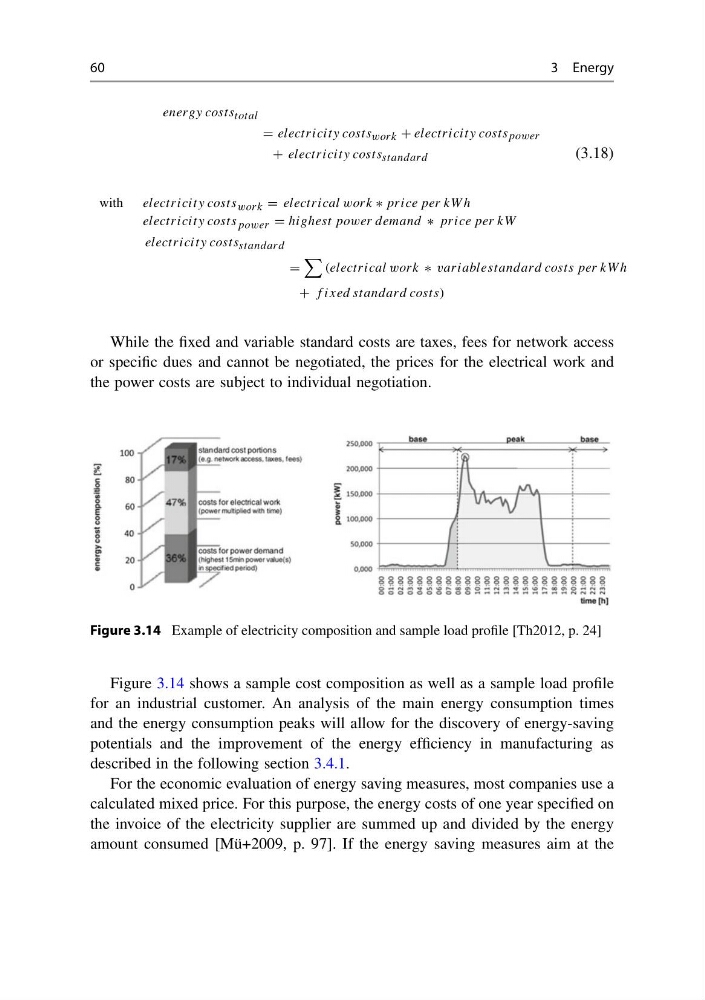
Figure 3.14 Example of electricity composition and sample load profile [Th2012, p. 24]
Figure 3.14 shows a sample cost composition as well as a sample load profile
for an industrial customer. An analysis of the main energy consumption times
and the energy consumption peaks will allow for the discovery of energy-saving
potentials and the improvement of the energy efficiency in manufacturing as
described in the following section 3.4.1.
For the economic evaluation of energy saving measures, most companies use a
calculated mixed price. For this purpose, the energy costs of one year specified on
the invoice of the electricity supplier are summed up and divided by the energy
amount consumed [Mü+2009, p. 97]. If the energy saving measures aim at the
3 Energy
energy costs total
= electricit y costs wor k + electricit y costs power
+ electricit y costs standard
(3.18)
with electricit y costs wor k = electrical wor k ∗ price per kW h
electricit y costs power = highest power demand ∗ price per kW
electricit y costs standard
=
(electrical wor k ∗ variablestandard costs per kW h
+ f ixed standard costs)
While the fixed and variable standard costs are taxes, fees for network access
or specific dues and cannot be negotiated, the prices for the electrical work and
the power costs are subject to individual negotiation.
Figure 3.14 Example of electricity composition and sample load profile [Th2012, p. 24]
Figure 3.14 shows a sample cost composition as well as a sample load profile
for an industrial customer. An analysis of the main energy consumption times
and the energy consumption peaks will allow for the discovery of energy-saving
potentials and the improvement of the energy efficiency in manufacturing as
described in the following section 3.4.1.
For the economic evaluation of energy saving measures, most companies use a
calculated mixed price. For this purpose, the energy costs of one year specified on
the invoice of the electricity supplier are summed up and divided by the energy
amount consumed [Mü+2009, p. 97]. If the energy saving measures aim at the