

192
6 Experimental Validation of the Methodology
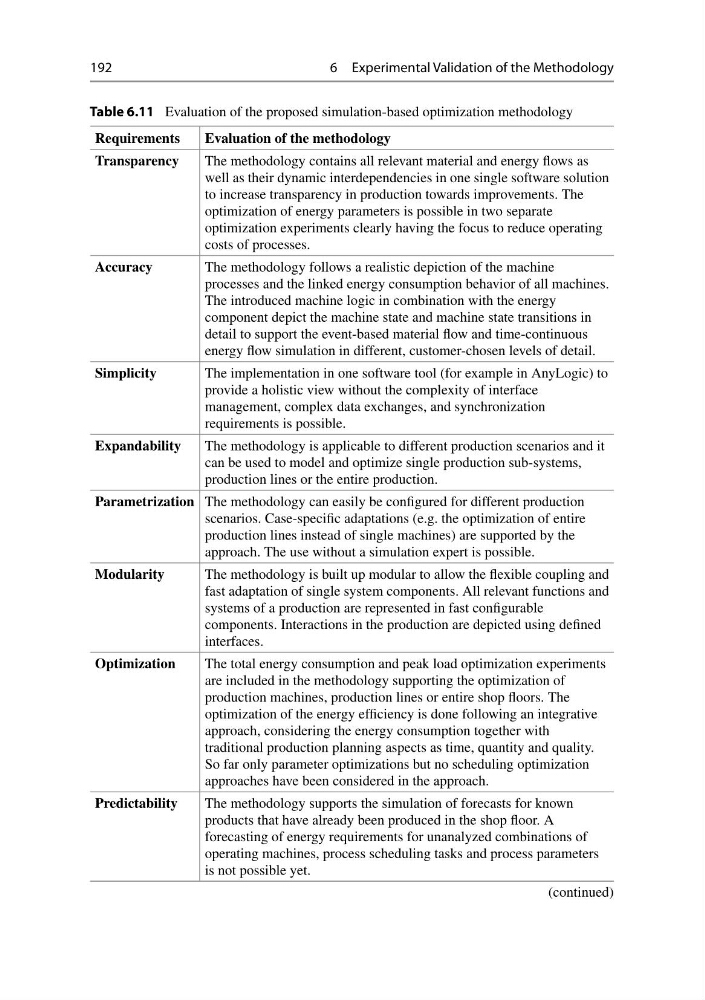
Table 6.11 Evaluation of the proposed simulation-based optimization methodology
Requirements
Evaluation of the methodology
Transparency
The methodology contains all relevant material and energy flows as
well as their dynamic interdependencies in one single software solution
to increase transparency in production towards improvements. The
optimization of energy parameters is possible in two separate
optimization experiments clearly having the focus to reduce operating
costs of processes.
Accuracy
The methodology follows a realistic depiction of the machine
processes and the linked energy consumption behavior of all machines.
The introduced machine logic in combination with the energy
component depict the machine state and machine state transitions in
detail to support the event-based material flow and time-continuous
energy flow simulation in different, customer-chosen levels of detail.
Simplicity
The implementation in one software tool (for example in AnyLogic) to
provide a holistic view without the complexity of interface
management, complex data exchanges, and synchronization
requirements is possible.
Expandability
The methodology is applicable to different production scenarios and it
can be used to model and optimize single production sub-systems,
production lines or the entire production.
Parametrization The methodology can easily be configured for different production
scenarios. Case-specific adaptations (e.g. the optimization of entire
production lines instead of single machines) are supported by the
approach. The use without a simulation expert is possible.
Modularity
The methodology is built up modular to allow the flexible coupling and
fast adaptation of single system components. All relevant functions and
systems of a production are represented in fast configurable
components. Interactions in the production are depicted using defined
interfaces.
Optimization
The total energy consumption and peak load optimization experiments
are included in the methodology supporting the optimization of
production machines, production lines or entire shop floors. The
optimization of the energy efficiency is done following an integrative
approach, considering the energy consumption together with
traditional production planning aspects as time, quantity and quality.
So far only parameter optimizations but no scheduling optimization
approaches have been considered in the approach.
Predictability
The methodology supports the simulation of forecasts for known
products that have already been produced in the shop floor. A
forecasting of energy requirements for unanalyzed combinations of
operating machines, process scheduling tasks and process parameters
is not possible yet.
(continued)
6 Experimental Validation of the Methodology
Table 6.11 Evaluation of the proposed simulation-based optimization methodology
Requirements
Evaluation of the methodology
Transparency
The methodology contains all relevant material and energy flows as
well as their dynamic interdependencies in one single software solution
to increase transparency in production towards improvements. The
optimization of energy parameters is possible in two separate
optimization experiments clearly having the focus to reduce operating
costs of processes.
Accuracy
The methodology follows a realistic depiction of the machine
processes and the linked energy consumption behavior of all machines.
The introduced machine logic in combination with the energy
component depict the machine state and machine state transitions in
detail to support the event-based material flow and time-continuous
energy flow simulation in different, customer-chosen levels of detail.
Simplicity
The implementation in one software tool (for example in AnyLogic) to
provide a holistic view without the complexity of interface
management, complex data exchanges, and synchronization
requirements is possible.
Expandability
The methodology is applicable to different production scenarios and it
can be used to model and optimize single production sub-systems,
production lines or the entire production.
Parametrization The methodology can easily be configured for different production
scenarios. Case-specific adaptations (e.g. the optimization of entire
production lines instead of single machines) are supported by the
approach. The use without a simulation expert is possible.
Modularity
The methodology is built up modular to allow the flexible coupling and
fast adaptation of single system components. All relevant functions and
systems of a production are represented in fast configurable
components. Interactions in the production are depicted using defined
interfaces.
Optimization
The total energy consumption and peak load optimization experiments
are included in the methodology supporting the optimization of
production machines, production lines or entire shop floors. The
optimization of the energy efficiency is done following an integrative
approach, considering the energy consumption together with
traditional production planning aspects as time, quantity and quality.
So far only parameter optimizations but no scheduling optimization
approaches have been considered in the approach.
Predictability
The methodology supports the simulation of forecasts for known
products that have already been produced in the shop floor. A
forecasting of energy requirements for unanalyzed combinations of
operating machines, process scheduling tasks and process parameters
is not possible yet.
(continued)