

186
6 Experimental Validation of the Methodology
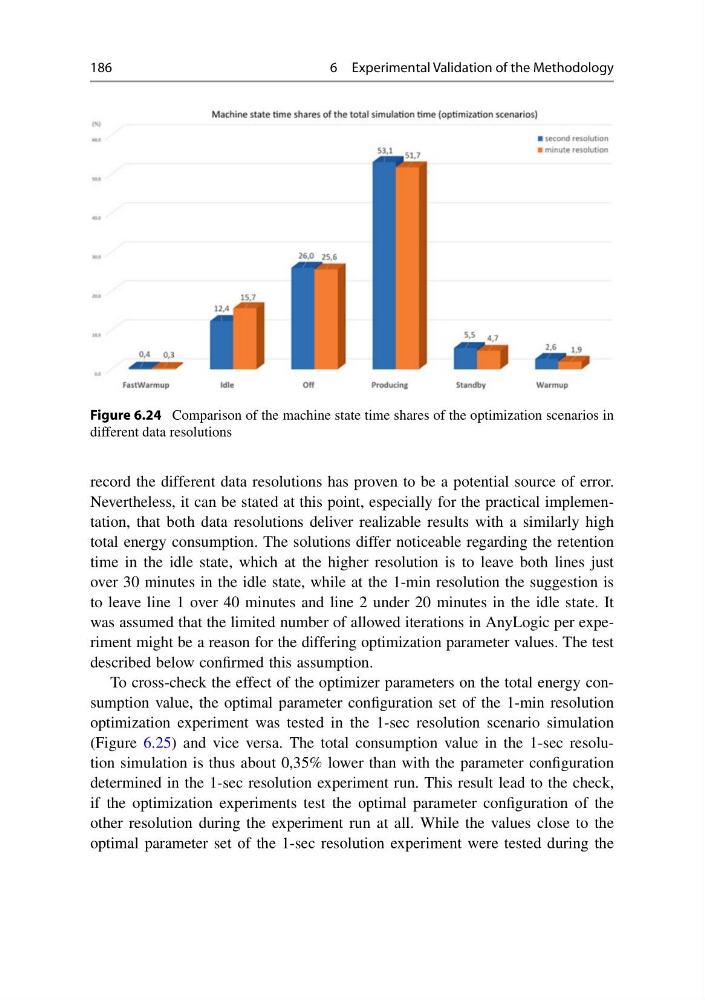
Figure 6.24 Comparison of the machine state time shares of the optimization scenarios in
different data resolutions
record the different data resolutions has proven to be a potential source of error.
Nevertheless, it can be stated at this point, especially for the practical implementation, that both data resolutions deliver realizable results with a similarly high
total energy consumption. The solutions differ noticeable regarding the retention
time in the idle state, which at the higher resolution is to leave both lines just
over 30 minutes in the idle state, while at the 1-min resolution the suggestion is
to leave line 1 over 40 minutes and line 2 under 20 minutes in the idle state. It
was assumed that the limited number of allowed iterations in AnyLogic per experiment might be a reason for the differing optimization parameter values. The test
described below confirmed this assumption.
To cross-check the effect of the optimizer parameters on the total energy consumption value, the optimal parameter configuration set of the 1-min resolution
optimization experiment was tested in the 1-sec resolution scenario simulation
(Figure 6.25) and vice versa. The total consumption value in the 1-sec resolution simulation is thus about 0,35% lower than with the parameter configuration
determined in the 1-sec resolution experiment run. This result lead to the check,
if the optimization experiments test the optimal parameter configuration of the
other resolution during the experiment run at all. While the values close to the
optimal parameter set of the 1-sec resolution experiment were tested during the
6 Experimental Validation of the Methodology
Figure 6.24 Comparison of the machine state time shares of the optimization scenarios in
different data resolutions
record the different data resolutions has proven to be a potential source of error.
Nevertheless, it can be stated at this point, especially for the practical implementation, that both data resolutions deliver realizable results with a similarly high
total energy consumption. The solutions differ noticeable regarding the retention
time in the idle state, which at the higher resolution is to leave both lines just
over 30 minutes in the idle state, while at the 1-min resolution the suggestion is
to leave line 1 over 40 minutes and line 2 under 20 minutes in the idle state. It
was assumed that the limited number of allowed iterations in AnyLogic per experiment might be a reason for the differing optimization parameter values. The test
described below confirmed this assumption.
To cross-check the effect of the optimizer parameters on the total energy consumption value, the optimal parameter configuration set of the 1-min resolution
optimization experiment was tested in the 1-sec resolution scenario simulation
(Figure 6.25) and vice versa. The total consumption value in the 1-sec resolution simulation is thus about 0,35% lower than with the parameter configuration
determined in the 1-sec resolution experiment run. This result lead to the check,
if the optimization experiments test the optimal parameter configuration of the
other resolution during the experiment run at all. While the values close to the
optimal parameter set of the 1-sec resolution experiment were tested during the