

158
6 Experimental Validation of the Methodology
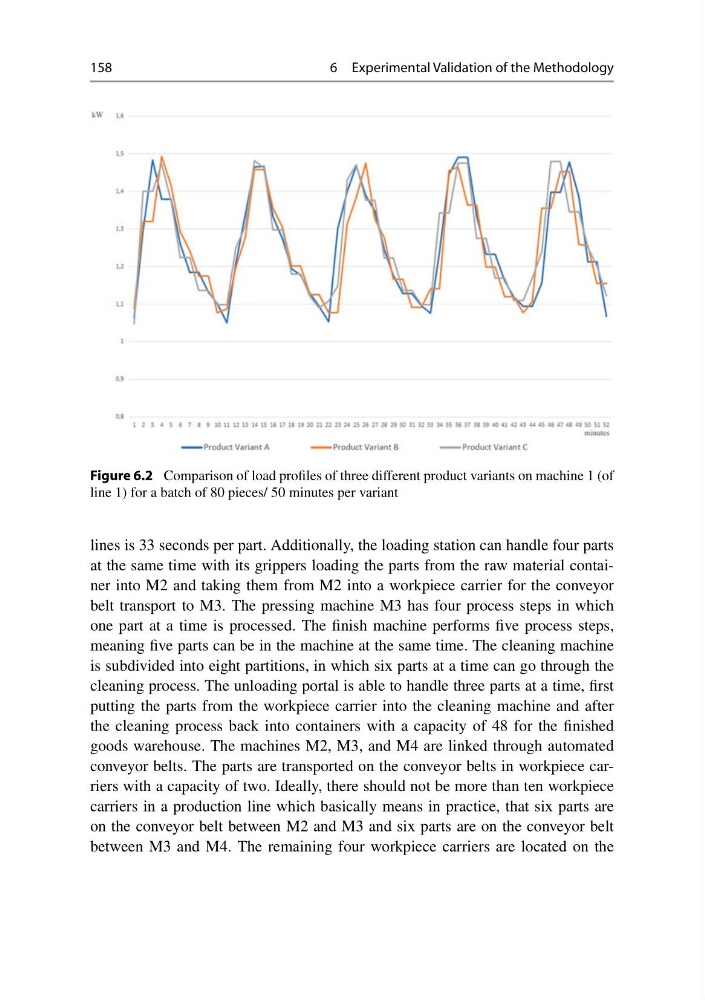
Figure 6.2 Comparison of load profiles of three different product variants on machine 1 (of
line 1) for a batch of 80 pieces/ 50 minutes per variant
lines is 33 seconds per part. Additionally, the loading station can handle four parts
at the same time with its grippers loading the parts from the raw material container into M2 and taking them from M2 into a workpiece carrier for the conveyor
belt transport to M3. The pressing machine M3 has four process steps in which
one part at a time is processed. The finish machine performs five process steps,
meaning five parts can be in the machine at the same time. The cleaning machine
is subdivided into eight partitions, in which six parts at a time can go through the
cleaning process. The unloading portal is able to handle three parts at a time, first
putting the parts from the workpiece carrier into the cleaning machine and after
the cleaning process back into containers with a capacity of 48 for the finished
goods warehouse. The machines M2, M3, and M4 are linked through automated
conveyor belts. The parts are transported on the conveyor belts in workpiece carriers with a capacity of two. Ideally, there should not be more than ten workpiece
carriers in a production line which basically means in practice, that six parts are
on the conveyor belt between M2 and M3 and six parts are on the conveyor belt
between M3 and M4. The remaining four workpiece carriers are located on the
6 Experimental Validation of the Methodology
Figure 6.2 Comparison of load profiles of three different product variants on machine 1 (of
line 1) for a batch of 80 pieces/ 50 minutes per variant
lines is 33 seconds per part. Additionally, the loading station can handle four parts
at the same time with its grippers loading the parts from the raw material container into M2 and taking them from M2 into a workpiece carrier for the conveyor
belt transport to M3. The pressing machine M3 has four process steps in which
one part at a time is processed. The finish machine performs five process steps,
meaning five parts can be in the machine at the same time. The cleaning machine
is subdivided into eight partitions, in which six parts at a time can go through the
cleaning process. The unloading portal is able to handle three parts at a time, first
putting the parts from the workpiece carrier into the cleaning machine and after
the cleaning process back into containers with a capacity of 48 for the finished
goods warehouse. The machines M2, M3, and M4 are linked through automated
conveyor belts. The parts are transported on the conveyor belts in workpiece carriers with a capacity of two. Ideally, there should not be more than ten workpiece
carriers in a production line which basically means in practice, that six parts are
on the conveyor belt between M2 and M3 and six parts are on the conveyor belt
between M3 and M4. The remaining four workpiece carriers are located on the