

150
5 Development of a Simulation-based Methodology …
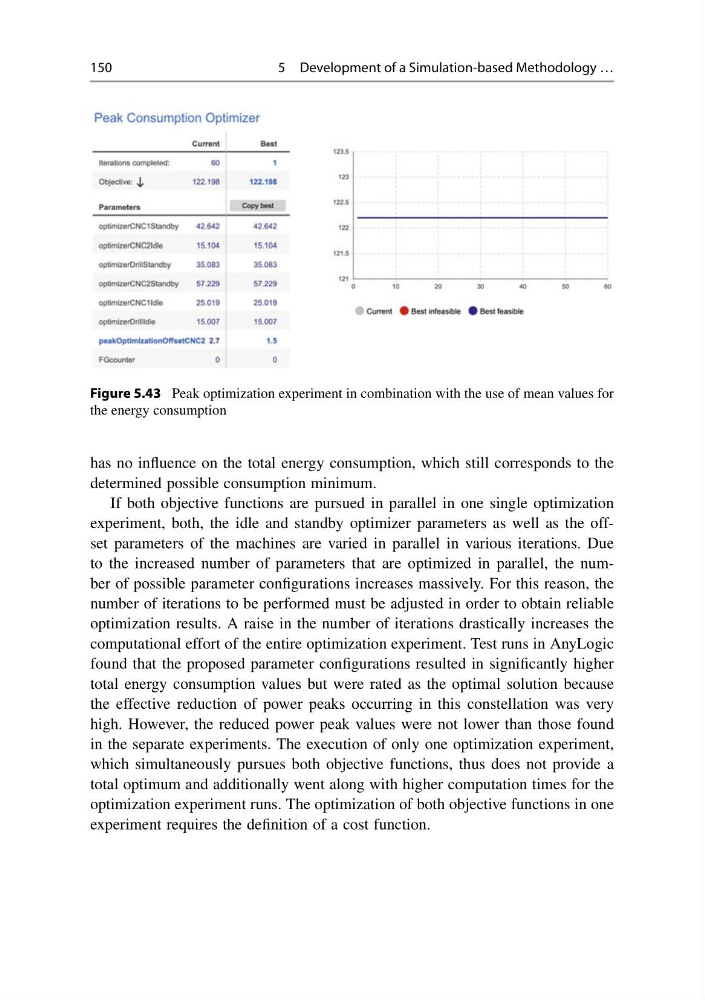
Figure 5.43 Peak optimization experiment in combination with the use of mean values for
the energy consumption
has no influence on the total energy consumption, which still corresponds to the
determined possible consumption minimum.
If both objective functions are pursued in parallel in one single optimization
experiment, both, the idle and standby optimizer parameters as well as the offset parameters of the machines are varied in parallel in various iterations. Due
to the increased number of parameters that are optimized in parallel, the number of possible parameter configurations increases massively. For this reason, the
number of iterations to be performed must be adjusted in order to obtain reliable
optimization results. A raise in the number of iterations drastically increases the
computational effort of the entire optimization experiment. Test runs in AnyLogic
found that the proposed parameter configurations resulted in significantly higher
total energy consumption values but were rated as the optimal solution because
the effective reduction of power peaks occurring in this constellation was very
high. However, the reduced power peak values were not lower than those found
in the separate experiments. The execution of only one optimization experiment,
which simultaneously pursues both objective functions, thus does not provide a
total optimum and additionally went along with higher computation times for the
optimization experiment runs. The optimization of both objective functions in one
experiment requires the definition of a cost function.
5 Development of a Simulation-based Methodology …
Figure 5.43 Peak optimization experiment in combination with the use of mean values for
the energy consumption
has no influence on the total energy consumption, which still corresponds to the
determined possible consumption minimum.
If both objective functions are pursued in parallel in one single optimization
experiment, both, the idle and standby optimizer parameters as well as the offset parameters of the machines are varied in parallel in various iterations. Due
to the increased number of parameters that are optimized in parallel, the number of possible parameter configurations increases massively. For this reason, the
number of iterations to be performed must be adjusted in order to obtain reliable
optimization results. A raise in the number of iterations drastically increases the
computational effort of the entire optimization experiment. Test runs in AnyLogic
found that the proposed parameter configurations resulted in significantly higher
total energy consumption values but were rated as the optimal solution because
the effective reduction of power peaks occurring in this constellation was very
high. However, the reduced power peak values were not lower than those found
in the separate experiments. The execution of only one optimization experiment,
which simultaneously pursues both objective functions, thus does not provide a
total optimum and additionally went along with higher computation times for the
optimization experiment runs. The optimization of both objective functions in one
experiment requires the definition of a cost function.