

138
5 Development of a Simulation-based Methodology …
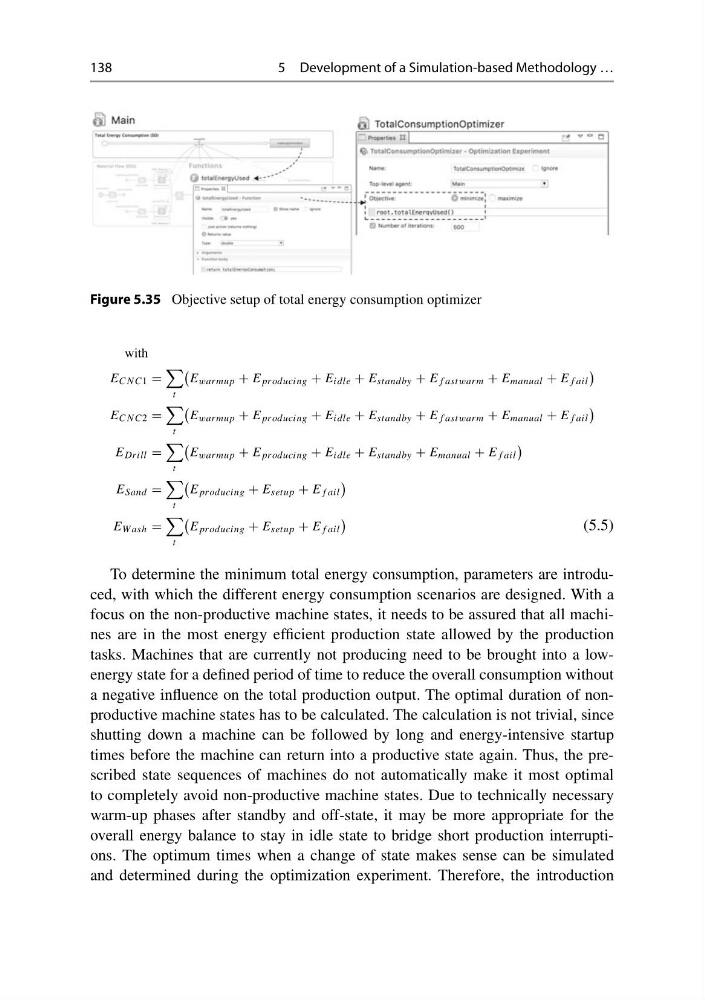
Figure 5.35 Objective setup of total energy consumption optimizer
with
E C NC1 =
t
E warmup + E producing + E idle + E standby + E f astwarm + E manual + E f ail
E C NC2 =
t
E warmup + E producing + E idle + E standby + E f astwarm + E manual + E f ail
E Drill =
t
E warmup + E producing + E idle + E standby + E manual + E f ail
E Sand =
t
E producing + E setup + E f ail
E W ash =
t
E producing + E setup + E f ail
(5.5)
To determine the minimum total energy consumption, parameters are introduced, with which the different energy consumption scenarios are designed. With a
focus on the non-productive machine states, it needs to be assured that all machines are in the most energy efficient production state allowed by the production
tasks. Machines that are currently not producing need to be brought into a lowenergy state for a defined period of time to reduce the overall consumption without
a negative influence on the total production output. The optimal duration of nonproductive machine states has to be calculated. The calculation is not trivial, since
shutting down a machine can be followed by long and energy-intensive startup
times before the machine can return into a productive state again. Thus, the prescribed state sequences of machines do not automatically make it most optimal
to completely avoid non-productive machine states. Due to technically necessary
warm-up phases after standby and off-state, it may be more appropriate for the
overall energy balance to stay in idle state to bridge short production interruptions. The optimum times when a change of state makes sense can be simulated
and determined during the optimization experiment. Therefore, the introduction
5 Development of a Simulation-based Methodology …
Figure 5.35 Objective setup of total energy consumption optimizer
with
E C NC1 =
t
E warmup + E producing + E idle + E standby + E f astwarm + E manual + E f ail
E C NC2 =
t
E warmup + E producing + E idle + E standby + E f astwarm + E manual + E f ail
E Drill =
t
E warmup + E producing + E idle + E standby + E manual + E f ail
E Sand =
t
E producing + E setup + E f ail
E W ash =
t
E producing + E setup + E f ail
(5.5)
To determine the minimum total energy consumption, parameters are introduced, with which the different energy consumption scenarios are designed. With a
focus on the non-productive machine states, it needs to be assured that all machines are in the most energy efficient production state allowed by the production
tasks. Machines that are currently not producing need to be brought into a lowenergy state for a defined period of time to reduce the overall consumption without
a negative influence on the total production output. The optimal duration of nonproductive machine states has to be calculated. The calculation is not trivial, since
shutting down a machine can be followed by long and energy-intensive startup
times before the machine can return into a productive state again. Thus, the prescribed state sequences of machines do not automatically make it most optimal
to completely avoid non-productive machine states. Due to technically necessary
warm-up phases after standby and off-state, it may be more appropriate for the
overall energy balance to stay in idle state to bridge short production interruptions. The optimum times when a change of state makes sense can be simulated
and determined during the optimization experiment. Therefore, the introduction