

5.4 Description of the Optimization Approach
111
Simulation Module
Machine Brick
Production Flow Brick
Energy Brick
operational
machine state
energy
state
Energy consumption parameters
> Mathematical functions
> Value tables/ table functions
> Energy state values
DES material flow
SD energy flow
Machine process logic
Production Process Parameters
Setup times
Production/Cycle Times
MTTR/MTTF
Operational state restrictions
Throughput times
Batch sizes
…
Production Flow Parameters
Product data
Production orders
Maintenance cycles
Planning Parameters
Shift models
Machines
Transport systems
Break arrangements
Working schedules
Restrictions
…
Waiting times
Quantities
…
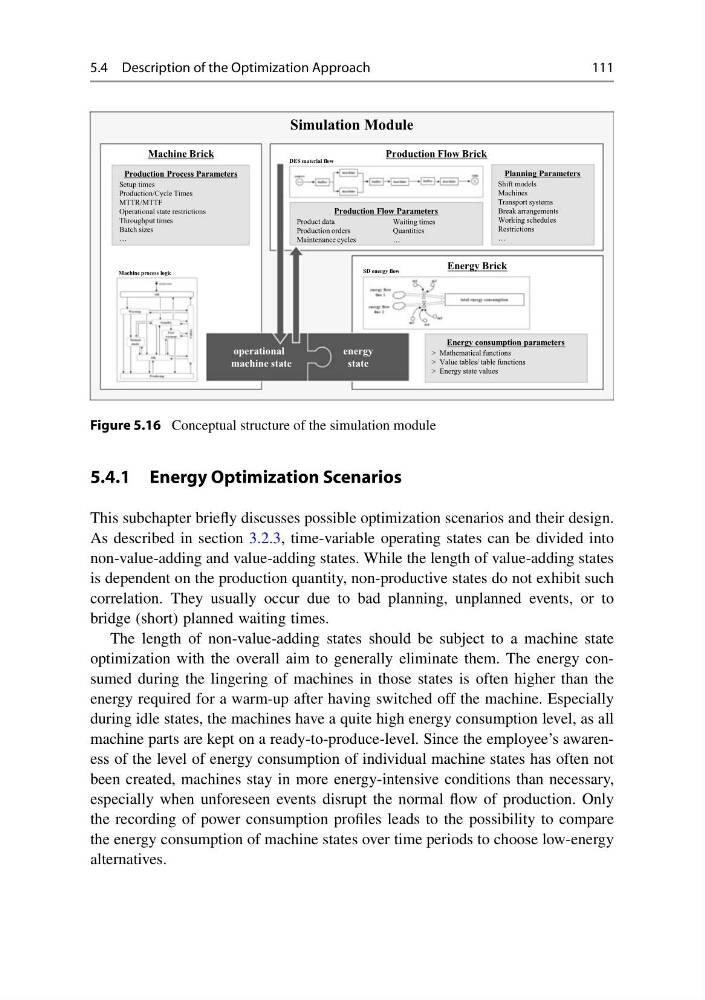
Figure 5.16 Conceptual structure of the simulation module
5.4.1 Energy Optimization Scenarios
This subchapter briefly discusses possible optimization scenarios and their design.
As described in section 3.2.3, time-variable operating states can be divided into
non-value-adding and value-adding states. While the length of value-adding states
is dependent on the production quantity, non-productive states do not exhibit such
correlation. They usually occur due to bad planning, unplanned events, or to
bridge (short) planned waiting times.
The length of non-value-adding states should be subject to a machine state
optimization with the overall aim to generally eliminate them. The energy consumed during the lingering of machines in those states is often higher than the
energy required for a warm-up after having switched off the machine. Especially
during idle states, the machines have a quite high energy consumption level, as all
machine parts are kept on a ready-to-produce-level. Since the employee’s awareness of the level of energy consumption of individual machine states has often not
been created, machines stay in more energy-intensive conditions than necessary,
especially when unforeseen events disrupt the normal flow of production. Only
the recording of power consumption profiles leads to the possibility to compare
the energy consumption of machine states over time periods to choose low-energy
alternatives.
111
Simulation Module
Machine Brick
Production Flow Brick
Energy Brick
operational
machine state
energy
state
Energy consumption parameters
> Mathematical functions
> Value tables/ table functions
> Energy state values
DES material flow
SD energy flow
Machine process logic
Production Process Parameters
Setup times
Production/Cycle Times
MTTR/MTTF
Operational state restrictions
Throughput times
Batch sizes
…
Production Flow Parameters
Product data
Production orders
Maintenance cycles
Planning Parameters
Shift models
Machines
Transport systems
Break arrangements
Working schedules
Restrictions
…
Waiting times
Quantities
…
Figure 5.16 Conceptual structure of the simulation module
5.4.1 Energy Optimization Scenarios
This subchapter briefly discusses possible optimization scenarios and their design.
As described in section 3.2.3, time-variable operating states can be divided into
non-value-adding and value-adding states. While the length of value-adding states
is dependent on the production quantity, non-productive states do not exhibit such
correlation. They usually occur due to bad planning, unplanned events, or to
bridge (short) planned waiting times.
The length of non-value-adding states should be subject to a machine state
optimization with the overall aim to generally eliminate them. The energy consumed during the lingering of machines in those states is often higher than the
energy required for a warm-up after having switched off the machine. Especially
during idle states, the machines have a quite high energy consumption level, as all
machine parts are kept on a ready-to-produce-level. Since the employee’s awareness of the level of energy consumption of individual machine states has often not
been created, machines stay in more energy-intensive conditions than necessary,
especially when unforeseen events disrupt the normal flow of production. Only
the recording of power consumption profiles leads to the possibility to compare
the energy consumption of machine states over time periods to choose low-energy
alternatives.