

1.2 Sources of X-rays
From Maxwell’s equations, we know that all electromagnetic radiation comes from
accelerating charges. The most common X-ray sources, so-called X-ray tubes,
involve a high-voltage electron current passing through a vacuum from the cathode
to anode. In these sources, the broadband radiation results from a deceleration of
electrons as they pass by atomic nuclei, hence the German name bremsstrahlung or
“braking radiation” (Fig. 1.2). These tubes also produce narrow lines of X-ray
fluorescence, the result of electronic transitions between different atomic core levels.
Respectively, these are examples of rapid (negative) acceleration and bound-state
transitions on a microscopic scale. For many applications, these sources have one
major drawback—the radiation is emitted essentially in all directions and from a
relatively large volume.
1.2.1 Synchrotron Radiation
As shown in Fig. 1.2, synchrotron radiation results from the transverse acceleration
of a relativistic charged particle. In contrast with conventional X-ray tubes, which
radiate from a large source in all directions, in a synchrotron radiation source, the
X-rays are emitted from a small bunch of electrons in a narrow cone along the
direction of the moving particles. As we will see later, the fact that the particles are
relativistic—traveling very close to the speed of light—gives rise to these special
radiation properties. Collimation and small source size make synchrotron radiation
much more useful than the other sources in Fig. 1.2. To be more quantitative about
these benefits, we need to define some figures of merit.
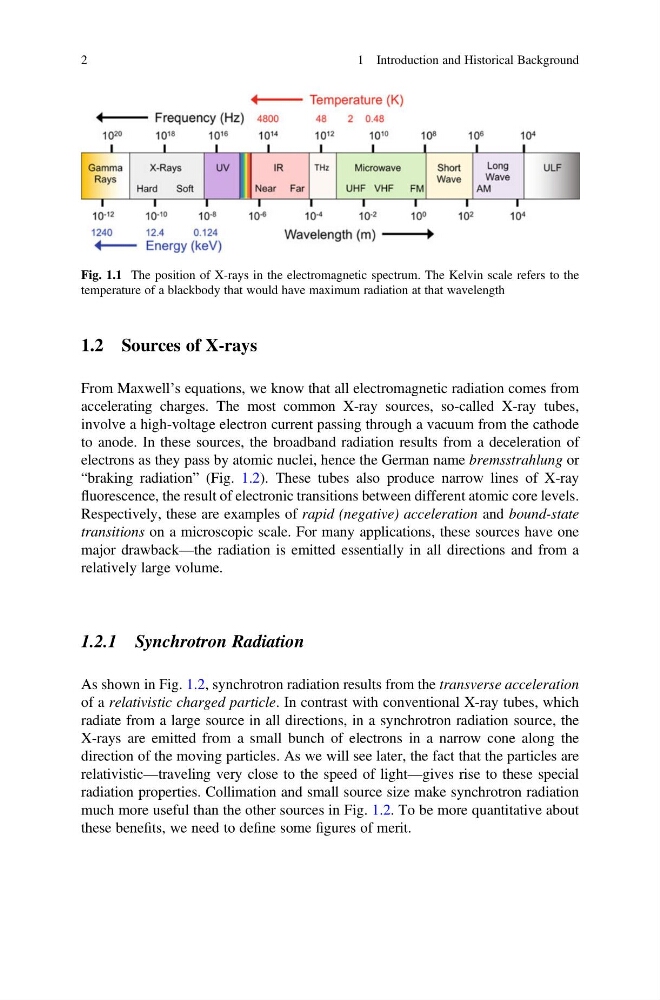
Fig. 1.1 The position of X-rays in the electromagnetic spectrum. The Kelvin scale refers to the
temperature of a blackbody that would have maximum radiation at that wavelength
2
1 Introduction and Historical Background
From Maxwell’s equations, we know that all electromagnetic radiation comes from
accelerating charges. The most common X-ray sources, so-called X-ray tubes,
involve a high-voltage electron current passing through a vacuum from the cathode
to anode. In these sources, the broadband radiation results from a deceleration of
electrons as they pass by atomic nuclei, hence the German name bremsstrahlung or
“braking radiation” (Fig. 1.2). These tubes also produce narrow lines of X-ray
fluorescence, the result of electronic transitions between different atomic core levels.
Respectively, these are examples of rapid (negative) acceleration and bound-state
transitions on a microscopic scale. For many applications, these sources have one
major drawback—the radiation is emitted essentially in all directions and from a
relatively large volume.
1.2.1 Synchrotron Radiation
As shown in Fig. 1.2, synchrotron radiation results from the transverse acceleration
of a relativistic charged particle. In contrast with conventional X-ray tubes, which
radiate from a large source in all directions, in a synchrotron radiation source, the
X-rays are emitted from a small bunch of electrons in a narrow cone along the
direction of the moving particles. As we will see later, the fact that the particles are
relativistic—traveling very close to the speed of light—gives rise to these special
radiation properties. Collimation and small source size make synchrotron radiation
much more useful than the other sources in Fig. 1.2. To be more quantitative about
these benefits, we need to define some figures of merit.
Fig. 1.1 The position of X-rays in the electromagnetic spectrum. The Kelvin scale refers to the
temperature of a blackbody that would have maximum radiation at that wavelength
2
1 Introduction and Historical Background