

101
7
compared to the endogenous ligand acetylcholine probably because it is not hydrolysed by
acetylcholinesterase (Fraser 1957).
The muscarinic acetylcholine receptors are also targeted by plant-derived secondary
metabolites (. Fig. 7.1). The best known of those is atropine, a tropane alkaloid found in
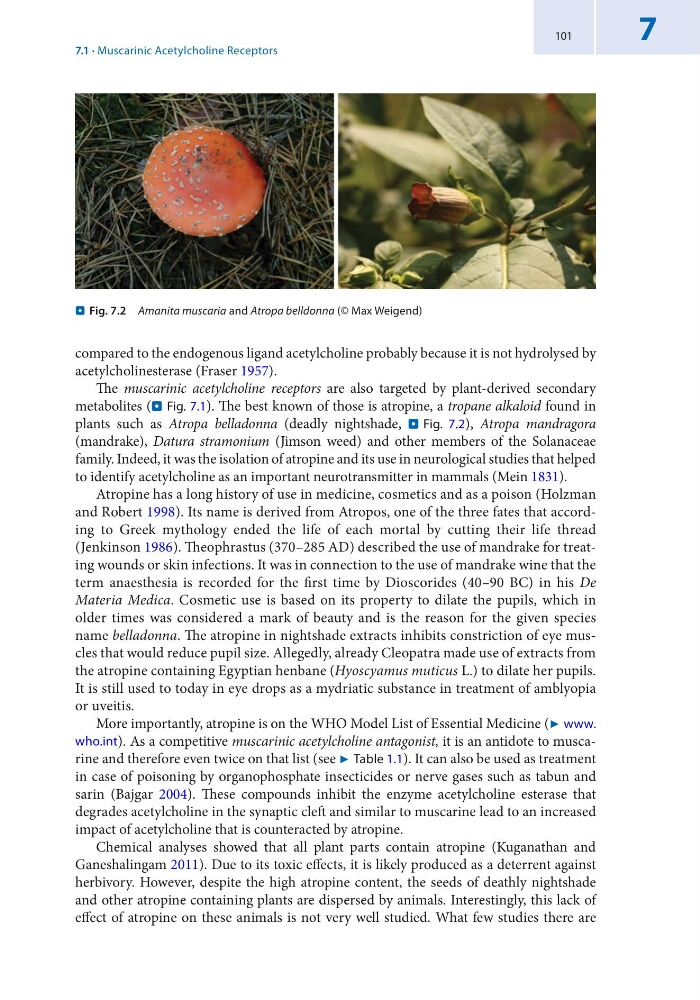
plants such as Atropa belladonna (deadly nightshade, . Fig. 7.2), Atropa mandragora
(mandrake), Datura stramonium (Jimson weed) and other members of the Solanaceae
family. Indeed, it was the isolation of atropine and its use in neurological studies that helped
to identify acetylcholine as an important neurotransmitter in mammals (Mein 1831).
Atropine has a long history of use in medicine, cosmetics and as a poison (Holzman
and Robert 1998). Its name is derived from Atropos, one of the three fates that according to Greek mythology ended the life of each mortal by cutting their life thread
(Jenkinson 1986). Theophrastus (370–285 AD) described the use of mandrake for treating wounds or skin infections. It was in connection to the use of mandrake wine that the
term anaesthesia is recorded for the first time by Dioscorides (40–90 BC) in his De
Materia Medica. Cosmetic use is based on its property to dilate the pupils, which in
older times was considered a mark of beauty and is the reason for the given species
name belladonna. The atropine in nightshade extracts inhibits constriction of eye muscles that would reduce pupil size. Allegedly, already Cleopatra made use of extracts from
the atropine containing Egyptian henbane (Hyoscyamus muticus L.) to dilate her pupils.
It is still used to today in eye drops as a mydriatic substance in treatment of amblyopia
or uveitis.
More importantly, atropine is on the WHO Model List of Essential Medicine (7 www.
who. int). As a competitive muscarinic acetylcholine antagonist, it is an antidote to muscarine and therefore even twice on that list (see 7 Table 1.1). It can also be used as treatment
in case of poisoning by organophosphate insecticides or nerve gases such as tabun and
sarin (Bajgar 2004). These compounds inhibit the enzyme acetylcholine esterase that
degrades acetylcholine in the synaptic cleft and similar to muscarine lead to an increased
impact of acetylcholine that is counteracted by atropine.
Chemical analyses showed that all plant parts contain atropine (Kuganathan and
Ganeshalingam 2011). Due to its toxic effects, it is likely produced as a deterrent against
herbivory. However, despite the high atropine content, the seeds of deathly nightshade
and other atropine containing plants are dispersed by animals. Interestingly, this lack of
effect of atropine on these animals is not very well studied. What few studies there are
. Fig. 7.2 Amanita muscaria and Atropa belldonna (© Max Weigend)
7.1 · Muscarinic Acetylcholine Receptors
7
compared to the endogenous ligand acetylcholine probably because it is not hydrolysed by
acetylcholinesterase (Fraser 1957).
The muscarinic acetylcholine receptors are also targeted by plant-derived secondary
metabolites (. Fig. 7.1). The best known of those is atropine, a tropane alkaloid found in
plants such as Atropa belladonna (deadly nightshade, . Fig. 7.2), Atropa mandragora
(mandrake), Datura stramonium (Jimson weed) and other members of the Solanaceae
family. Indeed, it was the isolation of atropine and its use in neurological studies that helped
to identify acetylcholine as an important neurotransmitter in mammals (Mein 1831).
Atropine has a long history of use in medicine, cosmetics and as a poison (Holzman
and Robert 1998). Its name is derived from Atropos, one of the three fates that according to Greek mythology ended the life of each mortal by cutting their life thread
(Jenkinson 1986). Theophrastus (370–285 AD) described the use of mandrake for treating wounds or skin infections. It was in connection to the use of mandrake wine that the
term anaesthesia is recorded for the first time by Dioscorides (40–90 BC) in his De
Materia Medica. Cosmetic use is based on its property to dilate the pupils, which in
older times was considered a mark of beauty and is the reason for the given species
name belladonna. The atropine in nightshade extracts inhibits constriction of eye muscles that would reduce pupil size. Allegedly, already Cleopatra made use of extracts from
the atropine containing Egyptian henbane (Hyoscyamus muticus L.) to dilate her pupils.
It is still used to today in eye drops as a mydriatic substance in treatment of amblyopia
or uveitis.
More importantly, atropine is on the WHO Model List of Essential Medicine (7 www.
who. int). As a competitive muscarinic acetylcholine antagonist, it is an antidote to muscarine and therefore even twice on that list (see 7 Table 1.1). It can also be used as treatment
in case of poisoning by organophosphate insecticides or nerve gases such as tabun and
sarin (Bajgar 2004). These compounds inhibit the enzyme acetylcholine esterase that
degrades acetylcholine in the synaptic cleft and similar to muscarine lead to an increased
impact of acetylcholine that is counteracted by atropine.
Chemical analyses showed that all plant parts contain atropine (Kuganathan and
Ganeshalingam 2011). Due to its toxic effects, it is likely produced as a deterrent against
herbivory. However, despite the high atropine content, the seeds of deathly nightshade
and other atropine containing plants are dispersed by animals. Interestingly, this lack of
effect of atropine on these animals is not very well studied. What few studies there are
. Fig. 7.2 Amanita muscaria and Atropa belldonna (© Max Weigend)
7.1 · Muscarinic Acetylcholine Receptors