

biologists and the formalism and methods of investigation of physical chemists, to the great benefit of
each party: biologists have introduced physical rationality in their use of detergents, and physical
chemists and chemists have introduced biological objects in their experimental systems and mode of
thinking. A nod is due to Charles Tanford, on the one hand, and to Kai Simons and Ari Helenius, on the
other, for the key roles they played in this evolution (Tanford 1972, 1980; Helenius and Simons 1975;
Tanford and Reynolds 1976; Helenius et al. 1979). Since then, a large number of reviews have been
published on the use of detergents in membrane biology, only a few of which can be cited here (see
e.g. Neugebauer 1990; Zulauf 1991; le Maire et al. 2000; Bowie 2001; Garavito and Ferguson-Miller
2001; Chevalier 2002; Gohon and Popot 2003; Seddon et al. 2004; Wiener 2004; Privé 2007; Arnold
and Linke 2008; Duquesne and Sturgis 2010; Tate 2010; Zhang et al. 2011; Arachea et al. 2012;
Lichtenberg et al. 2013; Otzen 2015; Sadaf et al. 2015; Champeil et al. 2016; Orwick-Rydmark et al.
2016). The following somewhat schematic presentation draws on this literature, as well as on the
personal experience gathered over some 40 years of biochemical and biophysical work on a range of
widely different membrane proteins, each of them raising its own specific problems.
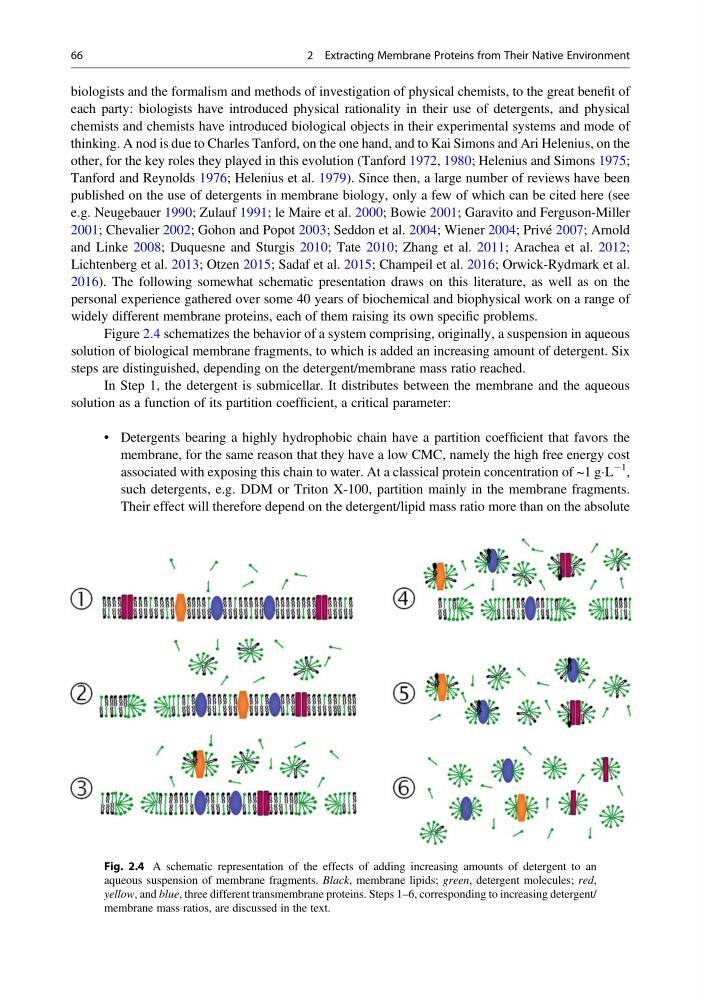
Figure 2.4 schematizes the behavior of a system comprising, originally, a suspension in aqueous
solution of biological membrane fragments, to which is added an increasing amount of detergent. Six
steps are distinguished, depending on the detergent/membrane mass ratio reached.
In Step 1, the detergent is submicellar. It distributes between the membrane and the aqueous
solution as a function of its partition coefficient, a critical parameter:
• Detergents bearing a highly hydrophobic chain have a partition coefficient that favors the
membrane, for the same reason that they have a low CMC, namely the high free energy cost
associated with exposing this chain to water. At a classical protein concentration of ~1 gÁL
À1 ,
such detergents, e.g. DDM or Triton X-100, partition mainly in the membrane fragments.
Their effect will therefore depend on the detergent/lipid mass ratio more than on the absolute
Fig. 2.4 A schematic representation of the effects of adding increasing amounts of detergent to an
aqueous suspension of membrane fragments. Black, membrane lipids; green, detergent molecules; red,
yellow, and blue, three different transmembrane proteins. Steps 1–6, corresponding to increasing detergent/
membrane mass ratios, are discussed in the text.
66
2 Extracting Membrane Proteins from Their Native Environment
each party: biologists have introduced physical rationality in their use of detergents, and physical
chemists and chemists have introduced biological objects in their experimental systems and mode of
thinking. A nod is due to Charles Tanford, on the one hand, and to Kai Simons and Ari Helenius, on the
other, for the key roles they played in this evolution (Tanford 1972, 1980; Helenius and Simons 1975;
Tanford and Reynolds 1976; Helenius et al. 1979). Since then, a large number of reviews have been
published on the use of detergents in membrane biology, only a few of which can be cited here (see
e.g. Neugebauer 1990; Zulauf 1991; le Maire et al. 2000; Bowie 2001; Garavito and Ferguson-Miller
2001; Chevalier 2002; Gohon and Popot 2003; Seddon et al. 2004; Wiener 2004; Privé 2007; Arnold
and Linke 2008; Duquesne and Sturgis 2010; Tate 2010; Zhang et al. 2011; Arachea et al. 2012;
Lichtenberg et al. 2013; Otzen 2015; Sadaf et al. 2015; Champeil et al. 2016; Orwick-Rydmark et al.
2016). The following somewhat schematic presentation draws on this literature, as well as on the
personal experience gathered over some 40 years of biochemical and biophysical work on a range of
widely different membrane proteins, each of them raising its own specific problems.
Figure 2.4 schematizes the behavior of a system comprising, originally, a suspension in aqueous
solution of biological membrane fragments, to which is added an increasing amount of detergent. Six
steps are distinguished, depending on the detergent/membrane mass ratio reached.
In Step 1, the detergent is submicellar. It distributes between the membrane and the aqueous
solution as a function of its partition coefficient, a critical parameter:
• Detergents bearing a highly hydrophobic chain have a partition coefficient that favors the
membrane, for the same reason that they have a low CMC, namely the high free energy cost
associated with exposing this chain to water. At a classical protein concentration of ~1 gÁL
À1 ,
such detergents, e.g. DDM or Triton X-100, partition mainly in the membrane fragments.
Their effect will therefore depend on the detergent/lipid mass ratio more than on the absolute
Fig. 2.4 A schematic representation of the effects of adding increasing amounts of detergent to an
aqueous suspension of membrane fragments. Black, membrane lipids; green, detergent molecules; red,
yellow, and blue, three different transmembrane proteins. Steps 1–6, corresponding to increasing detergent/
membrane mass ratios, are discussed in the text.
66
2 Extracting Membrane Proteins from Their Native Environment