

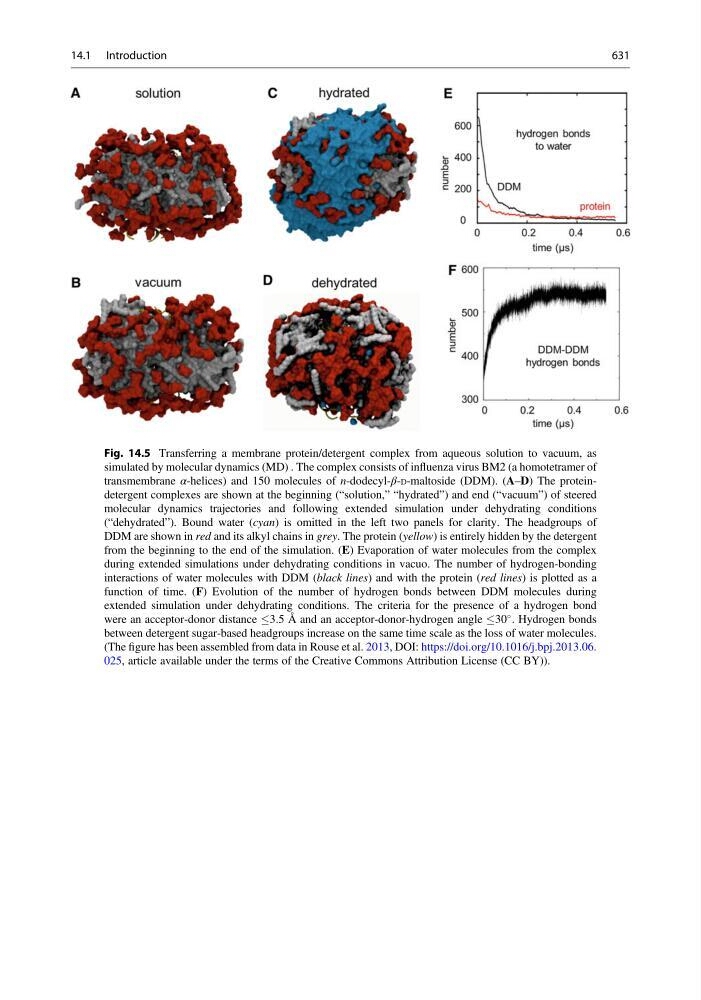
Fig. 14.5 Transferring a membrane protein/detergent complex from aqueous solution to vacuum, as
simulated by molecular dynamics (MD) . The complex consists of influenza virus BM2 (a homotetramer of
transmembrane α-helices) and 150 molecules of n-dodecyl-β-D-maltoside (DDM). (A–D) The proteindetergent complexes are shown at the beginning (“solution,” “hydrated”) and end (“vacuum”) of steered
molecular dynamics trajectories and following extended simulation under dehydrating conditions
(“dehydrated”). Bound water (cyan) is omitted in the left two panels for clarity. The headgroups of
DDM are shown in red and its alkyl chains in grey. The protein (yellow) is entirely hidden by the detergent
from the beginning to the end of the simulation. (E) Evaporation of water molecules from the complex
during extended simulations under dehydrating conditions in vacuo. The number of hydrogen-bonding
interactions of water molecules with DDM (black lines) and with the protein (red lines) is plotted as a
function of time. (F) Evolution of the number of hydrogen bonds between DDM molecules during
extended simulation under dehydrating conditions. The criteria for the presence of a hydrogen bond
were an acceptor-donor distance 3.5 Å and an acceptor-donor-hydrogen angle 30
. Hydrogen bonds
between detergent sugar-based headgroups increase on the same time scale as the loss of water molecules.
(The figure has been assembled from data in Rouse et al. 2013, DOI: https://doi.org/10.1016/j.bpj.2013.06.
025, article available under the terms of the Creative Commons Attribution License (CC BY)).
14.1 Introduction
631