

10.3.3.3 Preliminary Studies of Chlamydia trachomatis MOMP and Two Melanocortin
Receptors
Attempts have been reported in Study 10.8 (Table 10.1; Elter et al. 2014) to fold in A8-35 two other
GPCRs, melanocortin receptors 2 and 4. The best folding yields were obtained by precipitating SDS in
the presence of A8-35, after the denatured His-tagged receptors had been immobilized onto Ni/NTAcarrying beads (cf. Chap. 6). NMR studies, however, were hampered by difficulties upscaling the
procedure (Elter et al. 2014).
C. trachomatis is a major bacterial pathogen throughout the world, responsible for many
sequelae including infertility and trachoma (see Chap. 15, § 15.2.1). Although antibiotherapy is
effective when the infection is detected early, a majority of the cases are asymptomatic, which requires
the development of preventive measures. Efforts have focused on the production of a vaccine using
C. trachomatis major outer membrane protein (MOMP) as an immunogen. MOMP is purified in its
native trimeric form (nMOMP) using the zwitterionic detergent Z3-14, but its stability in detergent
solutions is limited. Preservation of protein structure and optimization of exposure of the most
effective antigenic regions can avoid vaccination with misfolded, poorly protective protein. It has
been shown that A8-35 preserves nMOMP secondary structure, that it stabilizes it, and that nMOMP/
APol vaccine formulations elicit better protection against C. trachomatis than formulations using
either recombinant MOMP or nMOMP solubilized in Z3-14 (Tifrea et al. 2011, 2014; see Chap. 15). In
Study 10.11 (Table 10.1; Feinstein et al. 2014),
1 H15 N HSQC NMR spectra of
15 N-labeled nMOMP
were recorded in either DPC or A8-35. The extramembrane loops of MOMP, whose conformation is
probably critical in eliciting a protective vaccinal response, are detectable in APols, but not in
detergent, and the protein can be studied at higher temperature (50
C; see Chap. 15, Fig. 15.5).
It is worth noting that the study of Kp-tOmpA described in § 10.3.1.2 (Study 10.12 in
Table 10.1; Planchard et al. 2014) can lead to the same application, inasmuch as Kp-tOmpA is a
potential immunogen for vaccination against K. pneumoniae (Chap. 15).
10.4 Challenges and Prospects
At the time of writing this chapter, it is somewhat difficult to anticipate which of the many media in
which MPs can be made water-soluble will turn out to be best adapted to which type of NMR studies.
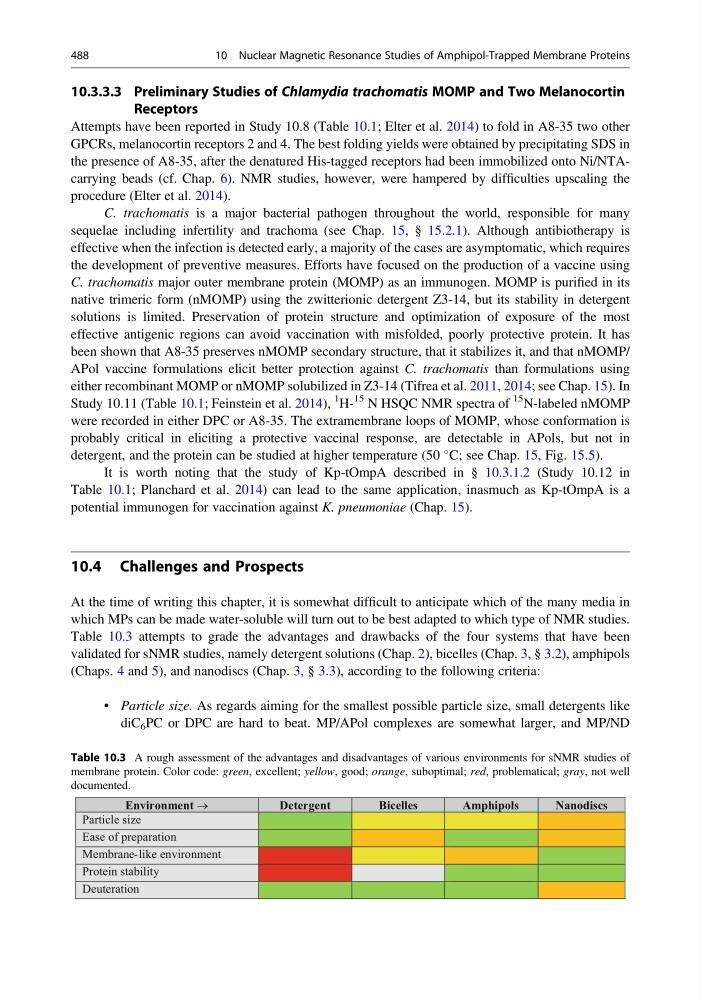
Table 10.3 attempts to grade the advantages and drawbacks of the four systems that have been
validated for sNMR studies, namely detergent solutions (Chap. 2), bicelles (Chap. 3, § 3.2), amphipols
(Chaps. 4 and 5), and nanodiscs (Chap. 3, § 3.3), according to the following criteria:
• Particle size. As regards aiming for the smallest possible particle size, small detergents like
diC 6 PC or DPC are hard to beat. MP/APol complexes are somewhat larger, and MP/ND
Table 10.3 A rough assessment of the advantages and disadvantages of various environments for sNMR studies of
membrane protein. Color code: green, excellent; yellow, good; orange, suboptimal; red, problematical; gray, not well
documented.
Environment ®
Detergent
Bicelles
Amphipols
Nanodiscs
Particle size
Ease of preparation
Membrane-like environment
Protein stability
Deuteration
488
10 Nuclear Magnetic Resonance Studies of Amphipol-Trapped Membrane Proteins
Receptors
Attempts have been reported in Study 10.8 (Table 10.1; Elter et al. 2014) to fold in A8-35 two other
GPCRs, melanocortin receptors 2 and 4. The best folding yields were obtained by precipitating SDS in
the presence of A8-35, after the denatured His-tagged receptors had been immobilized onto Ni/NTAcarrying beads (cf. Chap. 6). NMR studies, however, were hampered by difficulties upscaling the
procedure (Elter et al. 2014).
C. trachomatis is a major bacterial pathogen throughout the world, responsible for many
sequelae including infertility and trachoma (see Chap. 15, § 15.2.1). Although antibiotherapy is
effective when the infection is detected early, a majority of the cases are asymptomatic, which requires
the development of preventive measures. Efforts have focused on the production of a vaccine using
C. trachomatis major outer membrane protein (MOMP) as an immunogen. MOMP is purified in its
native trimeric form (nMOMP) using the zwitterionic detergent Z3-14, but its stability in detergent
solutions is limited. Preservation of protein structure and optimization of exposure of the most
effective antigenic regions can avoid vaccination with misfolded, poorly protective protein. It has
been shown that A8-35 preserves nMOMP secondary structure, that it stabilizes it, and that nMOMP/
APol vaccine formulations elicit better protection against C. trachomatis than formulations using
either recombinant MOMP or nMOMP solubilized in Z3-14 (Tifrea et al. 2011, 2014; see Chap. 15). In
Study 10.11 (Table 10.1; Feinstein et al. 2014),
1 H15 N HSQC NMR spectra of
15 N-labeled nMOMP
were recorded in either DPC or A8-35. The extramembrane loops of MOMP, whose conformation is
probably critical in eliciting a protective vaccinal response, are detectable in APols, but not in
detergent, and the protein can be studied at higher temperature (50
C; see Chap. 15, Fig. 15.5).
It is worth noting that the study of Kp-tOmpA described in § 10.3.1.2 (Study 10.12 in
Table 10.1; Planchard et al. 2014) can lead to the same application, inasmuch as Kp-tOmpA is a
potential immunogen for vaccination against K. pneumoniae (Chap. 15).
10.4 Challenges and Prospects
At the time of writing this chapter, it is somewhat difficult to anticipate which of the many media in
which MPs can be made water-soluble will turn out to be best adapted to which type of NMR studies.
Table 10.3 attempts to grade the advantages and drawbacks of the four systems that have been
validated for sNMR studies, namely detergent solutions (Chap. 2), bicelles (Chap. 3, § 3.2), amphipols
(Chaps. 4 and 5), and nanodiscs (Chap. 3, § 3.3), according to the following criteria:
• Particle size. As regards aiming for the smallest possible particle size, small detergents like
diC 6 PC or DPC are hard to beat. MP/APol complexes are somewhat larger, and MP/ND
Table 10.3 A rough assessment of the advantages and disadvantages of various environments for sNMR studies of
membrane protein. Color code: green, excellent; yellow, good; orange, suboptimal; red, problematical; gray, not well
documented.
Environment ®
Detergent
Bicelles
Amphipols
Nanodiscs
Particle size
Ease of preparation
Membrane-like environment
Protein stability
Deuteration
488
10 Nuclear Magnetic Resonance Studies of Amphipol-Trapped Membrane Proteins