

and/or compromising its stability (see e.g. Poget and Girvin 2007; Zhou and Cross 2013; Zoonens
et al. 2013).
APols being inherently polydisperse molecules (see Chap. 4), a recurrent concern has been that
they could form with MPs populations of complexes with a wide distribution of sizes or NMR
chemical shifts due to variable electronic environments. Indeed, complexes formed between a small
MP, tOmpA, and A8-35 do migrate, upon size exclusion chromatography (SEC), as a broader band
than tOmpA/octyltetraoxyethylene (tOmpA/C 8 E 4 ) complexes (see Chap. 5). The origin of this apparent size dispersity deserves a discussion.
There are two sources of heterogeneity in most APol preparations, the length of the polymer and
the random distribution of the hydrophilic and hydrophobic moieties (Chap. 4). Whether the size
distribution is by itself a source of particle size polydispersity is uncertain, given that a version of
A8-35 with restricted length polydispersity showed essentially the same behavior in SEC as the
standard polydisperse mixtures (Fabrice Giusti and Christophe Tribet, unpublished results quoted in
Giusti et al. 2014). It is possible, however, that the mere size of APol molecules favors a degree of
heterogeneity. A8-35 molecules (on average ~4.3 kDa; Giusti et al. 2014; see Chap. 4, § 4.2.1) are
~10Â bigger than detergent ones (respectively, 482, 351, and 511 Da for diC 6 PC, DPC, and
dodecylmaltoside (DDM)), and, therefore, a MP binds a lesser number of APol molecules than of
detergent ones (Chap. 5). This results in a less efficient thermodynamic pressure toward optimization
of the bulk of the APol vs. the detergent belt, which can generate a degree of size dispersity without
necessarily affecting the chemical environment of the protein. The heterogeneity in alkyl chain
distribution probably plays a role, in the sense that a given APol particle or MP/APol complex may
recruit a smaller or larger mass of APol depending on the number and distribution of the chains carried
by each molecule. This is suggested by the observation that homopolymeric non-ionic APols, which
are also polydisperse in length but homogeneous as regards alkyl chain distribution, migrate upon size
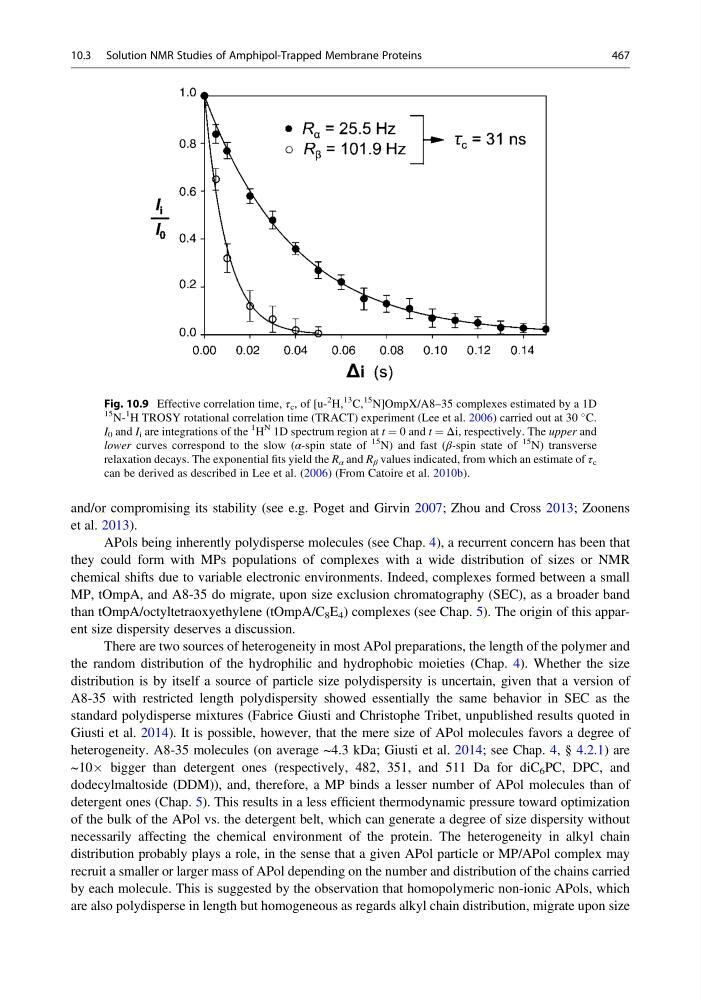
Fig. 10.9 Effective correlation time, τ c , of [u2 H,
13 C,
15 N]OmpX/A8–35 complexes estimated by a 1D
15 N1 H TROSY rotational correlation time (TRACT) experiment (Lee et al. 2006) carried out at 30
C.
I 0 and I i are integrations of the
1 H
N 1D spectrum region at t ¼ 0 and t ¼ Δi, respectively. The upper and
lower curves correspond to the slow (α-spin state of
15 N) and fast (β-spin state of
15 N) transverse
relaxation decays. The exponential fits yield the R α and R β values indicated, from which an estimate of τ c
can be derived as described in Lee et al. (2006) (From Catoire et al. 2010b).
10.3 Solution NMR Studies of Amphipol-Trapped Membrane Proteins
467
et al. 2013).
APols being inherently polydisperse molecules (see Chap. 4), a recurrent concern has been that
they could form with MPs populations of complexes with a wide distribution of sizes or NMR
chemical shifts due to variable electronic environments. Indeed, complexes formed between a small
MP, tOmpA, and A8-35 do migrate, upon size exclusion chromatography (SEC), as a broader band
than tOmpA/octyltetraoxyethylene (tOmpA/C 8 E 4 ) complexes (see Chap. 5). The origin of this apparent size dispersity deserves a discussion.
There are two sources of heterogeneity in most APol preparations, the length of the polymer and
the random distribution of the hydrophilic and hydrophobic moieties (Chap. 4). Whether the size
distribution is by itself a source of particle size polydispersity is uncertain, given that a version of
A8-35 with restricted length polydispersity showed essentially the same behavior in SEC as the
standard polydisperse mixtures (Fabrice Giusti and Christophe Tribet, unpublished results quoted in
Giusti et al. 2014). It is possible, however, that the mere size of APol molecules favors a degree of
heterogeneity. A8-35 molecules (on average ~4.3 kDa; Giusti et al. 2014; see Chap. 4, § 4.2.1) are
~10Â bigger than detergent ones (respectively, 482, 351, and 511 Da for diC 6 PC, DPC, and
dodecylmaltoside (DDM)), and, therefore, a MP binds a lesser number of APol molecules than of
detergent ones (Chap. 5). This results in a less efficient thermodynamic pressure toward optimization
of the bulk of the APol vs. the detergent belt, which can generate a degree of size dispersity without
necessarily affecting the chemical environment of the protein. The heterogeneity in alkyl chain
distribution probably plays a role, in the sense that a given APol particle or MP/APol complex may
recruit a smaller or larger mass of APol depending on the number and distribution of the chains carried
by each molecule. This is suggested by the observation that homopolymeric non-ionic APols, which
are also polydisperse in length but homogeneous as regards alkyl chain distribution, migrate upon size
Fig. 10.9 Effective correlation time, τ c , of [u2 H,
13 C,
15 N]OmpX/A8–35 complexes estimated by a 1D
15 N1 H TROSY rotational correlation time (TRACT) experiment (Lee et al. 2006) carried out at 30
C.
I 0 and I i are integrations of the
1 H
N 1D spectrum region at t ¼ 0 and t ¼ Δi, respectively. The upper and
lower curves correspond to the slow (α-spin state of
15 N) and fast (β-spin state of
15 N) transverse
relaxation decays. The exponential fits yield the R α and R β values indicated, from which an estimate of τ c
can be derived as described in Lee et al. (2006) (From Catoire et al. 2010b).
10.3 Solution NMR Studies of Amphipol-Trapped Membrane Proteins
467