

at 26.7 kDa (Gautier et al. 2010). Oligomeric MPs, in which the number of distinct nuclei is divided by
the number of protomers, reach 39.3 kDa for the diacylglycerol kinase (DAGK) trimer, i.e. 13.1 kDa per
protomer (Van Horn et al. 2009), and 71.1 kDa for the KcsA tetramer, i.e. 18.8 kDa per protomer
(Yu et al. 2005). All but one of these proteins have been expressed in E. coli, the last one by cell-free
synthesis. All structures have been obtained in detergent solution, most often DPC, diC 6 PC or diC 7 PC.
Experimental temperatures range from 30 to 50
C. To this list, one may want to add VDAC-1, a 30.8kDa, 19-strand eukaryotic β-barrel protein from the outer mitochondrial membrane. The protein was
expressed in E. coli, folded in vitro, and spectra recorded in the detergent LDAO at 30
C (Hiller et al.
2008). The use of NDs for sNMR studies, which is developing rapidly, is reviewed in Chap. 3 (§ 3.3.5,
Table 3.1).
ä
Fig. 10.3 (continued) (40
C), (B) 1-oleoyl-2-hydroxy-sn-glycero-3-[phosphor-rac-(1-glycerol)]
(40
C), (C) 1-palmitoyl-2-hydroxy-sn-glycero-3-[phosphor-rac-(1-glycerol)] (40
C), (D) lysomyristoylphosphatidylcholine (50
C), (E) diC 7 PC (40
C) and [u2
H,
15
N]pSRII, (F) same at 50
C. All spectra
were recorded at 800 MHz, and detergent concentrations were individually optimized for best protein
signal intensity (pSRII 0.4 mM, experiment times 3 h) (From Nietlispach and Gautier 2011, # 2011
Elsevier Ltd. All rights reserved).
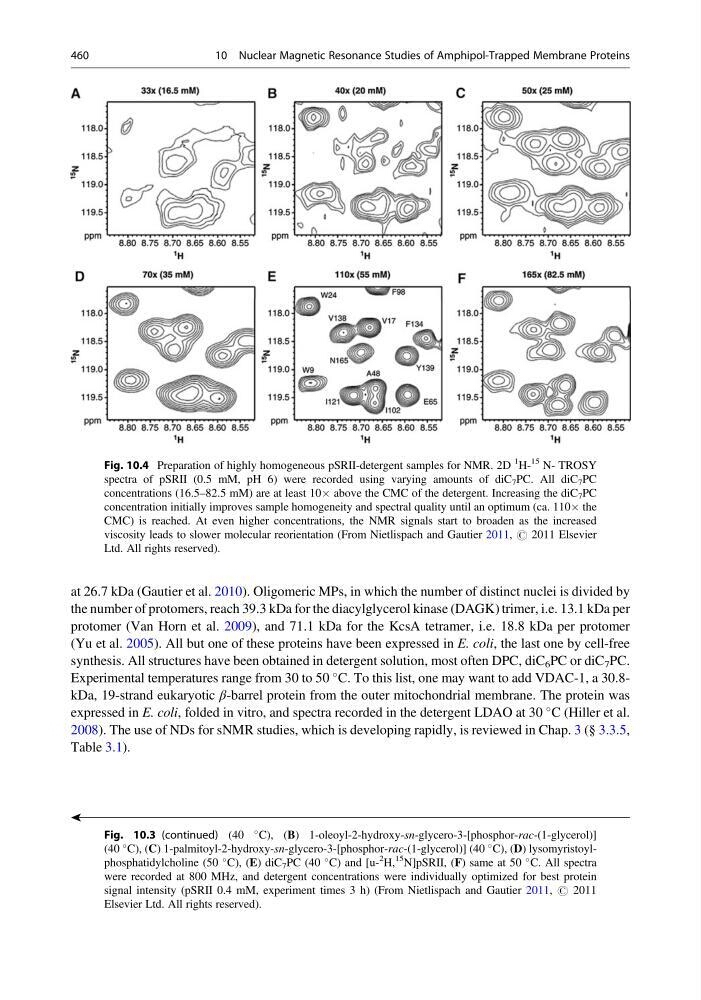
Fig. 10.4 Preparation of highly homogeneous pSRII-detergent samples for NMR. 2D
1
H15 N- TROSY
spectra of pSRII (0.5 mM, pH 6) were recorded using varying amounts of diC 7 PC. All diC 7 PC
concentrations (16.5–82.5 mM) are at least 10Â above the CMC of the detergent. Increasing the diC 7 PC
concentration initially improves sample homogeneity and spectral quality until an optimum (ca. 110Â the
CMC) is reached. At even higher concentrations, the NMR signals start to broaden as the increased
viscosity leads to slower molecular reorientation (From Nietlispach and Gautier 2011, # 2011 Elsevier
Ltd. All rights reserved).
460
10 Nuclear Magnetic Resonance Studies of Amphipol-Trapped Membrane Proteins
the number of protomers, reach 39.3 kDa for the diacylglycerol kinase (DAGK) trimer, i.e. 13.1 kDa per
protomer (Van Horn et al. 2009), and 71.1 kDa for the KcsA tetramer, i.e. 18.8 kDa per protomer
(Yu et al. 2005). All but one of these proteins have been expressed in E. coli, the last one by cell-free
synthesis. All structures have been obtained in detergent solution, most often DPC, diC 6 PC or diC 7 PC.
Experimental temperatures range from 30 to 50
C. To this list, one may want to add VDAC-1, a 30.8kDa, 19-strand eukaryotic β-barrel protein from the outer mitochondrial membrane. The protein was
expressed in E. coli, folded in vitro, and spectra recorded in the detergent LDAO at 30
C (Hiller et al.
2008). The use of NDs for sNMR studies, which is developing rapidly, is reviewed in Chap. 3 (§ 3.3.5,
Table 3.1).
ä
Fig. 10.3 (continued) (40
C), (B) 1-oleoyl-2-hydroxy-sn-glycero-3-[phosphor-rac-(1-glycerol)]
(40
C), (C) 1-palmitoyl-2-hydroxy-sn-glycero-3-[phosphor-rac-(1-glycerol)] (40
C), (D) lysomyristoylphosphatidylcholine (50
C), (E) diC 7 PC (40
C) and [u2
H,
15
N]pSRII, (F) same at 50
C. All spectra
were recorded at 800 MHz, and detergent concentrations were individually optimized for best protein
signal intensity (pSRII 0.4 mM, experiment times 3 h) (From Nietlispach and Gautier 2011, # 2011
Elsevier Ltd. All rights reserved).
Fig. 10.4 Preparation of highly homogeneous pSRII-detergent samples for NMR. 2D
1
H15 N- TROSY
spectra of pSRII (0.5 mM, pH 6) were recorded using varying amounts of diC 7 PC. All diC 7 PC
concentrations (16.5–82.5 mM) are at least 10Â above the CMC of the detergent. Increasing the diC 7 PC
concentration initially improves sample homogeneity and spectral quality until an optimum (ca. 110Â the
CMC) is reached. At even higher concentrations, the NMR signals start to broaden as the increased
viscosity leads to slower molecular reorientation (From Nietlispach and Gautier 2011, # 2011 Elsevier
Ltd. All rights reserved).
460
10 Nuclear Magnetic Resonance Studies of Amphipol-Trapped Membrane Proteins