

2012; Otzen and Andersen 2013; Popot 2014; Kleinschmidt 2015), making it unnecessary, for most
experiments, to turn to much more costly and technically more demanding CFE. In addition, the use of
CFE has been strongly boosted by the demand of biological and pharmaceutical research for properly
folded eukaryotic membrane receptors and channels, most of which feature α-helical transmembrane
(TM) domains.
Experience has shown that, in most cases, only extremely mild surfactants – such as, as far as
detergents are concerned, digitonin or detergents of the Brij family – allow MPs expressed by CFE to
fold properly in good yield (see e.g. Hein et al. 2014 and references therein). Stronger surfactants may
inhibit MP production by interfering either with the translation machinery or with protein folding.
In most cases, the surfactant comprises detergent or mixed lipid/detergent micelles, lipid vesicles,
bicelles, nanodiscs, native membrane fragments, etc. (for some examples of these various approaches,
see Kaiser et al. 2008; Katzen et al. 2008; Wuu and Swartz 2008; Cappuccio et al. 2009; Kuruma et al.
2010; Reckel et al. 2011; Wada et al. 2011; Abdine et al. 2012; Isaksson et al. 2012; Lyukmanova et al.
2012; Uhlemann et al. 2012; Periasamy et al. 2013; Proverbio et al. 2013; Shenkarev et al. 2013;
Matsubayashi et al. 2014; Kuruma and Ueda 2015; Niwa et al. 2015; Henrich et al. 2017; and
references therein). Less classical surfactants, known or expected to be milder than detergents, have
been occasionally resorted to, including fluorinated surfactants (Park et al. 2007, 2011; Breyton et al.
2009; Blesneac et al. 2012), amphipathic peptides (Corin et al. 2011; Wang et al. 2011), and, as will be
described in the next section, amphipathic polymers (for an overview of folding media, see Popot
(2014)).
7.3
Cell-Free Expression of Membrane Proteins Using Amphipols and Other
Amphipathic Polymers
Amphipathic polymers that have been tested for CFE of MPs include A8-35, sulfonated APols
(SAPols), glucosylated non-ionic APols (NAPols), NVoy, and styrene-maleic acid copolymers
(SMA) (Table 7.1; for earlier reviews, see Popot et al. 2011; Popot 2014; Zoonens and Popot 2014).
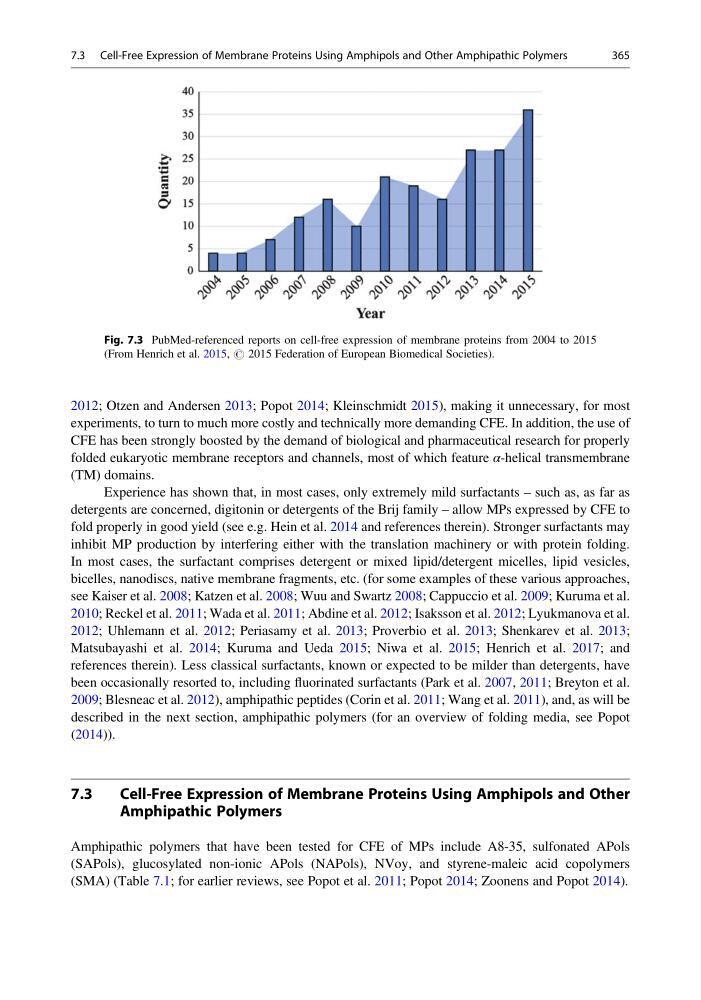
Fig. 7.3 PubMed-referenced reports on cell-free expression of membrane proteins from 2004 to 2015
(From Henrich et al. 2015, # 2015 Federation of European Biomedical Societies).
7.3 Cell-Free Expression of Membrane Proteins Using Amphipols and Other Amphipathic Polymers
365
experiments, to turn to much more costly and technically more demanding CFE. In addition, the use of
CFE has been strongly boosted by the demand of biological and pharmaceutical research for properly
folded eukaryotic membrane receptors and channels, most of which feature α-helical transmembrane
(TM) domains.
Experience has shown that, in most cases, only extremely mild surfactants – such as, as far as
detergents are concerned, digitonin or detergents of the Brij family – allow MPs expressed by CFE to
fold properly in good yield (see e.g. Hein et al. 2014 and references therein). Stronger surfactants may
inhibit MP production by interfering either with the translation machinery or with protein folding.
In most cases, the surfactant comprises detergent or mixed lipid/detergent micelles, lipid vesicles,
bicelles, nanodiscs, native membrane fragments, etc. (for some examples of these various approaches,
see Kaiser et al. 2008; Katzen et al. 2008; Wuu and Swartz 2008; Cappuccio et al. 2009; Kuruma et al.
2010; Reckel et al. 2011; Wada et al. 2011; Abdine et al. 2012; Isaksson et al. 2012; Lyukmanova et al.
2012; Uhlemann et al. 2012; Periasamy et al. 2013; Proverbio et al. 2013; Shenkarev et al. 2013;
Matsubayashi et al. 2014; Kuruma and Ueda 2015; Niwa et al. 2015; Henrich et al. 2017; and
references therein). Less classical surfactants, known or expected to be milder than detergents, have
been occasionally resorted to, including fluorinated surfactants (Park et al. 2007, 2011; Breyton et al.
2009; Blesneac et al. 2012), amphipathic peptides (Corin et al. 2011; Wang et al. 2011), and, as will be
described in the next section, amphipathic polymers (for an overview of folding media, see Popot
(2014)).
7.3
Cell-Free Expression of Membrane Proteins Using Amphipols and Other
Amphipathic Polymers
Amphipathic polymers that have been tested for CFE of MPs include A8-35, sulfonated APols
(SAPols), glucosylated non-ionic APols (NAPols), NVoy, and styrene-maleic acid copolymers
(SMA) (Table 7.1; for earlier reviews, see Popot et al. 2011; Popot 2014; Zoonens and Popot 2014).
Fig. 7.3 PubMed-referenced reports on cell-free expression of membrane proteins from 2004 to 2015
(From Henrich et al. 2015, # 2015 Federation of European Biomedical Societies).
7.3 Cell-Free Expression of Membrane Proteins Using Amphipols and Other Amphipathic Polymers
365