

SMA does not seem to have been used to trap lipid-free MPs. Rather, it has been exploited either
to solubilize lipids or to directly extract from lipid vesicles or natural membrane MPs associated to
lipids (Chap. 5). The resulting particles are referred to as SMALPs, styrene-maleic acid/lipid particles,
or Lipodisqs
® , a trade name. The major practical difference between SMA and classical APols like
A8-35 is indeed that SMA is able to directly extract MPs, without recourse to detergents, whereas
classical APols, with some possible exceptions, do not (see however Chap. 5, § 5.2.2.2). The
mechanism of formation of SMALPs is discussed in Scheidelaar et al. (2015), Vargas et al. (2015),
Zhang et al. (2015), Dörr et al. (2016), and Dominguez Pardo et al. (2017). Whether the complex SMA
forms with MPs and lipids resemble nanodiscs (NDs) or bicelles more than MP/lipid/APol complexes
(Dörr et al. 2016) is a debatable issue, which will be dealt with in Chap. 5, § 5.3.1.2.
DIBMA (¼ Sokalan CP9), an alternating copolymer of diisobutylene and maleic acid (hM w i %
15.3 kDa, hM n i % 8.4 kDa, Ð % 1.82), has been recently advocated as a superior alternative to SMA
(Oluwole et al. 2017). According to the data presented, DIBMA shows equal performance to SMA in
solubilizing phospholipids, stabilizes outer membrane phospholipase A (OmpLA) under a functional
form, and extracts proteins of various sizes directly from E. coli membranes (~70% of those extracted
by DDM). Unlike SMA, DIBMA has only a mild effect on lipid acyl-chain order, does not interfere
with optical spectroscopy in the far-UV range – it does not carry phenyl rings – and does not precipitate
in the presence of millimolar concentrations of divalent cations. No report is provided about the effect
of low pH. However, given the chemical structure of DIBMA, it can be expected to aggregate in acidic
buffers.
4.2.2.5 Hydrophobically Grafted Poly-g-Glutamic Acid (APG)
Poly-γ-glutamic acid (average molar mass ~10 kDa) was grafted to the level of ~41% of the
carboxylates with octylamine and to ~24% with glucosamine, ~35% of the carboxylates being left
free (Han et al. 2014). The resulting polymer (called APG, for amphipathic poly-γ-glutamic acid)
assembles into rather broadly distributed ~80-kDa particles, comprising ~4–5 molecules and ~150
octyl chains. BR denatured in SDS was refolded in APG, and a GPCR, the type A endothelin receptor
(ET A ), fused to a bacteriophage protein, was transferred to it from the detergent sarkosyl under a
functional form, as judged by its binding of endothelin 1, forming rather polydisperse, ~300-kDa
complexes. Upon mixing the complexes with liposomes, a fraction of the receptor associated with
them (Han et al. 2014). A variant of APG has been recently described in which octylamine (~25%),
glucosamine (~19%), and diethyl aminopropylamine (~25%) are coupled onto the carboxylic groups
of poly-γ-glutamic acid, leaving ~31% of them free (Han et al. 2017). With only two papers published
to date, it is somewhat early to weigh the pros and cons of this new system, but the first results appear
promising, at least for APG (see Table 4.4).
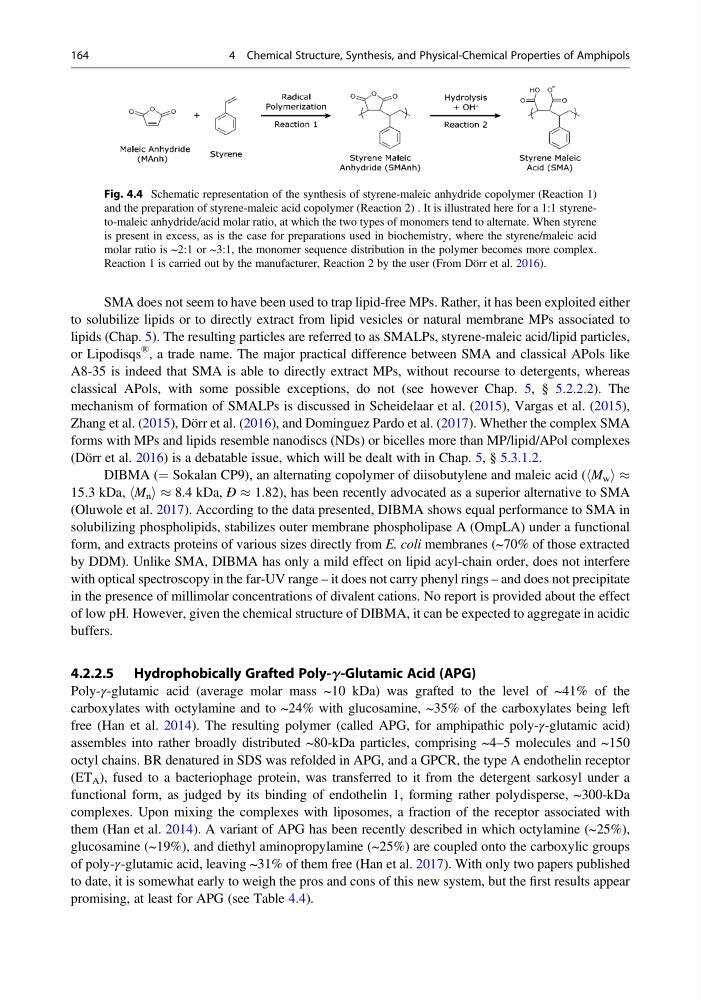
Fig. 4.4 Schematic representation of the synthesis of styrene-maleic anhydride copolymer (Reaction 1)
and the preparation of styrene-maleic acid copolymer (Reaction 2) . It is illustrated here for a 1:1 styreneto-maleic anhydride/acid molar ratio, at which the two types of monomers tend to alternate. When styrene
is present in excess, as is the case for preparations used in biochemistry, where the styrene/maleic acid
molar ratio is ~2:1 or ~3:1, the monomer sequence distribution in the polymer becomes more complex.
Reaction 1 is carried out by the manufacturer, Reaction 2 by the user (From Dörr et al. 2016).
164
4 Chemical Structure, Synthesis, and Physical-Chemical Properties of Amphipols
to solubilize lipids or to directly extract from lipid vesicles or natural membrane MPs associated to
lipids (Chap. 5). The resulting particles are referred to as SMALPs, styrene-maleic acid/lipid particles,
or Lipodisqs
® , a trade name. The major practical difference between SMA and classical APols like
A8-35 is indeed that SMA is able to directly extract MPs, without recourse to detergents, whereas
classical APols, with some possible exceptions, do not (see however Chap. 5, § 5.2.2.2). The
mechanism of formation of SMALPs is discussed in Scheidelaar et al. (2015), Vargas et al. (2015),
Zhang et al. (2015), Dörr et al. (2016), and Dominguez Pardo et al. (2017). Whether the complex SMA
forms with MPs and lipids resemble nanodiscs (NDs) or bicelles more than MP/lipid/APol complexes
(Dörr et al. 2016) is a debatable issue, which will be dealt with in Chap. 5, § 5.3.1.2.
DIBMA (¼ Sokalan CP9), an alternating copolymer of diisobutylene and maleic acid (hM w i %
15.3 kDa, hM n i % 8.4 kDa, Ð % 1.82), has been recently advocated as a superior alternative to SMA
(Oluwole et al. 2017). According to the data presented, DIBMA shows equal performance to SMA in
solubilizing phospholipids, stabilizes outer membrane phospholipase A (OmpLA) under a functional
form, and extracts proteins of various sizes directly from E. coli membranes (~70% of those extracted
by DDM). Unlike SMA, DIBMA has only a mild effect on lipid acyl-chain order, does not interfere
with optical spectroscopy in the far-UV range – it does not carry phenyl rings – and does not precipitate
in the presence of millimolar concentrations of divalent cations. No report is provided about the effect
of low pH. However, given the chemical structure of DIBMA, it can be expected to aggregate in acidic
buffers.
4.2.2.5 Hydrophobically Grafted Poly-g-Glutamic Acid (APG)
Poly-γ-glutamic acid (average molar mass ~10 kDa) was grafted to the level of ~41% of the
carboxylates with octylamine and to ~24% with glucosamine, ~35% of the carboxylates being left
free (Han et al. 2014). The resulting polymer (called APG, for amphipathic poly-γ-glutamic acid)
assembles into rather broadly distributed ~80-kDa particles, comprising ~4–5 molecules and ~150
octyl chains. BR denatured in SDS was refolded in APG, and a GPCR, the type A endothelin receptor
(ET A ), fused to a bacteriophage protein, was transferred to it from the detergent sarkosyl under a
functional form, as judged by its binding of endothelin 1, forming rather polydisperse, ~300-kDa
complexes. Upon mixing the complexes with liposomes, a fraction of the receptor associated with
them (Han et al. 2014). A variant of APG has been recently described in which octylamine (~25%),
glucosamine (~19%), and diethyl aminopropylamine (~25%) are coupled onto the carboxylic groups
of poly-γ-glutamic acid, leaving ~31% of them free (Han et al. 2017). With only two papers published
to date, it is somewhat early to weigh the pros and cons of this new system, but the first results appear
promising, at least for APG (see Table 4.4).
Fig. 4.4 Schematic representation of the synthesis of styrene-maleic anhydride copolymer (Reaction 1)
and the preparation of styrene-maleic acid copolymer (Reaction 2) . It is illustrated here for a 1:1 styreneto-maleic anhydride/acid molar ratio, at which the two types of monomers tend to alternate. When styrene
is present in excess, as is the case for preparations used in biochemistry, where the styrene/maleic acid
molar ratio is ~2:1 or ~3:1, the monomer sequence distribution in the polymer becomes more complex.
Reaction 1 is carried out by the manufacturer, Reaction 2 by the user (From Dörr et al. 2016).
164
4 Chemical Structure, Synthesis, and Physical-Chemical Properties of Amphipols