

196
3 eThekwini’s Green and Ecological Infrastructure Policy Landscape
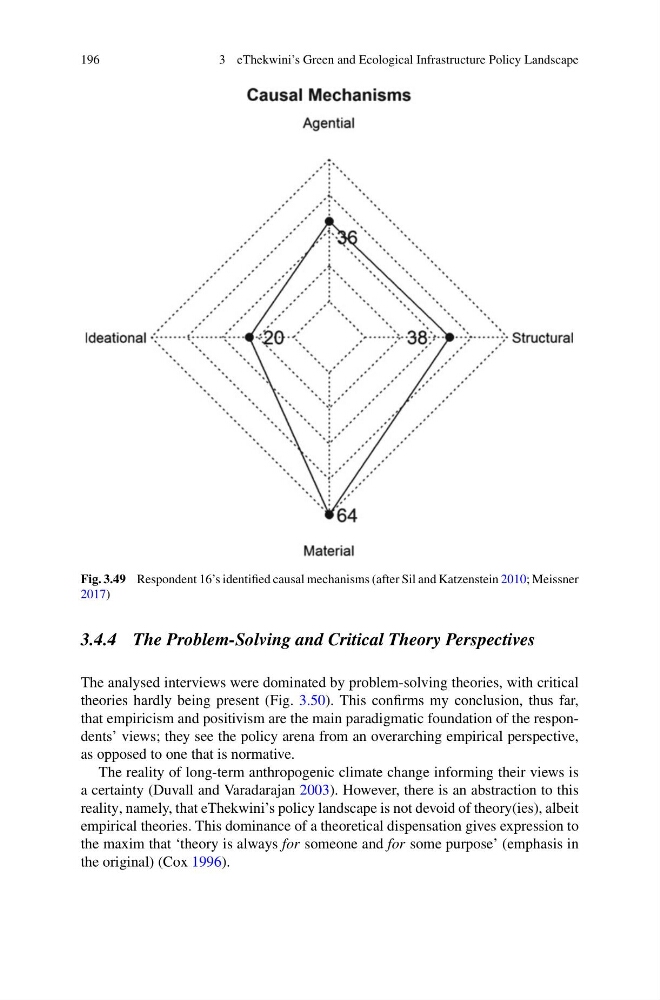
Fig. 3.49 Respondent 16’s identified causal mechanisms (after Sil and Katzenstein 2010; Meissner
2017)
3.4.4 The Problem-Solving and Critical Theory Perspectives
The analysed interviews were dominated by problem-solving theories, with critical
theories hardly being present (Fig. 3.50). This confirms my conclusion, thus far,
that empiricism and positivism are the main paradigmatic foundation of the respondents’ views; they see the policy arena from an overarching empirical perspective,
as opposed to one that is normative.
The reality of long-term anthropogenic climate change informing their views is
a certainty (Duvall and Varadarajan 2003). However, there is an abstraction to this
reality, namely, that eThekwini’s policy landscape is not devoid of theory(ies), albeit
empirical theories. This dominance of a theoretical dispensation gives expression to
the maxim that ‘theory is always for someone and for some purpose’ (emphasis in
the original) (Cox 1996).
3 eThekwini’s Green and Ecological Infrastructure Policy Landscape
Fig. 3.49 Respondent 16’s identified causal mechanisms (after Sil and Katzenstein 2010; Meissner
2017)
3.4.4 The Problem-Solving and Critical Theory Perspectives
The analysed interviews were dominated by problem-solving theories, with critical
theories hardly being present (Fig. 3.50). This confirms my conclusion, thus far,
that empiricism and positivism are the main paradigmatic foundation of the respondents’ views; they see the policy arena from an overarching empirical perspective,
as opposed to one that is normative.
The reality of long-term anthropogenic climate change informing their views is
a certainty (Duvall and Varadarajan 2003). However, there is an abstraction to this
reality, namely, that eThekwini’s policy landscape is not devoid of theory(ies), albeit
empirical theories. This dominance of a theoretical dispensation gives expression to
the maxim that ‘theory is always for someone and for some purpose’ (emphasis in
the original) (Cox 1996).