

100
3 eThekwini’s Green and Ecological Infrastructure Policy Landscape
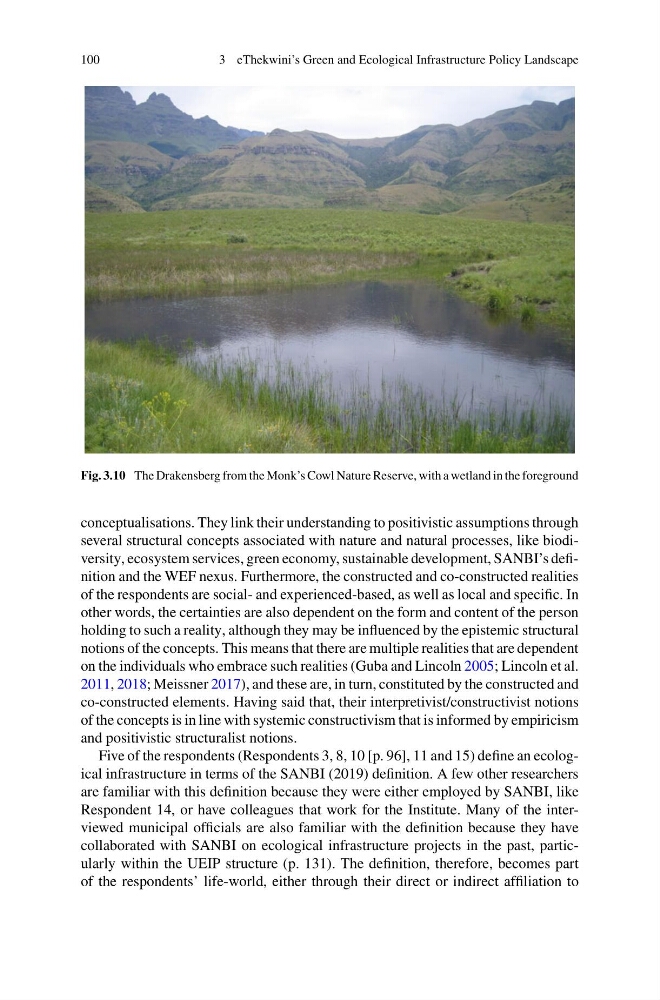
Fig. 3.10 The Drakensberg from the Monk’s Cowl Nature Reserve, with a wetland in the foreground
conceptualisations. They link their understanding to positivistic assumptions through
several structural concepts associated with nature and natural processes, like biodiversity, ecosystem services, green economy, sustainable development, SANBI’s definition and the WEF nexus. Furthermore, the constructed and co-constructed realities
of the respondents are social- and experienced-based, as well as local and specific. In
other words, the certainties are also dependent on the form and content of the person
holding to such a reality, although they may be influenced by the epistemic structural
notions of the concepts. This means that there are multiple realities that are dependent
on the individuals who embrace such realities (Guba and Lincoln 2005; Lincoln et al.
2011, 2018; Meissner 2017), and these are, in turn, constituted by the constructed and
co-constructed elements. Having said that, their interpretivist/constructivist notions
of the concepts is in line with systemic constructivism that is informed by empiricism
and positivistic structuralist notions.
Five of the respondents (Respondents 3, 8, 10 [p. 96], 11 and 15) define an ecological infrastructure in terms of the SANBI (2019) definition. A few other researchers
are familiar with this definition because they were either employed by SANBI, like
Respondent 14, or have colleagues that work for the Institute. Many of the interviewed municipal officials are also familiar with the definition because they have
collaborated with SANBI on ecological infrastructure projects in the past, particularly within the UEIP structure (p. 131). The definition, therefore, becomes part
of the respondents’ life-world, either through their direct or indirect affiliation to
3 eThekwini’s Green and Ecological Infrastructure Policy Landscape
Fig. 3.10 The Drakensberg from the Monk’s Cowl Nature Reserve, with a wetland in the foreground
conceptualisations. They link their understanding to positivistic assumptions through
several structural concepts associated with nature and natural processes, like biodiversity, ecosystem services, green economy, sustainable development, SANBI’s definition and the WEF nexus. Furthermore, the constructed and co-constructed realities
of the respondents are social- and experienced-based, as well as local and specific. In
other words, the certainties are also dependent on the form and content of the person
holding to such a reality, although they may be influenced by the epistemic structural
notions of the concepts. This means that there are multiple realities that are dependent
on the individuals who embrace such realities (Guba and Lincoln 2005; Lincoln et al.
2011, 2018; Meissner 2017), and these are, in turn, constituted by the constructed and
co-constructed elements. Having said that, their interpretivist/constructivist notions
of the concepts is in line with systemic constructivism that is informed by empiricism
and positivistic structuralist notions.
Five of the respondents (Respondents 3, 8, 10 [p. 96], 11 and 15) define an ecological infrastructure in terms of the SANBI (2019) definition. A few other researchers
are familiar with this definition because they were either employed by SANBI, like
Respondent 14, or have colleagues that work for the Institute. Many of the interviewed municipal officials are also familiar with the definition because they have
collaborated with SANBI on ecological infrastructure projects in the past, particularly within the UEIP structure (p. 131). The definition, therefore, becomes part
of the respondents’ life-world, either through their direct or indirect affiliation to