

3.4 Analysis
97
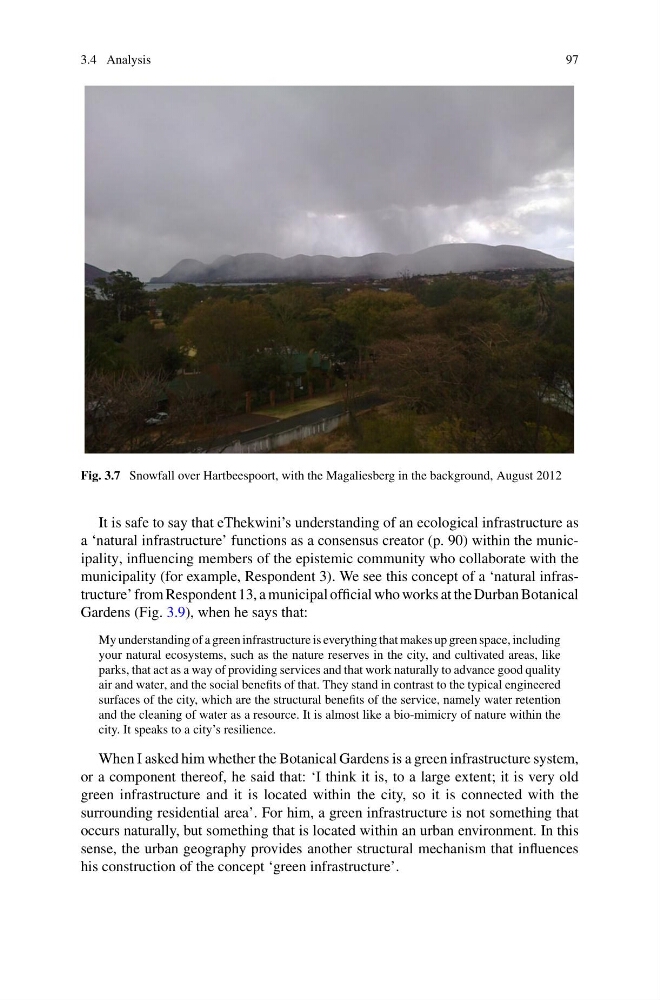
Fig. 3.7 Snowfall over Hartbeespoort, with the Magaliesberg in the background, August 2012
It is safe to say that eThekwini’s understanding of an ecological infrastructure as
a ‘natural infrastructure’ functions as a consensus creator (p. 90) within the municipality, influencing members of the epistemic community who collaborate with the
municipality (for example, Respondent 3). We see this concept of a ‘natural infrastructure’ from Respondent 13, a municipal official who works at the Durban Botanical
Gardens (Fig. 3.9), when he says that:
My understanding of a green infrastructure is everything that makes up green space, including
your natural ecosystems, such as the nature reserves in the city, and cultivated areas, like
parks, that act as a way of providing services and that work naturally to advance good quality
air and water, and the social benefits of that. They stand in contrast to the typical engineered
surfaces of the city, which are the structural benefits of the service, namely water retention
and the cleaning of water as a resource. It is almost like a bio-mimicry of nature within the
city. It speaks to a city’s resilience.
When I asked him whether the Botanical Gardens is a green infrastructure system,
or a component thereof, he said that: ‘I think it is, to a large extent; it is very old
green infrastructure and it is located within the city, so it is connected with the
surrounding residential area’. For him, a green infrastructure is not something that
occurs naturally, but something that is located within an urban environment. In this
sense, the urban geography provides another structural mechanism that influences
his construction of the concept ‘green infrastructure’.
97
Fig. 3.7 Snowfall over Hartbeespoort, with the Magaliesberg in the background, August 2012
It is safe to say that eThekwini’s understanding of an ecological infrastructure as
a ‘natural infrastructure’ functions as a consensus creator (p. 90) within the municipality, influencing members of the epistemic community who collaborate with the
municipality (for example, Respondent 3). We see this concept of a ‘natural infrastructure’ from Respondent 13, a municipal official who works at the Durban Botanical
Gardens (Fig. 3.9), when he says that:
My understanding of a green infrastructure is everything that makes up green space, including
your natural ecosystems, such as the nature reserves in the city, and cultivated areas, like
parks, that act as a way of providing services and that work naturally to advance good quality
air and water, and the social benefits of that. They stand in contrast to the typical engineered
surfaces of the city, which are the structural benefits of the service, namely water retention
and the cleaning of water as a resource. It is almost like a bio-mimicry of nature within the
city. It speaks to a city’s resilience.
When I asked him whether the Botanical Gardens is a green infrastructure system,
or a component thereof, he said that: ‘I think it is, to a large extent; it is very old
green infrastructure and it is located within the city, so it is connected with the
surrounding residential area’. For him, a green infrastructure is not something that
occurs naturally, but something that is located within an urban environment. In this
sense, the urban geography provides another structural mechanism that influences
his construction of the concept ‘green infrastructure’.