

96
3 eThekwini’s Green and Ecological Infrastructure Policy Landscape
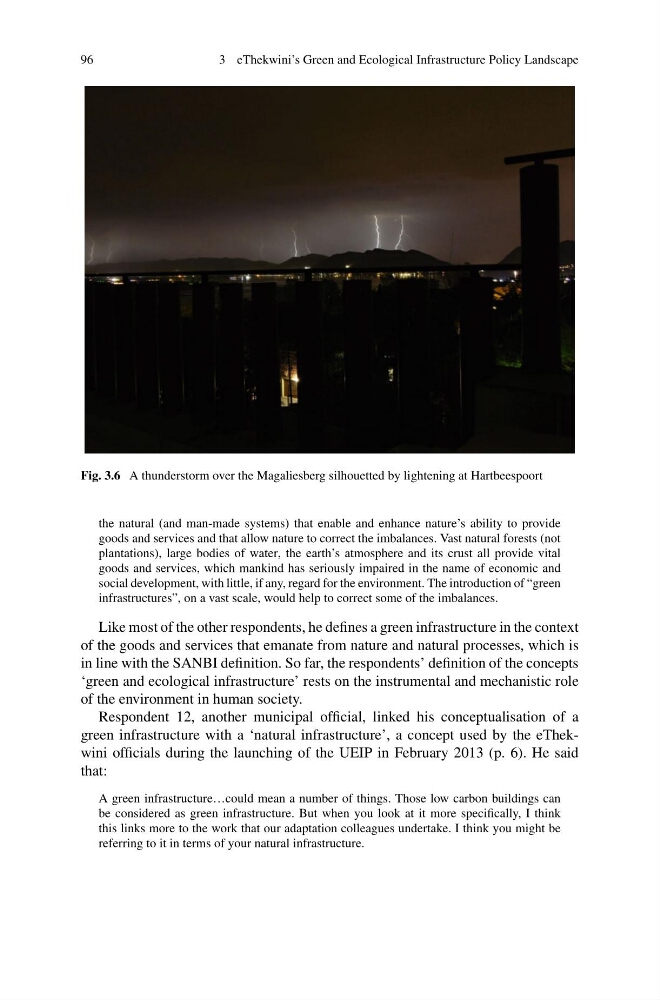
Fig. 3.6 A thunderstorm over the Magaliesberg silhouetted by lightening at Hartbeespoort
the natural (and man-made systems) that enable and enhance nature’s ability to provide
goods and services and that allow nature to correct the imbalances. Vast natural forests (not
plantations), large bodies of water, the earth’s atmosphere and its crust all provide vital
goods and services, which mankind has seriously impaired in the name of economic and
social development, with little, if any, regard for the environment. The introduction of “green
infrastructures”, on a vast scale, would help to correct some of the imbalances.
Like most of the other respondents, he defines a green infrastructure in the context
of the goods and services that emanate from nature and natural processes, which is
in line with the SANBI definition. So far, the respondents’ definition of the concepts
‘green and ecological infrastructure’ rests on the instrumental and mechanistic role
of the environment in human society.
Respondent 12, another municipal official, linked his conceptualisation of a
green infrastructure with a ‘natural infrastructure’, a concept used by the eThekwini officials during the launching of the UEIP in February 2013 (p. 6). He said
that:
A green infrastructure…could mean a number of things. Those low carbon buildings can
be considered as green infrastructure. But when you look at it more specifically, I think
this links more to the work that our adaptation colleagues undertake. I think you might be
referring to it in terms of your natural infrastructure.
3 eThekwini’s Green and Ecological Infrastructure Policy Landscape
Fig. 3.6 A thunderstorm over the Magaliesberg silhouetted by lightening at Hartbeespoort
the natural (and man-made systems) that enable and enhance nature’s ability to provide
goods and services and that allow nature to correct the imbalances. Vast natural forests (not
plantations), large bodies of water, the earth’s atmosphere and its crust all provide vital
goods and services, which mankind has seriously impaired in the name of economic and
social development, with little, if any, regard for the environment. The introduction of “green
infrastructures”, on a vast scale, would help to correct some of the imbalances.
Like most of the other respondents, he defines a green infrastructure in the context
of the goods and services that emanate from nature and natural processes, which is
in line with the SANBI definition. So far, the respondents’ definition of the concepts
‘green and ecological infrastructure’ rests on the instrumental and mechanistic role
of the environment in human society.
Respondent 12, another municipal official, linked his conceptualisation of a
green infrastructure with a ‘natural infrastructure’, a concept used by the eThekwini officials during the launching of the UEIP in February 2013 (p. 6). He said
that:
A green infrastructure…could mean a number of things. Those low carbon buildings can
be considered as green infrastructure. But when you look at it more specifically, I think
this links more to the work that our adaptation colleagues undertake. I think you might be
referring to it in terms of your natural infrastructure.