

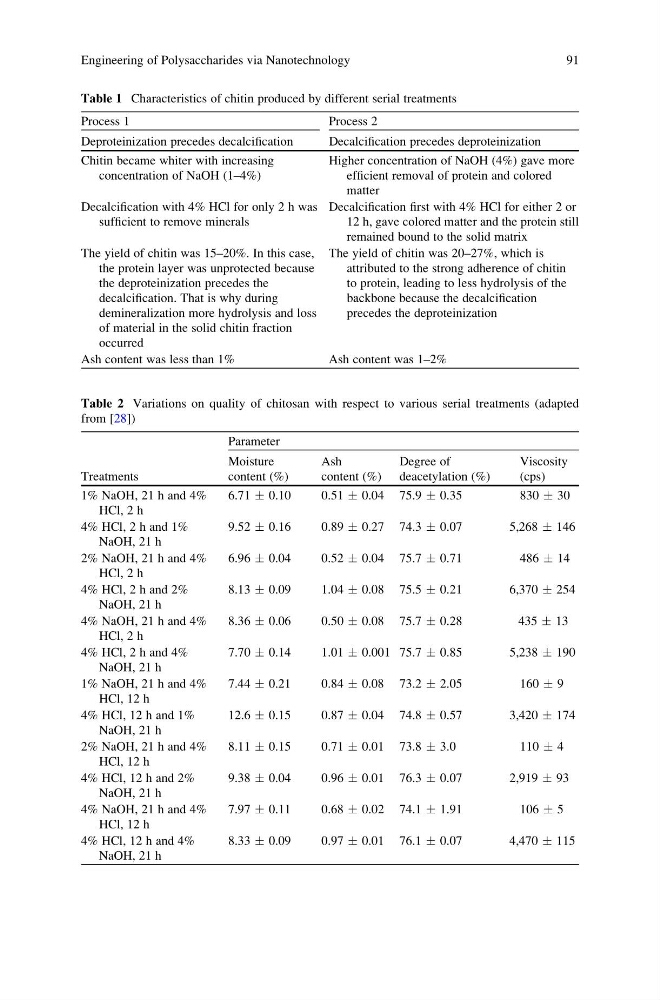
Table 1 Characteristics of chitin produced by different serial treatments
Process 1
Process 2
Deproteinization precedes decalcification
Decalcification precedes deproteinization
Chitin became whiter with increasing
concentration of NaOH (1–4%)
Higher concentration of NaOH (4%) gave more
efficient removal of protein and colored
matter
Decalcification with 4% HCl for only 2 h was
sufficient to remove minerals
Decalcification first with 4% HCl for either 2 or
12 h, gave colored matter and the protein still
remained bound to the solid matrix
The yield of chitin was 15–20%. In this case,
the protein layer was unprotected because
the deproteinization precedes the
decalcification. That is why during
demineralization more hydrolysis and loss
of material in the solid chitin fraction
occurred
The yield of chitin was 20–27%, which is
attributed to the strong adherence of chitin
to protein, leading to less hydrolysis of the
backbone because the decalcification
precedes the deproteinization
Ash content was less than 1%
Ash content was 1–2%
Table 2 Variations on quality of chitosan with respect to various serial treatments (adapted
from [28])
Treatments
Parameter
Moisture
content (%)
Ash
content (%)
Degree of
deacetylation (%)
Viscosity
(cps)
1% NaOH, 21 h and 4%
HCl, 2 h
6.71 Æ 0.10
0.51 Æ 0.04 75.9 Æ 0.35
830 Æ 30
4% HCl, 2 h and 1%
NaOH, 21 h
9.52 Æ 0.16
0.89 Æ 0.27 74.3 Æ 0.07
5,268 Æ 146
2% NaOH, 21 h and 4%
HCl, 2 h
6.96 Æ 0.04
0.52 Æ 0.04 75.7 Æ 0.71
486 Æ 14
4% HCl, 2 h and 2%
NaOH, 21 h
8.13 Æ 0.09
1.04 Æ 0.08 75.5 Æ 0.21
6,370 Æ 254
4% NaOH, 21 h and 4%
HCl, 2 h
8.36 Æ 0.06
0.50 Æ 0.08 75.7 Æ 0.28
435 Æ 13
4% HCl, 2 h and 4%
NaOH, 21 h
7.70 Æ 0.14
1.01 Æ 0.001 75.7 Æ 0.85
5,238 Æ 190
1% NaOH, 21 h and 4%
HCl, 12 h
7.44 Æ 0.21
0.84 Æ 0.08 73.2 Æ 2.05
160 Æ 9
4% HCl, 12 h and 1%
NaOH, 21 h
12.6 Æ 0.15
0.87 Æ 0.04 74.8 Æ 0.57
3,420 Æ 174
2% NaOH, 21 h and 4%
HCl, 12 h
8.11 Æ 0.15
0.71 Æ 0.01 73.8 Æ 3.0
110 Æ 4
4% HCl, 12 h and 2%
NaOH, 21 h
9.38 Æ 0.04
0.96 Æ 0.01 76.3 Æ 0.07
2,919 Æ 93
4% NaOH, 21 h and 4%
HCl, 12 h
7.97 Æ 0.11
0.68 Æ 0.02 74.1 Æ 1.91
106 Æ 5
4% HCl, 12 h and 4%
NaOH, 21 h
8.33 Æ 0.09
0.97 Æ 0.01 76.1 Æ 0.07
4,470 Æ 115
Engineering of Polysaccharides via Nanotechnology
91
Process 1
Process 2
Deproteinization precedes decalcification
Decalcification precedes deproteinization
Chitin became whiter with increasing
concentration of NaOH (1–4%)
Higher concentration of NaOH (4%) gave more
efficient removal of protein and colored
matter
Decalcification with 4% HCl for only 2 h was
sufficient to remove minerals
Decalcification first with 4% HCl for either 2 or
12 h, gave colored matter and the protein still
remained bound to the solid matrix
The yield of chitin was 15–20%. In this case,
the protein layer was unprotected because
the deproteinization precedes the
decalcification. That is why during
demineralization more hydrolysis and loss
of material in the solid chitin fraction
occurred
The yield of chitin was 20–27%, which is
attributed to the strong adherence of chitin
to protein, leading to less hydrolysis of the
backbone because the decalcification
precedes the deproteinization
Ash content was less than 1%
Ash content was 1–2%
Table 2 Variations on quality of chitosan with respect to various serial treatments (adapted
from [28])
Treatments
Parameter
Moisture
content (%)
Ash
content (%)
Degree of
deacetylation (%)
Viscosity
(cps)
1% NaOH, 21 h and 4%
HCl, 2 h
6.71 Æ 0.10
0.51 Æ 0.04 75.9 Æ 0.35
830 Æ 30
4% HCl, 2 h and 1%
NaOH, 21 h
9.52 Æ 0.16
0.89 Æ 0.27 74.3 Æ 0.07
5,268 Æ 146
2% NaOH, 21 h and 4%
HCl, 2 h
6.96 Æ 0.04
0.52 Æ 0.04 75.7 Æ 0.71
486 Æ 14
4% HCl, 2 h and 2%
NaOH, 21 h
8.13 Æ 0.09
1.04 Æ 0.08 75.5 Æ 0.21
6,370 Æ 254
4% NaOH, 21 h and 4%
HCl, 2 h
8.36 Æ 0.06
0.50 Æ 0.08 75.7 Æ 0.28
435 Æ 13
4% HCl, 2 h and 4%
NaOH, 21 h
7.70 Æ 0.14
1.01 Æ 0.001 75.7 Æ 0.85
5,238 Æ 190
1% NaOH, 21 h and 4%
HCl, 12 h
7.44 Æ 0.21
0.84 Æ 0.08 73.2 Æ 2.05
160 Æ 9
4% HCl, 12 h and 1%
NaOH, 21 h
12.6 Æ 0.15
0.87 Æ 0.04 74.8 Æ 0.57
3,420 Æ 174
2% NaOH, 21 h and 4%
HCl, 12 h
8.11 Æ 0.15
0.71 Æ 0.01 73.8 Æ 3.0
110 Æ 4
4% HCl, 12 h and 2%
NaOH, 21 h
9.38 Æ 0.04
0.96 Æ 0.01 76.3 Æ 0.07
2,919 Æ 93
4% NaOH, 21 h and 4%
HCl, 12 h
7.97 Æ 0.11
0.68 Æ 0.02 74.1 Æ 1.91
106 Æ 5
4% HCl, 12 h and 4%
NaOH, 21 h
8.33 Æ 0.09
0.97 Æ 0.01 76.1 Æ 0.07
4,470 Æ 115
Engineering of Polysaccharides via Nanotechnology
91