

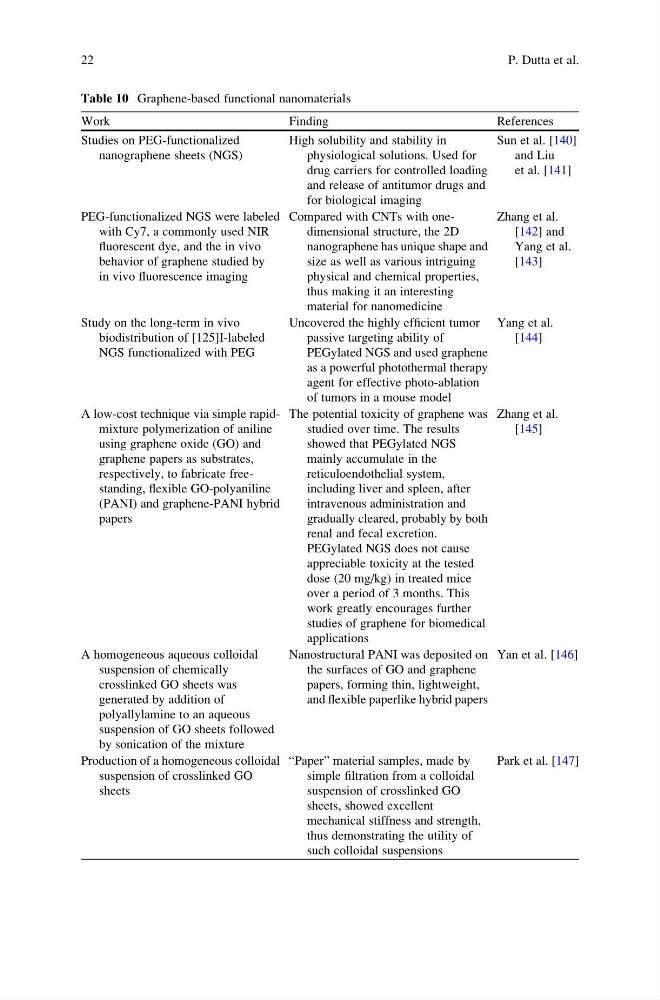
Table 10 Graphene-based functional nanomaterials
Work
Finding
References
Studies on PEG-functionalized
nanographene sheets (NGS)
High solubility and stability in
physiological solutions. Used for
drug carriers for controlled loading
and release of antitumor drugs and
for biological imaging
Sun et al. [140]
and Liu
et al. [141]
PEG-functionalized NGS were labeled
with Cy7, a commonly used NIR
fluorescent dye, and the in vivo
behavior of graphene studied by
in vivo fluorescence imaging
Compared with CNTs with onedimensional structure, the 2D
nanographene has unique shape and
size as well as various intriguing
physical and chemical properties,
thus making it an interesting
material for nanomedicine
Zhang et al.
[142] and
Yang et al.
[143]
Study on the long-term in vivo
biodistribution of [125]I-labeled
NGS functionalized with PEG
Uncovered the highly efficient tumor
passive targeting ability of
PEGylated NGS and used graphene
as a powerful photothermal therapy
agent for effective photo-ablation
of tumors in a mouse model
Yang et al.
[144]
A low-cost technique via simple rapidmixture polymerization of aniline
using graphene oxide (GO) and
graphene papers as substrates,
respectively, to fabricate freestanding, flexible GO-polyaniline
(PANI) and graphene-PANI hybrid
papers
The potential toxicity of graphene was
studied over time. The results
showed that PEGylated NGS
mainly accumulate in the
reticuloendothelial system,
including liver and spleen, after
intravenous administration and
gradually cleared, probably by both
renal and fecal excretion.
PEGylated NGS does not cause
appreciable toxicity at the tested
dose (20 mg/kg) in treated mice
over a period of 3 months. This
work greatly encourages further
studies of graphene for biomedical
applications
Zhang et al.
[145]
A homogeneous aqueous colloidal
suspension of chemically
crosslinked GO sheets was
generated by addition of
polyallylamine to an aqueous
suspension of GO sheets followed
by sonication of the mixture
Nanostructural PANI was deposited on
the surfaces of GO and graphene
papers, forming thin, lightweight,
and flexible paperlike hybrid papers
Yan et al. [146]
Production of a homogeneous colloidal
suspension of crosslinked GO
sheets
“Paper” material samples, made by
simple filtration from a colloidal
suspension of crosslinked GO
sheets, showed excellent
mechanical stiffness and strength,
thus demonstrating the utility of
such colloidal suspensions
Park et al. [147]
22
P. Dutta et al.
Work
Finding
References
Studies on PEG-functionalized
nanographene sheets (NGS)
High solubility and stability in
physiological solutions. Used for
drug carriers for controlled loading
and release of antitumor drugs and
for biological imaging
Sun et al. [140]
and Liu
et al. [141]
PEG-functionalized NGS were labeled
with Cy7, a commonly used NIR
fluorescent dye, and the in vivo
behavior of graphene studied by
in vivo fluorescence imaging
Compared with CNTs with onedimensional structure, the 2D
nanographene has unique shape and
size as well as various intriguing
physical and chemical properties,
thus making it an interesting
material for nanomedicine
Zhang et al.
[142] and
Yang et al.
[143]
Study on the long-term in vivo
biodistribution of [125]I-labeled
NGS functionalized with PEG
Uncovered the highly efficient tumor
passive targeting ability of
PEGylated NGS and used graphene
as a powerful photothermal therapy
agent for effective photo-ablation
of tumors in a mouse model
Yang et al.
[144]
A low-cost technique via simple rapidmixture polymerization of aniline
using graphene oxide (GO) and
graphene papers as substrates,
respectively, to fabricate freestanding, flexible GO-polyaniline
(PANI) and graphene-PANI hybrid
papers
The potential toxicity of graphene was
studied over time. The results
showed that PEGylated NGS
mainly accumulate in the
reticuloendothelial system,
including liver and spleen, after
intravenous administration and
gradually cleared, probably by both
renal and fecal excretion.
PEGylated NGS does not cause
appreciable toxicity at the tested
dose (20 mg/kg) in treated mice
over a period of 3 months. This
work greatly encourages further
studies of graphene for biomedical
applications
Zhang et al.
[145]
A homogeneous aqueous colloidal
suspension of chemically
crosslinked GO sheets was
generated by addition of
polyallylamine to an aqueous
suspension of GO sheets followed
by sonication of the mixture
Nanostructural PANI was deposited on
the surfaces of GO and graphene
papers, forming thin, lightweight,
and flexible paperlike hybrid papers
Yan et al. [146]
Production of a homogeneous colloidal
suspension of crosslinked GO
sheets
“Paper” material samples, made by
simple filtration from a colloidal
suspension of crosslinked GO
sheets, showed excellent
mechanical stiffness and strength,
thus demonstrating the utility of
such colloidal suspensions
Park et al. [147]
22
P. Dutta et al.