

such as chitosan, its mucoadhesive property plays an important role in attaining
controlled release, making it an excellent system for oral, nasal, and ocular drug
delivery [87].
Apart from these properties, the release kinetics can be manipulated in such a
way that drug release occurs due to a trigger from an environmental stimulus like
pH, temperature, etc. [88]. The thermoresponsive graft co-polymeric 5-FU-loaded
nanoparticles made from chitosan-g-poly(N-vinylcaprolactam), prepared by an
ionic crosslinking method, showed a lower critical solution temperature (LCST)
at 38
C, with a prominent in vitro drug release above LCST [89]. Camptothecinloaded poly(N-isopropylacrylamide) (PNIPAAm)/chitosan nanoparticles were
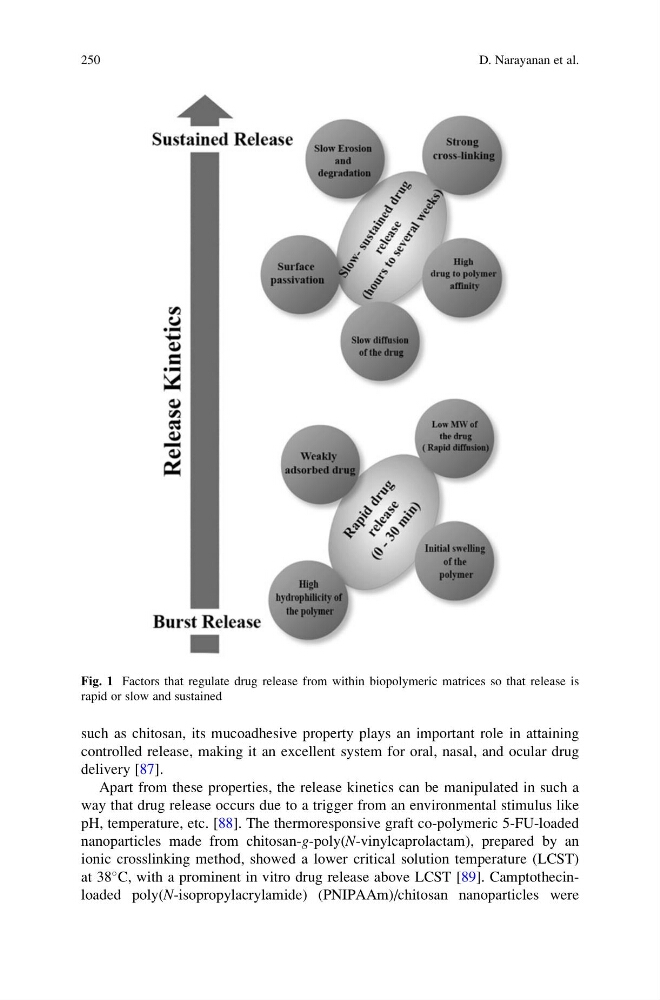
Fig. 1 Factors that regulate drug release from within biopolymeric matrices so that release is
rapid or slow and sustained
250
D. Narayanan et al.
controlled release, making it an excellent system for oral, nasal, and ocular drug
delivery [87].
Apart from these properties, the release kinetics can be manipulated in such a
way that drug release occurs due to a trigger from an environmental stimulus like
pH, temperature, etc. [88]. The thermoresponsive graft co-polymeric 5-FU-loaded
nanoparticles made from chitosan-g-poly(N-vinylcaprolactam), prepared by an
ionic crosslinking method, showed a lower critical solution temperature (LCST)
at 38
C, with a prominent in vitro drug release above LCST [89]. Camptothecinloaded poly(N-isopropylacrylamide) (PNIPAAm)/chitosan nanoparticles were
Fig. 1 Factors that regulate drug release from within biopolymeric matrices so that release is
rapid or slow and sustained
250
D. Narayanan et al.