

4.5 Saponin
Sanoj et al. formulated NPs of saponin with biocompatible and biodegradable
chitosan and reported this nanoformulation to be a better therapeutic agent. The
saponin-loaded chitosan nanoparticles (Fig. 10), “nanosaponin”, were prepared
via a simple crosslinking reaction with sodium tripolyphosphate (TPP) for
enhanced, controlled and sustained delivery to prostate cancer cell lines. The
cellular uptake studies of nanosaponin using L929 and PC3 cells demonstrated
significant internalization and retention of the NPs inside the cells, suggesting
that these nanoparticle systems can be used for delivering saponin directly into
the cells. The nanosaponin has showed specific toxicity to cancer cells and are
nontoxic to normal cells [172].
4.6 Grape Seed Extract
Narayanan et al. reported targeted NP-mediated delivery to enhance the efficacy of
the well-known nutraceutical GSE. NanoGSE was prepared by a nanoprecipitation
technique whereby GSE was encapsulated in PLGA nanoparticles. The potential
cancer-targeting ligand folic acid was conjugated to GSE-PLGA NPs and tested
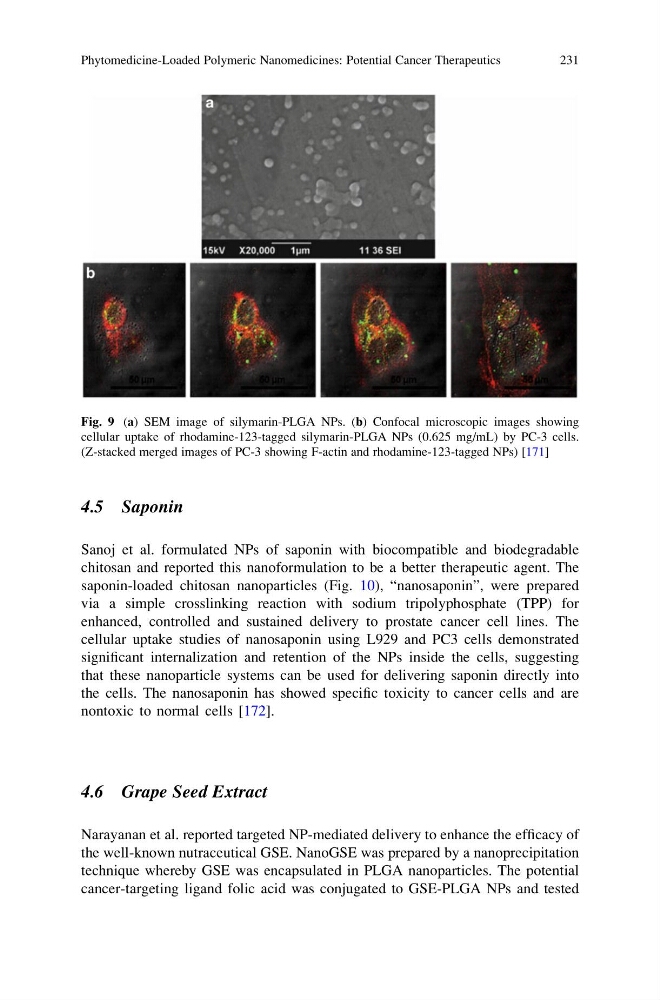
Fig. 9 (a) SEM image of silymarin-PLGA NPs. (b) Confocal microscopic images showing
cellular uptake of rhodamine-123-tagged silymarin-PLGA NPs (0.625 mg/mL) by PC-3 cells.
(Z-stacked merged images of PC-3 showing F-actin and rhodamine-123-tagged NPs) [171]
Phytomedicine-Loaded Polymeric Nanomedicines: Potential Cancer Therapeutics
231
Sanoj et al. formulated NPs of saponin with biocompatible and biodegradable
chitosan and reported this nanoformulation to be a better therapeutic agent. The
saponin-loaded chitosan nanoparticles (Fig. 10), “nanosaponin”, were prepared
via a simple crosslinking reaction with sodium tripolyphosphate (TPP) for
enhanced, controlled and sustained delivery to prostate cancer cell lines. The
cellular uptake studies of nanosaponin using L929 and PC3 cells demonstrated
significant internalization and retention of the NPs inside the cells, suggesting
that these nanoparticle systems can be used for delivering saponin directly into
the cells. The nanosaponin has showed specific toxicity to cancer cells and are
nontoxic to normal cells [172].
4.6 Grape Seed Extract
Narayanan et al. reported targeted NP-mediated delivery to enhance the efficacy of
the well-known nutraceutical GSE. NanoGSE was prepared by a nanoprecipitation
technique whereby GSE was encapsulated in PLGA nanoparticles. The potential
cancer-targeting ligand folic acid was conjugated to GSE-PLGA NPs and tested
Fig. 9 (a) SEM image of silymarin-PLGA NPs. (b) Confocal microscopic images showing
cellular uptake of rhodamine-123-tagged silymarin-PLGA NPs (0.625 mg/mL) by PC-3 cells.
(Z-stacked merged images of PC-3 showing F-actin and rhodamine-123-tagged NPs) [171]
Phytomedicine-Loaded Polymeric Nanomedicines: Potential Cancer Therapeutics
231