

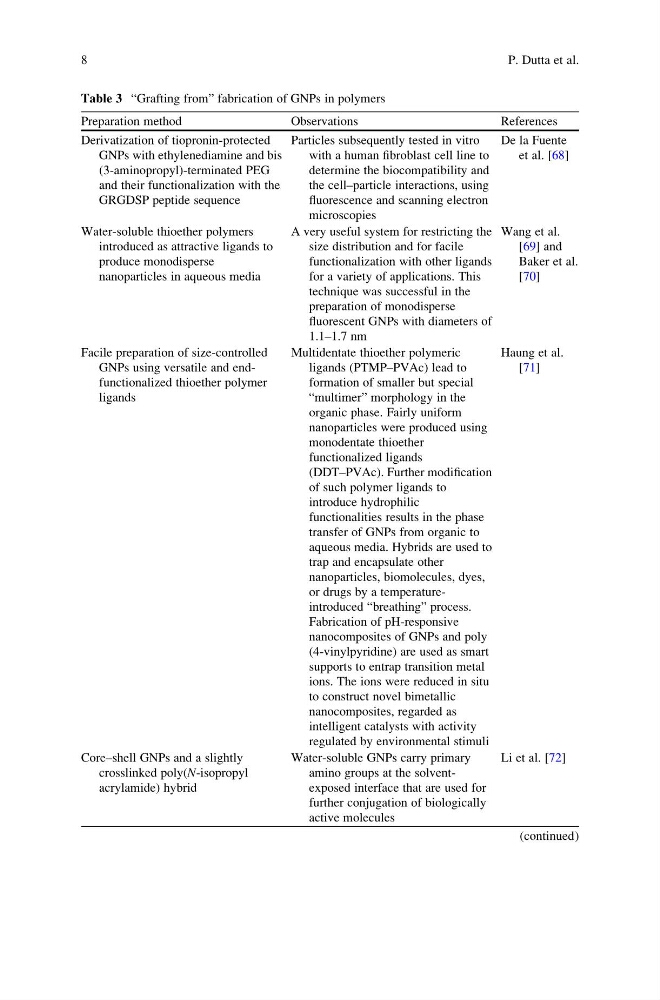
Table 3 “Grafting from” fabrication of GNPs in polymers
Preparation method
Observations
References
Derivatization of tiopronin-protected
GNPs with ethylenediamine and bis
(3-aminopropyl)-terminated PEG
and their functionalization with the
GRGDSP peptide sequence
Particles subsequently tested in vitro
with a human fibroblast cell line to
determine the biocompatibility and
the cell–particle interactions, using
fluorescence and scanning electron
microscopies
De la Fuente
et al. [68]
Water-soluble thioether polymers
introduced as attractive ligands to
produce monodisperse
nanoparticles in aqueous media
A very useful system for restricting the
size distribution and for facile
functionalization with other ligands
for a variety of applications. This
technique was successful in the
preparation of monodisperse
fluorescent GNPs with diameters of
1.1–1.7 nm
Wang et al.
[69] and
Baker et al.
[70]
Facile preparation of size-controlled
GNPs using versatile and endfunctionalized thioether polymer
ligands
Multidentate thioether polymeric
ligands (PTMP–PVAc) lead to
formation of smaller but special
“multimer” morphology in the
organic phase. Fairly uniform
nanoparticles were produced using
monodentate thioether
functionalized ligands
(DDT–PVAc). Further modification
of such polymer ligands to
introduce hydrophilic
functionalities results in the phase
transfer of GNPs from organic to
aqueous media. Hybrids are used to
trap and encapsulate other
nanoparticles, biomolecules, dyes,
or drugs by a temperatureintroduced “breathing” process.
Fabrication of pH-responsive
nanocomposites of GNPs and poly
(4-vinylpyridine) are used as smart
supports to entrap transition metal
ions. The ions were reduced in situ
to construct novel bimetallic
nanocomposites, regarded as
intelligent catalysts with activity
regulated by environmental stimuli
Haung et al.
[71]
Core–shell GNPs and a slightly
crosslinked poly(N-isopropyl
acrylamide) hybrid
Water-soluble GNPs carry primary
amino groups at the solventexposed interface that are used for
further conjugation of biologically
active molecules
Li et al. [72]
(continued)
8
P. Dutta et al.
Preparation method
Observations
References
Derivatization of tiopronin-protected
GNPs with ethylenediamine and bis
(3-aminopropyl)-terminated PEG
and their functionalization with the
GRGDSP peptide sequence
Particles subsequently tested in vitro
with a human fibroblast cell line to
determine the biocompatibility and
the cell–particle interactions, using
fluorescence and scanning electron
microscopies
De la Fuente
et al. [68]
Water-soluble thioether polymers
introduced as attractive ligands to
produce monodisperse
nanoparticles in aqueous media
A very useful system for restricting the
size distribution and for facile
functionalization with other ligands
for a variety of applications. This
technique was successful in the
preparation of monodisperse
fluorescent GNPs with diameters of
1.1–1.7 nm
Wang et al.
[69] and
Baker et al.
[70]
Facile preparation of size-controlled
GNPs using versatile and endfunctionalized thioether polymer
ligands
Multidentate thioether polymeric
ligands (PTMP–PVAc) lead to
formation of smaller but special
“multimer” morphology in the
organic phase. Fairly uniform
nanoparticles were produced using
monodentate thioether
functionalized ligands
(DDT–PVAc). Further modification
of such polymer ligands to
introduce hydrophilic
functionalities results in the phase
transfer of GNPs from organic to
aqueous media. Hybrids are used to
trap and encapsulate other
nanoparticles, biomolecules, dyes,
or drugs by a temperatureintroduced “breathing” process.
Fabrication of pH-responsive
nanocomposites of GNPs and poly
(4-vinylpyridine) are used as smart
supports to entrap transition metal
ions. The ions were reduced in situ
to construct novel bimetallic
nanocomposites, regarded as
intelligent catalysts with activity
regulated by environmental stimuli
Haung et al.
[71]
Core–shell GNPs and a slightly
crosslinked poly(N-isopropyl
acrylamide) hybrid
Water-soluble GNPs carry primary
amino groups at the solventexposed interface that are used for
further conjugation of biologically
active molecules
Li et al. [72]
(continued)
8
P. Dutta et al.