

290
E.F. Sheka et al.
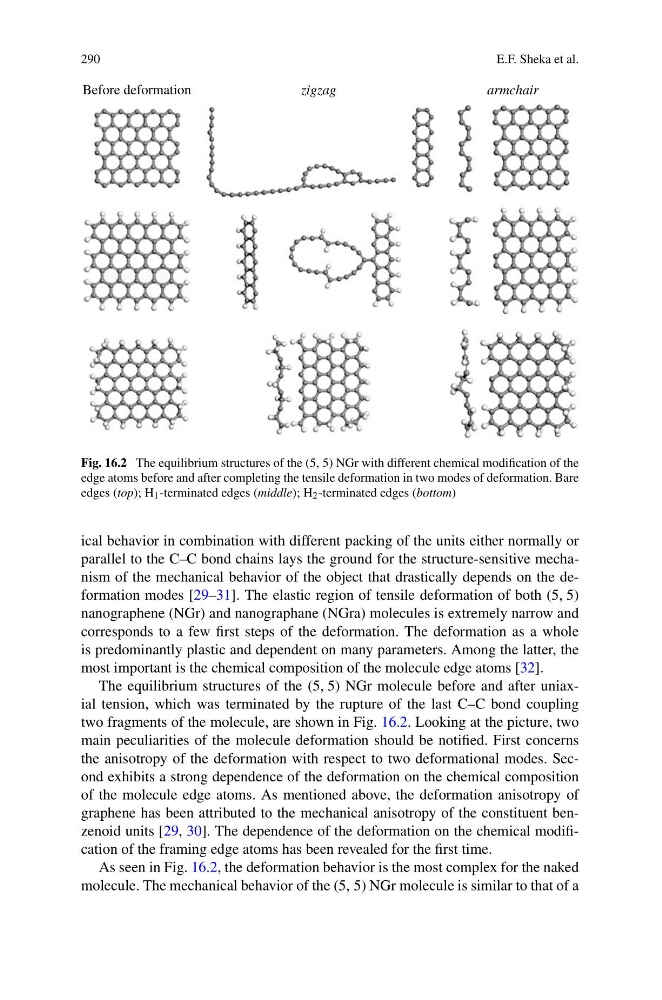
Fig. 16.2 The equilibrium structures of the (5, 5) NGr with different chemical modification of the
edge atoms before and after completing the tensile deformation in two modes of deformation. Bare
edges (top); H 1 -terminated edges (middle); H 2 -terminated edges (bottom)
ical behavior in combination with different packing of the units either normally or
parallel to the C–C bond chains lays the ground for the structure-sensitive mechanism of the mechanical behavior of the object that drastically depends on the deformation modes [29–31]. The elastic region of tensile deformation of both (5, 5)
nanographene (NGr) and nanographane (NGra) molecules is extremely narrow and
corresponds to a few first steps of the deformation. The deformation as a whole
is predominantly plastic and dependent on many parameters. Among the latter, the
most important is the chemical composition of the molecule edge atoms [32].
The equilibrium structures of the (5, 5) NGr molecule before and after uniaxial tension, which was terminated by the rupture of the last C–C bond coupling
two fragments of the molecule, are shown in Fig. 16.2. Looking at the picture, two
main peculiarities of the molecule deformation should be notified. First concerns
the anisotropy of the deformation with respect to two deformational modes. Second exhibits a strong dependence of the deformation on the chemical composition
of the molecule edge atoms. As mentioned above, the deformation anisotropy of
graphene has been attributed to the mechanical anisotropy of the constituent benzenoid units [29, 30]. The dependence of the deformation on the chemical modification of the framing edge atoms has been revealed for the first time.
As seen in Fig. 16.2, the deformation behavior is the most complex for the naked
molecule. The mechanical behavior of the (5, 5) NGr molecule is similar to that of a
E.F. Sheka et al.
Fig. 16.2 The equilibrium structures of the (5, 5) NGr with different chemical modification of the
edge atoms before and after completing the tensile deformation in two modes of deformation. Bare
edges (top); H 1 -terminated edges (middle); H 2 -terminated edges (bottom)
ical behavior in combination with different packing of the units either normally or
parallel to the C–C bond chains lays the ground for the structure-sensitive mechanism of the mechanical behavior of the object that drastically depends on the deformation modes [29–31]. The elastic region of tensile deformation of both (5, 5)
nanographene (NGr) and nanographane (NGra) molecules is extremely narrow and
corresponds to a few first steps of the deformation. The deformation as a whole
is predominantly plastic and dependent on many parameters. Among the latter, the
most important is the chemical composition of the molecule edge atoms [32].
The equilibrium structures of the (5, 5) NGr molecule before and after uniaxial tension, which was terminated by the rupture of the last C–C bond coupling
two fragments of the molecule, are shown in Fig. 16.2. Looking at the picture, two
main peculiarities of the molecule deformation should be notified. First concerns
the anisotropy of the deformation with respect to two deformational modes. Second exhibits a strong dependence of the deformation on the chemical composition
of the molecule edge atoms. As mentioned above, the deformation anisotropy of
graphene has been attributed to the mechanical anisotropy of the constituent benzenoid units [29, 30]. The dependence of the deformation on the chemical modification of the framing edge atoms has been revealed for the first time.
As seen in Fig. 16.2, the deformation behavior is the most complex for the naked
molecule. The mechanical behavior of the (5, 5) NGr molecule is similar to that of a