

15 Molecular Theory of Graphene
271
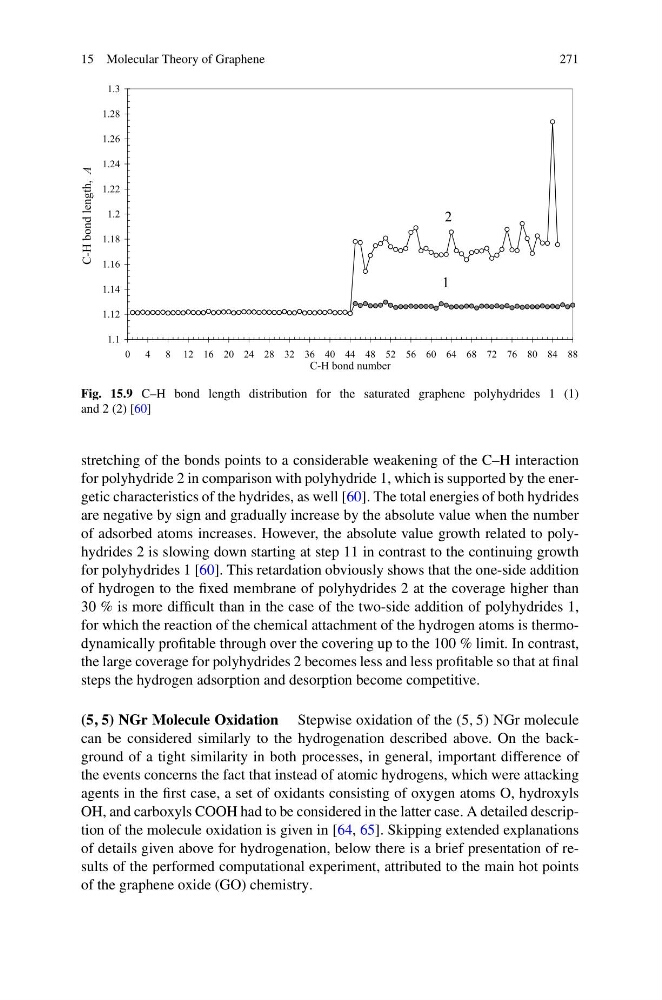
Fig. 15.9 C–H bond length distribution for the saturated graphene polyhydrides 1 (1)
and 2 (2) [60]
stretching of the bonds points to a considerable weakening of the C–H interaction
for polyhydride 2 in comparison with polyhydride 1, which is supported by the energetic characteristics of the hydrides, as well [60]. The total energies of both hydrides
are negative by sign and gradually increase by the absolute value when the number
of adsorbed atoms increases. However, the absolute value growth related to polyhydrides 2 is slowing down starting at step 11 in contrast to the continuing growth
for polyhydrides 1 [60]. This retardation obviously shows that the one-side addition
of hydrogen to the fixed membrane of polyhydrides 2 at the coverage higher than
30 % is more difficult than in the case of the two-side addition of polyhydrides 1,
for which the reaction of the chemical attachment of the hydrogen atoms is thermodynamically profitable through over the covering up to the 100 % limit. In contrast,
the large coverage for polyhydrides 2 becomes less and less profitable so that at final
steps the hydrogen adsorption and desorption become competitive.
(5, 5) NGr Molecule Oxidation Stepwise oxidation of the (5, 5) NGr molecule
can be considered similarly to the hydrogenation described above. On the background of a tight similarity in both processes, in general, important difference of
the events concerns the fact that instead of atomic hydrogens, which were attacking
agents in the first case, a set of oxidants consisting of oxygen atoms O, hydroxyls
OH, and carboxyls COOH had to be considered in the latter case. A detailed description of the molecule oxidation is given in [64, 65]. Skipping extended explanations
of details given above for hydrogenation, below there is a brief presentation of results of the performed computational experiment, attributed to the main hot points
of the graphene oxide (GO) chemistry.
271
Fig. 15.9 C–H bond length distribution for the saturated graphene polyhydrides 1 (1)
and 2 (2) [60]
stretching of the bonds points to a considerable weakening of the C–H interaction
for polyhydride 2 in comparison with polyhydride 1, which is supported by the energetic characteristics of the hydrides, as well [60]. The total energies of both hydrides
are negative by sign and gradually increase by the absolute value when the number
of adsorbed atoms increases. However, the absolute value growth related to polyhydrides 2 is slowing down starting at step 11 in contrast to the continuing growth
for polyhydrides 1 [60]. This retardation obviously shows that the one-side addition
of hydrogen to the fixed membrane of polyhydrides 2 at the coverage higher than
30 % is more difficult than in the case of the two-side addition of polyhydrides 1,
for which the reaction of the chemical attachment of the hydrogen atoms is thermodynamically profitable through over the covering up to the 100 % limit. In contrast,
the large coverage for polyhydrides 2 becomes less and less profitable so that at final
steps the hydrogen adsorption and desorption become competitive.
(5, 5) NGr Molecule Oxidation Stepwise oxidation of the (5, 5) NGr molecule
can be considered similarly to the hydrogenation described above. On the background of a tight similarity in both processes, in general, important difference of
the events concerns the fact that instead of atomic hydrogens, which were attacking
agents in the first case, a set of oxidants consisting of oxygen atoms O, hydroxyls
OH, and carboxyls COOH had to be considered in the latter case. A detailed description of the molecule oxidation is given in [64, 65]. Skipping extended explanations
of details given above for hydrogenation, below there is a brief presentation of results of the performed computational experiment, attributed to the main hot points
of the graphene oxide (GO) chemistry.