

10 Structural and Thermodynamic Properties of Au 2–58 Clusters
189
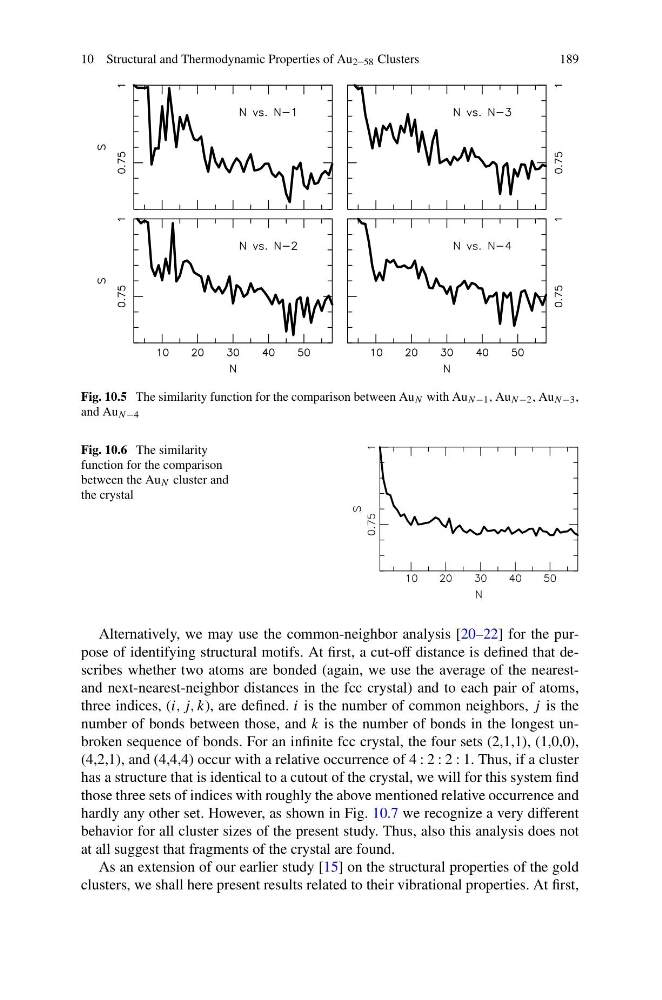
Fig. 10.5 The similarity function for the comparison between Au N with Au N −1 , Au N −2 , Au N −3 ,
and Au N −4
Fig. 10.6 The similarity
function for the comparison
between the Au N cluster and
the crystal
Alternatively, we may use the common-neighbor analysis [20–22] for the purpose of identifying structural motifs. At first, a cut-off distance is defined that describes whether two atoms are bonded (again, we use the average of the nearestand next-nearest-neighbor distances in the fcc crystal) and to each pair of atoms,
three indices, (i, j, k), are defined. i is the number of common neighbors, j is the
number of bonds between those, and k is the number of bonds in the longest unbroken sequence of bonds. For an infinite fcc crystal, the four sets (2,1,1), (1,0,0),
(4,2,1), and (4,4,4) occur with a relative occurrence of 4 : 2 : 2 : 1. Thus, if a cluster
has a structure that is identical to a cutout of the crystal, we will for this system find
those three sets of indices with roughly the above mentioned relative occurrence and
hardly any other set. However, as shown in Fig. 10.7 we recognize a very different
behavior for all cluster sizes of the present study. Thus, also this analysis does not
at all suggest that fragments of the crystal are found.
As an extension of our earlier study [15] on the structural properties of the gold
clusters, we shall here present results related to their vibrational properties. At first,
189
Fig. 10.5 The similarity function for the comparison between Au N with Au N −1 , Au N −2 , Au N −3 ,
and Au N −4
Fig. 10.6 The similarity
function for the comparison
between the Au N cluster and
the crystal
Alternatively, we may use the common-neighbor analysis [20–22] for the purpose of identifying structural motifs. At first, a cut-off distance is defined that describes whether two atoms are bonded (again, we use the average of the nearestand next-nearest-neighbor distances in the fcc crystal) and to each pair of atoms,
three indices, (i, j, k), are defined. i is the number of common neighbors, j is the
number of bonds between those, and k is the number of bonds in the longest unbroken sequence of bonds. For an infinite fcc crystal, the four sets (2,1,1), (1,0,0),
(4,2,1), and (4,4,4) occur with a relative occurrence of 4 : 2 : 2 : 1. Thus, if a cluster
has a structure that is identical to a cutout of the crystal, we will for this system find
those three sets of indices with roughly the above mentioned relative occurrence and
hardly any other set. However, as shown in Fig. 10.7 we recognize a very different
behavior for all cluster sizes of the present study. Thus, also this analysis does not
at all suggest that fragments of the crystal are found.
As an extension of our earlier study [15] on the structural properties of the gold
clusters, we shall here present results related to their vibrational properties. At first,