

2.5 Syndiospecific Transition State Structure
and Syndio-Insertion Catalytic Cycle
To delineate how these many factors operate in a concerted manner to provide the
necessary and sufficient conditions for the syndiospecificity of the catalytic site
created with complex 1, we can now employ the constructed molecular model to
devise a transition state structure that explains in a plausible manner the behavior of
this very complex system and the important steps involved in the catalytic cycles.
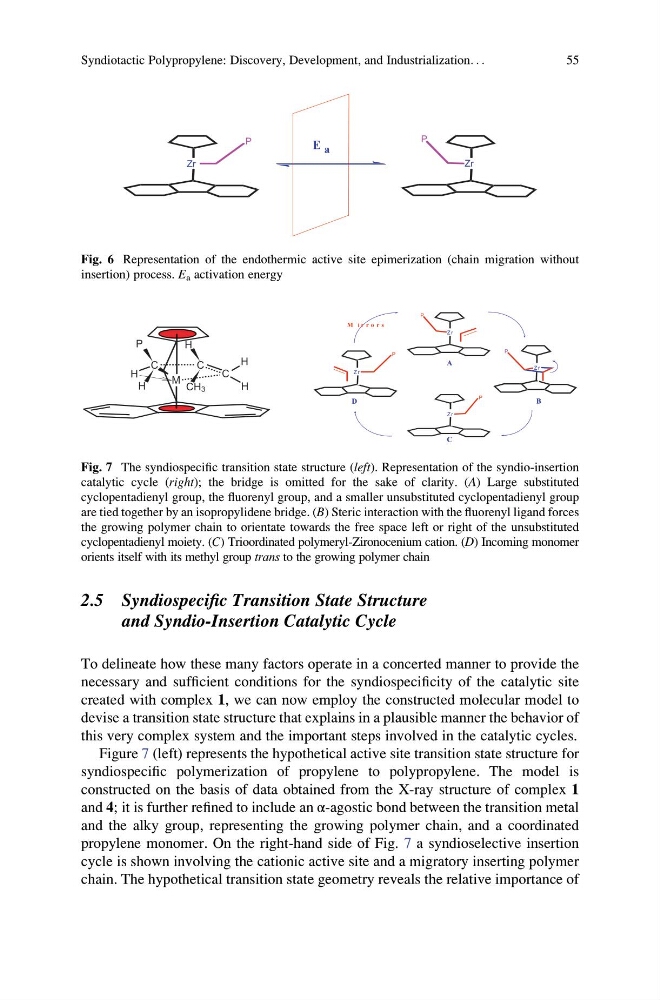
Figure 7 (left) represents the hypothetical active site transition state structure for
syndiospecific polymerization of propylene to polypropylene. The model is
constructed on the basis of data obtained from the X-ray structure of complex 1
and 4; it is further refined to include an α-agostic bond between the transition metal
and the alky group, representing the growing polymer chain, and a coordinated
propylene monomer. On the right-hand side of Fig. 7 a syndioselective insertion
cycle is shown involving the cationic active site and a migratory inserting polymer
chain. The hypothetical transition state geometry reveals the relative importance of
M
C
C
C
H
H
H
H
H
P
CH3
Z r
P
D
M ir r o r s
Z r
A
P
Z r
P
B
Z r
P
C
Fig. 7 The syndiospecific transition state structure (left). Representation of the syndio-insertion
catalytic cycle (right); the bridge is omitted for the sake of clarity. (A) Large substituted
cyclopentadienyl group, the fluorenyl group, and a smaller unsubstituted cyclopentadienyl group
are tied together by an isopropylidene bridge. (B) Steric interaction with the fluorenyl ligand forces
the growing polymer chain to orientate towards the free space left or right of the unsubstituted
cyclopentadienyl moiety. (C) Trioordinated polymeryl-Zironocenium cation. (D) Incoming monomer
orients itself with its methyl group trans to the growing polymer chain
Zr
P
Zr
P
E a
Fig. 6 Representation of the endothermic active site epimerization (chain migration without
insertion) process. E a activation energy
Syndiotactic Polypropylene: Discovery, Development, and Industrialization. . .
55
and Syndio-Insertion Catalytic Cycle
To delineate how these many factors operate in a concerted manner to provide the
necessary and sufficient conditions for the syndiospecificity of the catalytic site
created with complex 1, we can now employ the constructed molecular model to
devise a transition state structure that explains in a plausible manner the behavior of
this very complex system and the important steps involved in the catalytic cycles.
Figure 7 (left) represents the hypothetical active site transition state structure for
syndiospecific polymerization of propylene to polypropylene. The model is
constructed on the basis of data obtained from the X-ray structure of complex 1
and 4; it is further refined to include an α-agostic bond between the transition metal
and the alky group, representing the growing polymer chain, and a coordinated
propylene monomer. On the right-hand side of Fig. 7 a syndioselective insertion
cycle is shown involving the cationic active site and a migratory inserting polymer
chain. The hypothetical transition state geometry reveals the relative importance of
M
C
C
C
H
H
H
H
H
P
CH3
Z r
P
D
M ir r o r s
Z r
A
P
Z r
P
B
Z r
P
C
Fig. 7 The syndiospecific transition state structure (left). Representation of the syndio-insertion
catalytic cycle (right); the bridge is omitted for the sake of clarity. (A) Large substituted
cyclopentadienyl group, the fluorenyl group, and a smaller unsubstituted cyclopentadienyl group
are tied together by an isopropylidene bridge. (B) Steric interaction with the fluorenyl ligand forces
the growing polymer chain to orientate towards the free space left or right of the unsubstituted
cyclopentadienyl moiety. (C) Trioordinated polymeryl-Zironocenium cation. (D) Incoming monomer
orients itself with its methyl group trans to the growing polymer chain
Zr
P
Zr
P
E a
Fig. 6 Representation of the endothermic active site epimerization (chain migration without
insertion) process. E a activation energy
Syndiotactic Polypropylene: Discovery, Development, and Industrialization. . .
55