

polymerization catalysts [35–42]. The rationalization of the activation processes of
the metallocene complexes with MAO and the mechanistic aspects of the their
olefin polymerization (such as monomer coordination, activation, insertion, propagation, and possible pathways for chain termination) were in many ways identical
or very similar, except for minor details, to catalyst systems that were discovered by
Ziegler and Natta in 1953. Also, the fact that homotopic metallocene/MAO
catalysts polymerize propylene to stereoregular crystalline polypropylene was
already known. In the mid-1980s, after the discovery of the bridged chiral ansabis-indenyl metallocene complexes [43–45], it was shown, in a series of polymerization tests, that MAO activation of C 2 symmetric chirotopic bis-indenyl-based
metallocene complexes very efficiently promotes the isospecific polymerization of
propylene to highly stereoregular i-PP [46–55]. In this case, the rationalization for
the nature and behavior of catalytically active species and the formation of i-PP was
again very similar to the activation processes and mechanistic routes that had been
proposed, and generally accepted, for stereospecific polymerization of propylene
with heterogeneous ZN catalyst systems [56–63]. The polymerization mechanism
involving the face-selective coordination of propylene, its activation, insertion,
and stereoselective propagation at a C 2 symmetric active metal center could
satisfactorily explain the formation of i-PP with these metallocene-based catalysts
according to the same mechanism, and in a similar way, as proposed much earlier
for the heterogeneous titanium trichloride-based ZN catalyst systems. With the
exception of some minor differences, the enantio- and stereoselectivity as well as
regioselectivity of the poly-insertion reaction and chain termination path ways were
very similar to those processes that had been proposed for heterogeneous ZN
catalysts [64–76].
What was unprecedented in the polymerization behavior of the newly discovered
catalyst systems, however, was the fact that an initially nonchiral metallocene
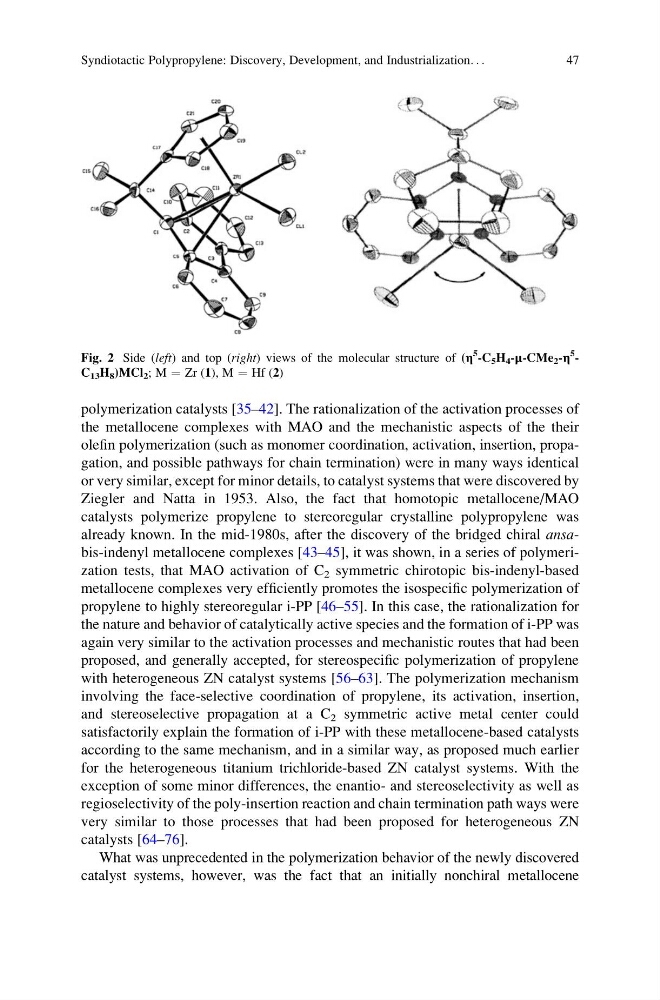
Fig. 2 Side (left) and top (right) views of the molecular structure of (η
5
-C 5 H 4 -μ-CMe 2 -η
5
-
C 13 H 8 )MCl 2 ; M ¼ Zr (1), M ¼ Hf (2)
Syndiotactic Polypropylene: Discovery, Development, and Industrialization. . .
47
the metallocene complexes with MAO and the mechanistic aspects of the their
olefin polymerization (such as monomer coordination, activation, insertion, propagation, and possible pathways for chain termination) were in many ways identical
or very similar, except for minor details, to catalyst systems that were discovered by
Ziegler and Natta in 1953. Also, the fact that homotopic metallocene/MAO
catalysts polymerize propylene to stereoregular crystalline polypropylene was
already known. In the mid-1980s, after the discovery of the bridged chiral ansabis-indenyl metallocene complexes [43–45], it was shown, in a series of polymerization tests, that MAO activation of C 2 symmetric chirotopic bis-indenyl-based
metallocene complexes very efficiently promotes the isospecific polymerization of
propylene to highly stereoregular i-PP [46–55]. In this case, the rationalization for
the nature and behavior of catalytically active species and the formation of i-PP was
again very similar to the activation processes and mechanistic routes that had been
proposed, and generally accepted, for stereospecific polymerization of propylene
with heterogeneous ZN catalyst systems [56–63]. The polymerization mechanism
involving the face-selective coordination of propylene, its activation, insertion,
and stereoselective propagation at a C 2 symmetric active metal center could
satisfactorily explain the formation of i-PP with these metallocene-based catalysts
according to the same mechanism, and in a similar way, as proposed much earlier
for the heterogeneous titanium trichloride-based ZN catalyst systems. With the
exception of some minor differences, the enantio- and stereoselectivity as well as
regioselectivity of the poly-insertion reaction and chain termination path ways were
very similar to those processes that had been proposed for heterogeneous ZN
catalysts [64–76].
What was unprecedented in the polymerization behavior of the newly discovered
catalyst systems, however, was the fact that an initially nonchiral metallocene
Fig. 2 Side (left) and top (right) views of the molecular structure of (η
5
-C 5 H 4 -μ-CMe 2 -η
5
-
C 13 H 8 )MCl 2 ; M ¼ Zr (1), M ¼ Hf (2)
Syndiotactic Polypropylene: Discovery, Development, and Industrialization. . .
47