

string-of-pearl-like structures. The polypropylene material is fitted on the fiber,
showing the excellent adhesion between polymer and fibers.
With longer polymerization times, the thickness of the polyolefin covering the
fiber increased. The fiber/MAO/zirconocene system works like a supported catalyst.
Filler contents between 0.5 and 50 wt% were possible.
In the case of MWCNTs, these were sonicated in a toluene suspension, treated
with MAO, stirred for 24 h, filtered, and washed with hot toluene. After adding the
chiral ansa zirconocene [(CH 3 ) 2 Si(2-CH 3 -4-Nap-Ind) 2 ]ZrCl 2 and propene, isotactic
high molecular weight polypropylene iPP/MWCNT composites with 0.9–50 wt%
filler content were obtained. The molecular weights of the polypropylene matrix in
the nanocomposites were in the range M w ¼ 1,200,000–1,700,000. The polymerization activity reached 5,000 kg PP /mol Zr h [propene]. It was independent of the
filler content.
It can be seen from Fig. 15 that the nanotubes are coated by a thin film of iPP.
The diameter of the MWCNT used (about 20 layers) is 20 nm and the thickness of
Table 5 Stability of MAO-impregnated nanosilica balls in syndiotactic propene polymerization
a
Weeks after preparation
Activity
b
Filler content (%)
0
3,700
11
2
3,300
9
11
3,000
10
a
Polymerization conditions: temperature 30
C, time 30 min, propene pressure 2 bar, solvent
200 mL toluene, silica/MAO 0.55 g, [zirconocene] 1.3 Â 10
À6 mol/L, TIBA 2 mmol
b
Activity is expressed as kg PP /(mol Zr h [propene])
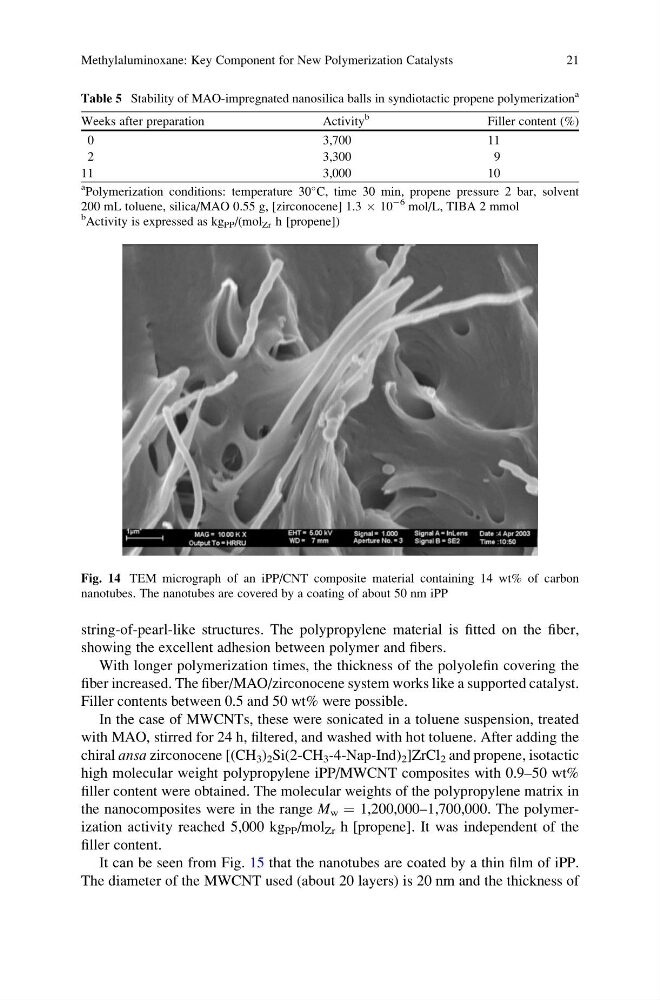
Fig. 14 TEM micrograph of an iPP/CNT composite material containing 14 wt% of carbon
nanotubes. The nanotubes are covered by a coating of about 50 nm iPP
Methylaluminoxane: Key Component for New Polymerization Catalysts
21
showing the excellent adhesion between polymer and fibers.
With longer polymerization times, the thickness of the polyolefin covering the
fiber increased. The fiber/MAO/zirconocene system works like a supported catalyst.
Filler contents between 0.5 and 50 wt% were possible.
In the case of MWCNTs, these were sonicated in a toluene suspension, treated
with MAO, stirred for 24 h, filtered, and washed with hot toluene. After adding the
chiral ansa zirconocene [(CH 3 ) 2 Si(2-CH 3 -4-Nap-Ind) 2 ]ZrCl 2 and propene, isotactic
high molecular weight polypropylene iPP/MWCNT composites with 0.9–50 wt%
filler content were obtained. The molecular weights of the polypropylene matrix in
the nanocomposites were in the range M w ¼ 1,200,000–1,700,000. The polymerization activity reached 5,000 kg PP /mol Zr h [propene]. It was independent of the
filler content.
It can be seen from Fig. 15 that the nanotubes are coated by a thin film of iPP.
The diameter of the MWCNT used (about 20 layers) is 20 nm and the thickness of
Table 5 Stability of MAO-impregnated nanosilica balls in syndiotactic propene polymerization
a
Weeks after preparation
Activity
b
Filler content (%)
0
3,700
11
2
3,300
9
11
3,000
10
a
Polymerization conditions: temperature 30
C, time 30 min, propene pressure 2 bar, solvent
200 mL toluene, silica/MAO 0.55 g, [zirconocene] 1.3 Â 10
À6 mol/L, TIBA 2 mmol
b
Activity is expressed as kg PP /(mol Zr h [propene])
Fig. 14 TEM micrograph of an iPP/CNT composite material containing 14 wt% of carbon
nanotubes. The nanotubes are covered by a coating of about 50 nm iPP
Methylaluminoxane: Key Component for New Polymerization Catalysts
21