

that were sampled at different reaction times during the same chain extension
process. The new peak at 3.58 ppm, corresponding to methoxyl groups (CH 3 O)
in PMMA, increased in intensity with the reaction time. Evidently, the PMMA
segment in PE-b-PMMA grew with the reaction time, and a high molecular weight
diblock copolymer with up to 85 mol% of PMMA copolymer (Fig. 17c) has been
prepared. Considering that there is only one terminal borane group in each PE
chain, these experimental results imply a very effective chain extension process.
On the other hand, the incorporated p-MS group in the polyolefin (the synthesis
discussed in Sect. 2.2), provides the active site to transform metallocene polymerization to living anionic polymerization [56]. Scheme 11 illustrates the anionic
reaction process from the PP-t-p-MS to the PP-b-PS diblock copolymer involving
only one p-MS group per polymer chain. The entire reaction process provides an
ultimate test for examining the efficiency of the chain transfer reaction to p-MS and
the subsequent chain extension process.
The metallation reaction of p-MS-terminated polypropylene (PP-t-p-MS) (I in
Scheme 11) was carried out under heterogeneous reaction conditions by suspending
the powder form of PP in s-BuLi/TMEDA/cyclohexane solution. To examine the
efficiency of the reaction, some of the metallated polymer (II) was terminated with
Cl-Si(CH 3 ) 3 and examined by
1 H NMR measurement, showing about 85% conversion. Most of the lithiated PP-t-p-MS (II) was used to prepare diblock copolymers.
By mixing polymer powder with styrene monomer in cyclohexane solvent, the
living anionic polymerization took place to produce PP-b-PS diblock copolymer
(III). After the reaction, the product was vigorously extracted by refluxing THF to
1.0
0.8
0.6
0.4
0.2
0.0
4.00
5.00
6.00
log MW
dw/d (logMW)
0
1 0
2 0
3 0
120000
100000
80000
60000
40000
20000
Mn. g/mol
% Conversion
(a)
(b)
(c)
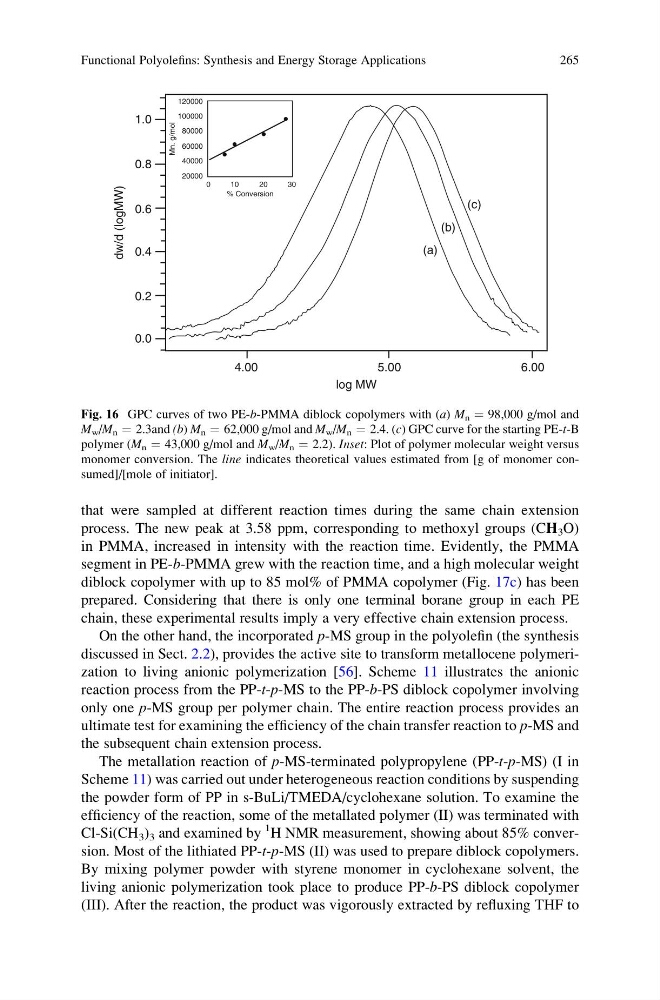
Fig. 16 GPC curves of two PE-b-PMMA diblock copolymers with (a) M n ¼ 98,000 g/mol and
M w /M n ¼ 2.3and (b) M n ¼ 62,000 g/mol and M w /M n ¼ 2.4. (c) GPC curve for the starting PE-t-B
polymer (M n ¼ 43,000 g/mol and M w /M n ¼ 2.2). Inset: Plot of polymer molecular weight versus
monomer conversion. The line indicates theoretical values estimated from [g of monomer consumed]/[mole of initiator].
Functional Polyolefins: Synthesis and Energy Storage Applications
265
process. The new peak at 3.58 ppm, corresponding to methoxyl groups (CH 3 O)
in PMMA, increased in intensity with the reaction time. Evidently, the PMMA
segment in PE-b-PMMA grew with the reaction time, and a high molecular weight
diblock copolymer with up to 85 mol% of PMMA copolymer (Fig. 17c) has been
prepared. Considering that there is only one terminal borane group in each PE
chain, these experimental results imply a very effective chain extension process.
On the other hand, the incorporated p-MS group in the polyolefin (the synthesis
discussed in Sect. 2.2), provides the active site to transform metallocene polymerization to living anionic polymerization [56]. Scheme 11 illustrates the anionic
reaction process from the PP-t-p-MS to the PP-b-PS diblock copolymer involving
only one p-MS group per polymer chain. The entire reaction process provides an
ultimate test for examining the efficiency of the chain transfer reaction to p-MS and
the subsequent chain extension process.
The metallation reaction of p-MS-terminated polypropylene (PP-t-p-MS) (I in
Scheme 11) was carried out under heterogeneous reaction conditions by suspending
the powder form of PP in s-BuLi/TMEDA/cyclohexane solution. To examine the
efficiency of the reaction, some of the metallated polymer (II) was terminated with
Cl-Si(CH 3 ) 3 and examined by
1 H NMR measurement, showing about 85% conversion. Most of the lithiated PP-t-p-MS (II) was used to prepare diblock copolymers.
By mixing polymer powder with styrene monomer in cyclohexane solvent, the
living anionic polymerization took place to produce PP-b-PS diblock copolymer
(III). After the reaction, the product was vigorously extracted by refluxing THF to
1.0
0.8
0.6
0.4
0.2
0.0
4.00
5.00
6.00
log MW
dw/d (logMW)
0
1 0
2 0
3 0
120000
100000
80000
60000
40000
20000
Mn. g/mol
% Conversion
(a)
(b)
(c)
Fig. 16 GPC curves of two PE-b-PMMA diblock copolymers with (a) M n ¼ 98,000 g/mol and
M w /M n ¼ 2.3and (b) M n ¼ 62,000 g/mol and M w /M n ¼ 2.4. (c) GPC curve for the starting PE-t-B
polymer (M n ¼ 43,000 g/mol and M w /M n ¼ 2.2). Inset: Plot of polymer molecular weight versus
monomer conversion. The line indicates theoretical values estimated from [g of monomer consumed]/[mole of initiator].
Functional Polyolefins: Synthesis and Energy Storage Applications
265