

was used to catalyze the copolymerization (Step B). Small amounts of hydrogen were
added to reduce the molecular weight for easier rheological measurements.
The incorporation of the macromer was investigated and calculated by
13 C NMR
measurements. The maximum incorporation rate was 0.52 mol%. This means that
about 59.7 wt% of the polymer is composed of macromer units and, on average,
every 400th carbon atom of the backbone chain is branched. The melting point of
the long-chain branched polyethylene decreases from 136 to 121
C, and the zero
shear-rate viscosity increases from 142 to 280 Pa s. Such long-chain branched
copolymer can be produced much more easily by metallocene/MAO catalysts than
by Ziegler–Natta catalysts.
By the copolymerization of cyclic olefins such as cyclopentene or norbornene
with ethene and other α-olefins, it is possible to obtain cycloolefin copolymers
(COC) representing a new class of thermoplastic, amorphous materials [89, 103].
Cyclopentene, norbornene, or other cyclic olefins are incorporated exclusively
by 1,2-insertion into the growing copolymer chain; no ring opening occurs. The
insertion of the huge norbornene monomer is very fast by metallocene/MAO
catalysts.
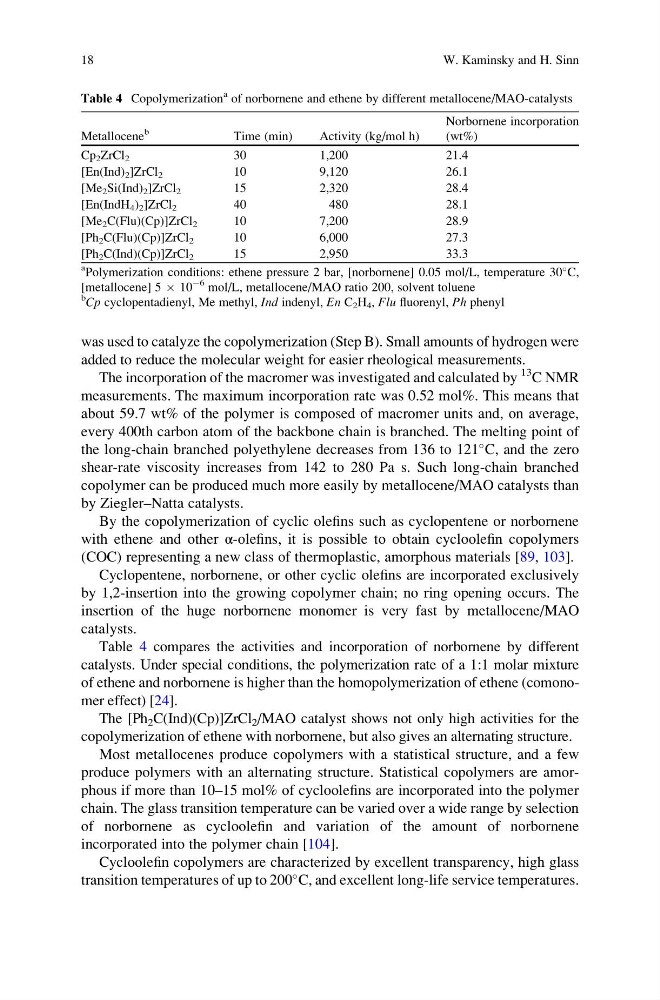
Table 4 compares the activities and incorporation of norbornene by different
catalysts. Under special conditions, the polymerization rate of a 1:1 molar mixture
of ethene and norbornene is higher than the homopolymerization of ethene (comonomer effect) [24].
The [Ph 2 C(Ind)(Cp)]ZrCl 2 /MAO catalyst shows not only high activities for the
copolymerization of ethene with norbornene, but also gives an alternating structure.
Most metallocenes produce copolymers with a statistical structure, and a few
produce polymers with an alternating structure. Statistical copolymers are amorphous if more than 10–15 mol% of cycloolefins are incorporated into the polymer
chain. The glass transition temperature can be varied over a wide range by selection
of norbornene as cycloolefin and variation of the amount of norbornene
incorporated into the polymer chain [104].
Cycloolefin copolymers are characterized by excellent transparency, high glass
transition temperatures of up to 200
C, and excellent long-life service temperatures.
Table 4 Copolymerization
a of norbornene and ethene by different metallocene/MAO-catalysts
Metallocene
b
Time (min)
Activity (kg/mol h)
Norbornene incorporation
(wt%)
Cp 2 ZrCl 2
30
1,200
21.4
[En(Ind) 2 ]ZrCl 2
10
9,120
26.1
[Me 2 Si(Ind) 2 ]ZrCl 2
15
2,320
28.4
[En(IndH 4 ) 2 ]ZrCl 2
40
480
28.1
[Me 2 C(Flu)(Cp)]ZrCl 2
10
7,200
28.9
[Ph 2 C(Flu)(Cp)]ZrCl 2
10
6,000
27.3
[Ph 2 C(Ind)(Cp)]ZrCl 2
15
2,950
33.3
a
Polymerization conditions: ethene pressure 2 bar, [norbornene] 0.05 mol/L, temperature 30
C,
[metallocene] 5 Â 10
À6 mol/L, metallocene/MAO ratio 200, solvent toluene
b
Cp cyclopentadienyl, Me methyl, Ind indenyl, En C 2 H 4 , Flu fluorenyl, Ph phenyl
18
W. Kaminsky and H. Sinn
added to reduce the molecular weight for easier rheological measurements.
The incorporation of the macromer was investigated and calculated by
13 C NMR
measurements. The maximum incorporation rate was 0.52 mol%. This means that
about 59.7 wt% of the polymer is composed of macromer units and, on average,
every 400th carbon atom of the backbone chain is branched. The melting point of
the long-chain branched polyethylene decreases from 136 to 121
C, and the zero
shear-rate viscosity increases from 142 to 280 Pa s. Such long-chain branched
copolymer can be produced much more easily by metallocene/MAO catalysts than
by Ziegler–Natta catalysts.
By the copolymerization of cyclic olefins such as cyclopentene or norbornene
with ethene and other α-olefins, it is possible to obtain cycloolefin copolymers
(COC) representing a new class of thermoplastic, amorphous materials [89, 103].
Cyclopentene, norbornene, or other cyclic olefins are incorporated exclusively
by 1,2-insertion into the growing copolymer chain; no ring opening occurs. The
insertion of the huge norbornene monomer is very fast by metallocene/MAO
catalysts.
Table 4 compares the activities and incorporation of norbornene by different
catalysts. Under special conditions, the polymerization rate of a 1:1 molar mixture
of ethene and norbornene is higher than the homopolymerization of ethene (comonomer effect) [24].
The [Ph 2 C(Ind)(Cp)]ZrCl 2 /MAO catalyst shows not only high activities for the
copolymerization of ethene with norbornene, but also gives an alternating structure.
Most metallocenes produce copolymers with a statistical structure, and a few
produce polymers with an alternating structure. Statistical copolymers are amorphous if more than 10–15 mol% of cycloolefins are incorporated into the polymer
chain. The glass transition temperature can be varied over a wide range by selection
of norbornene as cycloolefin and variation of the amount of norbornene
incorporated into the polymer chain [104].
Cycloolefin copolymers are characterized by excellent transparency, high glass
transition temperatures of up to 200
C, and excellent long-life service temperatures.
Table 4 Copolymerization
a of norbornene and ethene by different metallocene/MAO-catalysts
Metallocene
b
Time (min)
Activity (kg/mol h)
Norbornene incorporation
(wt%)
Cp 2 ZrCl 2
30
1,200
21.4
[En(Ind) 2 ]ZrCl 2
10
9,120
26.1
[Me 2 Si(Ind) 2 ]ZrCl 2
15
2,320
28.4
[En(IndH 4 ) 2 ]ZrCl 2
40
480
28.1
[Me 2 C(Flu)(Cp)]ZrCl 2
10
7,200
28.9
[Ph 2 C(Flu)(Cp)]ZrCl 2
10
6,000
27.3
[Ph 2 C(Ind)(Cp)]ZrCl 2
15
2,950
33.3
a
Polymerization conditions: ethene pressure 2 bar, [norbornene] 0.05 mol/L, temperature 30
C,
[metallocene] 5 Â 10
À6 mol/L, metallocene/MAO ratio 200, solvent toluene
b
Cp cyclopentadienyl, Me methyl, Ind indenyl, En C 2 H 4 , Flu fluorenyl, Ph phenyl
18
W. Kaminsky and H. Sinn