

a homogeneous solution was observed throughout the entire copolymerization
reaction. In the case of low BSt (runs VI2-VI6), a slurry solution with white
precipitates was observed at the beginning of the reaction. The precipitation is
evidently due to the polymer crystallinity, which has long propylene sequences.
Figure 8 shows a typical
1 H NMR spectrum of PP-BSt copolymer (run VI-5). In
addition to the major chemical shifts at 0.95, 1.35 and 1.65 ppm – corresponding to
the methine, methylene, and methyl groups in polypropylene, respectively – there
are several minor chemical shifts that are associated with the incorporated BSt
comonomer units, including three distinctive olefinic proton chemical shifts at 6.7,
5.7, and 5.2 ppm and two equal intensity aromatic proton chemical shift bands at
7.1–7.2 and 7.3–7.4 ppm. With their relative chemical shift intensities, it is clear that
most of the incorporated BSt units in the PP-BSt copolymer contain pendant styrene
moieties. It is interesting to note that the same propylene/BSt copolymerization by
the rac-Me 2 Si[2-Me-4-Ph(Ind)] 2 ZrCl 2 catalyst results in a long chain branched
polypropylene (LCBPP) [49, 50] due to both olefinic and styrenic reactions.
The PP-BSt copolymers were completely soluble in xylene at an elevated
temperature. However, the solution-encased PP-BSt copolymer films were
crosslinked upon heating, due to a Diels–Alder [2+4] cycloaddition reaction
between two pendant styrene units. The resulting crosslinked PP (x-PP) films
were subjected to a vigorous solvent extraction to remove the soluble fraction
that was not fully crosslinked into the network structure. Figure 9 compares the
gel content after thermal treatment for 1 h under various temperatures for three
PP-BSt copolymers with pendant styrene contents of 0.42 (run VI-3), 0.73 (run
VI-5), and 8.6 mol% (run VI-7). The thermal regiospecific [2+4] cycloaddition
reaction between two styrene units starts at a relatively low temperature (~80
C).
However, the rate of the crosslinking reaction is highly dependent on the temperature and copolymer composition. In the low temperature range below 160
C (below
melting temperature) with limited chain motion, the crosslinking efficiency of the
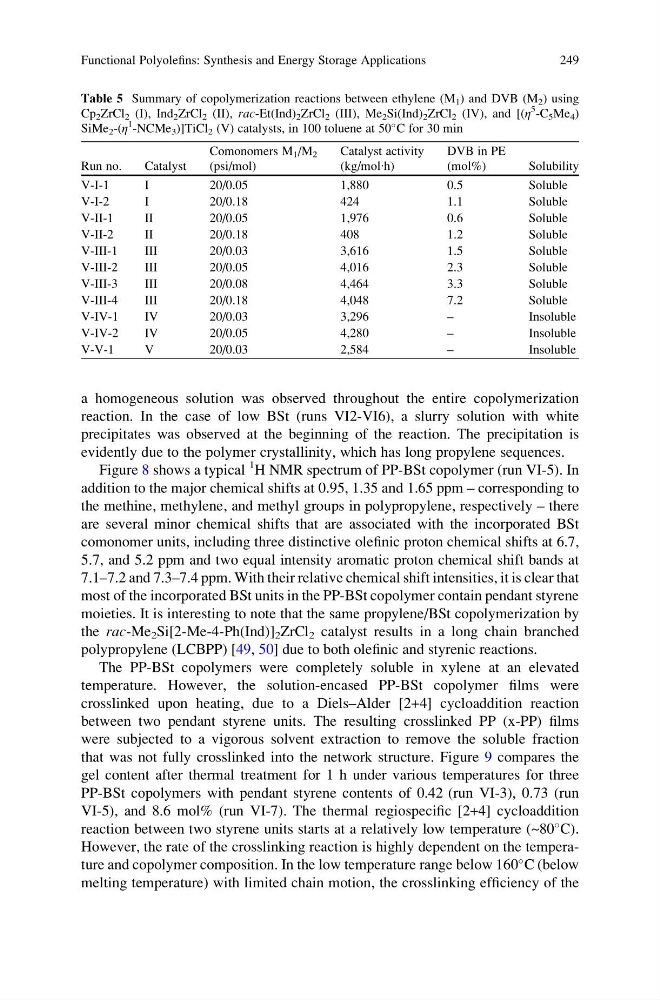
Table 5 Summary of copolymerization reactions between ethylene (M 1 ) and DVB (M 2 ) using
Cp 2 ZrCl 2 (I), Ind 2 ZrCl 2 (II), rac-Et(Ind) 2 ZrCl 2 (III), Me 2 Si(Ind) 2 ZrCl 2 (IV), and [(η
5
-C 5 Me 4 )
SiMe 2 -(η
1
-NCMe 3 )]TiCl 2 (V) catalysts, in 100 toluene at 50
C for 30 min
Run no.
Catalyst
Comonomers M 1 /M 2
(psi/mol)
Catalyst activity
(kg/mol∙h)
DVB in PE
(mol%)
Solubility
V-I-1
I
20/0.05
1,880
0.5
Soluble
V-I-2
I
20/0.18
424
1.1
Soluble
V-II-1
II
20/0.05
1,976
0.6
Soluble
V-II-2
II
20/0.18
408
1.2
Soluble
V-III-1
III
20/0.03
3,616
1.5
Soluble
V-III-2
III
20/0.05
4,016
2.3
Soluble
V-III-3
III
20/0.08
4,464
3.3
Soluble
V-III-4
III
20/0.18
4,048
7.2
Soluble
V-IV-1
IV
20/0.03
3,296
–
Insoluble
V-IV-2
IV
20/0.05
4,280
–
Insoluble
V-V-1
V
20/0.03
2,584
–
Insoluble
Functional Polyolefins: Synthesis and Energy Storage Applications
249
reaction. In the case of low BSt (runs VI2-VI6), a slurry solution with white
precipitates was observed at the beginning of the reaction. The precipitation is
evidently due to the polymer crystallinity, which has long propylene sequences.
Figure 8 shows a typical
1 H NMR spectrum of PP-BSt copolymer (run VI-5). In
addition to the major chemical shifts at 0.95, 1.35 and 1.65 ppm – corresponding to
the methine, methylene, and methyl groups in polypropylene, respectively – there
are several minor chemical shifts that are associated with the incorporated BSt
comonomer units, including three distinctive olefinic proton chemical shifts at 6.7,
5.7, and 5.2 ppm and two equal intensity aromatic proton chemical shift bands at
7.1–7.2 and 7.3–7.4 ppm. With their relative chemical shift intensities, it is clear that
most of the incorporated BSt units in the PP-BSt copolymer contain pendant styrene
moieties. It is interesting to note that the same propylene/BSt copolymerization by
the rac-Me 2 Si[2-Me-4-Ph(Ind)] 2 ZrCl 2 catalyst results in a long chain branched
polypropylene (LCBPP) [49, 50] due to both olefinic and styrenic reactions.
The PP-BSt copolymers were completely soluble in xylene at an elevated
temperature. However, the solution-encased PP-BSt copolymer films were
crosslinked upon heating, due to a Diels–Alder [2+4] cycloaddition reaction
between two pendant styrene units. The resulting crosslinked PP (x-PP) films
were subjected to a vigorous solvent extraction to remove the soluble fraction
that was not fully crosslinked into the network structure. Figure 9 compares the
gel content after thermal treatment for 1 h under various temperatures for three
PP-BSt copolymers with pendant styrene contents of 0.42 (run VI-3), 0.73 (run
VI-5), and 8.6 mol% (run VI-7). The thermal regiospecific [2+4] cycloaddition
reaction between two styrene units starts at a relatively low temperature (~80
C).
However, the rate of the crosslinking reaction is highly dependent on the temperature and copolymer composition. In the low temperature range below 160
C (below
melting temperature) with limited chain motion, the crosslinking efficiency of the
Table 5 Summary of copolymerization reactions between ethylene (M 1 ) and DVB (M 2 ) using
Cp 2 ZrCl 2 (I), Ind 2 ZrCl 2 (II), rac-Et(Ind) 2 ZrCl 2 (III), Me 2 Si(Ind) 2 ZrCl 2 (IV), and [(η
5
-C 5 Me 4 )
SiMe 2 -(η
1
-NCMe 3 )]TiCl 2 (V) catalysts, in 100 toluene at 50
C for 30 min
Run no.
Catalyst
Comonomers M 1 /M 2
(psi/mol)
Catalyst activity
(kg/mol∙h)
DVB in PE
(mol%)
Solubility
V-I-1
I
20/0.05
1,880
0.5
Soluble
V-I-2
I
20/0.18
424
1.1
Soluble
V-II-1
II
20/0.05
1,976
0.6
Soluble
V-II-2
II
20/0.18
408
1.2
Soluble
V-III-1
III
20/0.03
3,616
1.5
Soluble
V-III-2
III
20/0.05
4,016
2.3
Soluble
V-III-3
III
20/0.08
4,464
3.3
Soluble
V-III-4
III
20/0.18
4,048
7.2
Soluble
V-IV-1
IV
20/0.03
3,296
–
Insoluble
V-IV-2
IV
20/0.05
4,280
–
Insoluble
V-V-1
V
20/0.03
2,584
–
Insoluble
Functional Polyolefins: Synthesis and Energy Storage Applications
249