

behave like regular hydrocarbon polymers with similar solution properties (solubility, viscosity). Therefore, the same reaction conditions and processes for α-olefin
homopolymerization can be directly applied to its copolymerization reaction with a
borane monomer. High molecular weight and high yield of borane-containing
polymers are expected. On the other hand, the incorporated borane groups can be
effectively transformed to a remarkably fruitful variety of functionalities under
mild reaction conditions, as shown by Professor Herbert Brown [36]. Scheme 3
illustrates the general route to incorporation of borane monomers (the α-olefincontaining ω-borane group) into the polyolefin by the metallocene catalyst and
the interconversion of the resulting borane-containing polyolefin to functional
polyolefin copolymers [37, 38].
Table 1 summarizes the copolymerization results [39] between ethylene and borane
monomer (5-hexenyl-9-BBN) using various homogeneous metallocene catalysts,
including [(η
5
-C 5 Me 4 )SiMe 2 -(η
1
-NCMe 3 )]TiCl 2 , Et(Ind) 2 ZrCl 2 , and Cp 2 ZrCl 2 , and
heterogeneous Ziegler–Natta catalysts. The [(η
5
-C 5 Me 4 )SiMe 2 -(η
1
-NCMe 3 )]TiCl 2
CGC (constrained geometry complex) catalyst, with an open active site for accommodating a relatively large borane monomer, shows satisfactory copolymerization
results at 150
C, similar to those in the preparation of linear low density polyethylene (LLDPE) polymers. Comparing runs I-I-1 to I-I-4, the concentration of borane
groups in PE is basically proportional to the concentration of the borane monomer
feed. In the Et(Ind) 2 ZrCl 2 /MAO catalyst system, about 50–60% of borane
monomers were incorporated into the PE copolymers after a near half an hour of
reaction time. It is unexpected that the catalyst activity systematically increases
with the concentration of the borane monomer. Obviously, no retardation due to the
borane groups is shown in these cases. The copolymerization of borane monomers
in the Cp 2 ZrCl 2 /MAO system (shown in run I-III-2) is significantly more difficult.
Only 1.22 mol% of the borane monomer is incorporated in the PE copolymer, even
when a high concentration of the borane monomer used. On the other hand, the
heterogeneous TiCl 3 ·AA/Et 2 AlCl catalyst shows no detectable amount of a borane
group in the copolymer (as shown in run I-IV-1).
α-Olefin
"Reactive"
Chain Transfer Agent
+
Polyolefin with a
Terminal Reactive Group
Polyolefin with a
Terminal Functional Group
Polyolefin
Diblock Copolymer
Functionalization
Reaction
Graft-from
Reaction
Metallocene
Catalyst
Reactive
Chain Transfer Agent
H B
R
R
CH 3 B
R
R
CH 2 =CH / H 2
F
(F: CH 3 , or protected
functional group)
or
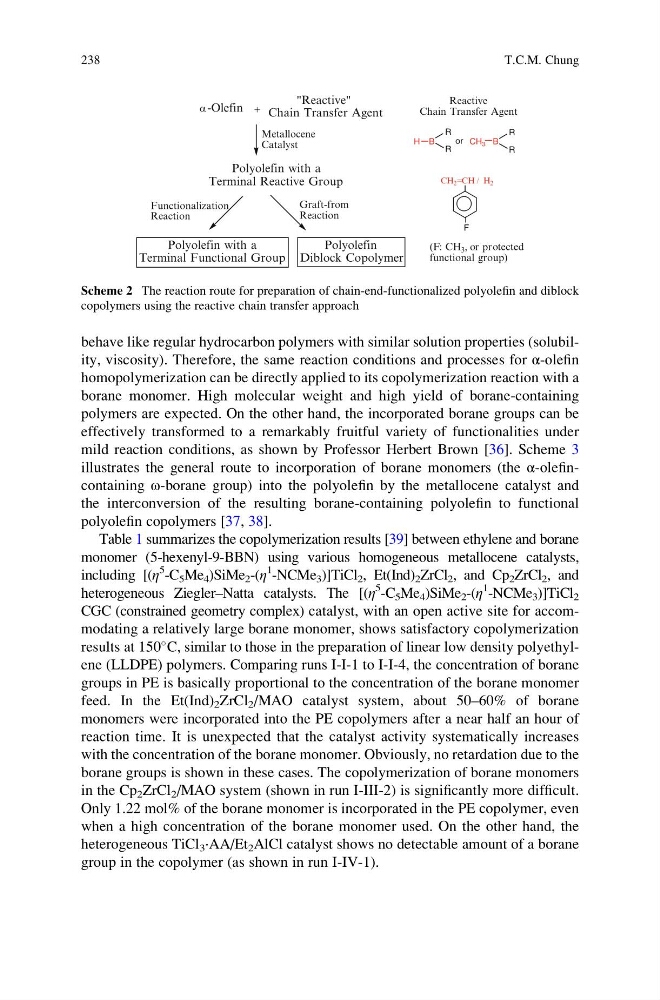
Scheme 2 The reaction route for preparation of chain-end-functionalized polyolefin and diblock
copolymers using the reactive chain transfer approach
238
T.C.M. Chung
homopolymerization can be directly applied to its copolymerization reaction with a
borane monomer. High molecular weight and high yield of borane-containing
polymers are expected. On the other hand, the incorporated borane groups can be
effectively transformed to a remarkably fruitful variety of functionalities under
mild reaction conditions, as shown by Professor Herbert Brown [36]. Scheme 3
illustrates the general route to incorporation of borane monomers (the α-olefincontaining ω-borane group) into the polyolefin by the metallocene catalyst and
the interconversion of the resulting borane-containing polyolefin to functional
polyolefin copolymers [37, 38].
Table 1 summarizes the copolymerization results [39] between ethylene and borane
monomer (5-hexenyl-9-BBN) using various homogeneous metallocene catalysts,
including [(η
5
-C 5 Me 4 )SiMe 2 -(η
1
-NCMe 3 )]TiCl 2 , Et(Ind) 2 ZrCl 2 , and Cp 2 ZrCl 2 , and
heterogeneous Ziegler–Natta catalysts. The [(η
5
-C 5 Me 4 )SiMe 2 -(η
1
-NCMe 3 )]TiCl 2
CGC (constrained geometry complex) catalyst, with an open active site for accommodating a relatively large borane monomer, shows satisfactory copolymerization
results at 150
C, similar to those in the preparation of linear low density polyethylene (LLDPE) polymers. Comparing runs I-I-1 to I-I-4, the concentration of borane
groups in PE is basically proportional to the concentration of the borane monomer
feed. In the Et(Ind) 2 ZrCl 2 /MAO catalyst system, about 50–60% of borane
monomers were incorporated into the PE copolymers after a near half an hour of
reaction time. It is unexpected that the catalyst activity systematically increases
with the concentration of the borane monomer. Obviously, no retardation due to the
borane groups is shown in these cases. The copolymerization of borane monomers
in the Cp 2 ZrCl 2 /MAO system (shown in run I-III-2) is significantly more difficult.
Only 1.22 mol% of the borane monomer is incorporated in the PE copolymer, even
when a high concentration of the borane monomer used. On the other hand, the
heterogeneous TiCl 3 ·AA/Et 2 AlCl catalyst shows no detectable amount of a borane
group in the copolymer (as shown in run I-IV-1).
α-Olefin
"Reactive"
Chain Transfer Agent
+
Polyolefin with a
Terminal Reactive Group
Polyolefin with a
Terminal Functional Group
Polyolefin
Diblock Copolymer
Functionalization
Reaction
Graft-from
Reaction
Metallocene
Catalyst
Reactive
Chain Transfer Agent
H B
R
R
CH 3 B
R
R
CH 2 =CH / H 2
F
(F: CH 3 , or protected
functional group)
or
Scheme 2 The reaction route for preparation of chain-end-functionalized polyolefin and diblock
copolymers using the reactive chain transfer approach
238
T.C.M. Chung