

of the electrons that tridentate ligands have. In fact, such chemistry was planned in
the shadow of electrophilic active species of the well-known constrained-geometry
complexes (CGC) [75–79].
In general, the cobalt complexes performed with slightly lower activity but with
similar catalytic behavior as their iron analogs, though there were limited cases of
cobalt analogs having better activities than their iron analogs. The abundance of
iron, along with the lowest toxicity amongst metals, should be a favorable consideration in my view. The iron complex pre-catalysts are potentially promising for
both ethylene oligomerization and polymerization.
3 The Nickel Complex Pre-catalysts
Similar catalytic behavior of nickel and palladium complex pre-catalysts has been
observed in ethylene reactivity. The nickel complexes would be favored for industry because of their availability as a natural resource, whereas the palladium
complexes would be widely used in academic studies with the advantage of
effective NMR monitoring of the species. The nickel-promoted SHOP process for
α-olefins [47, 48] illustrates its unique properties. Although the SHOP complex
model has been extensively modified, there are a few catalytic systems of these
modified complexes that are as efficient as the operating SHOP process. Therefore,
nickel complex pre-catalysts in ethylene oligomerization will not be focused on
here; instead the nickel complex pre-catalysts will be briefly discussed for ethylene
polymerization, producing branched polyethylene.
There are numerous models of nickel complex pre-catalysts in ethylene polymerization, the study of which was initiated by a report on α-diiminonickel
complexes. The obtained polyethylenes are commonly branched, including main
methyl- and other alkyl-substituents. Concerning the ease of synthesis and handling
of nickel complexes, the N,N-bidentate-type nickel complexes should be
emphasized, especially with representative ligands such as α-diimino and
2-iminoethylpyridine derivatives, although other bidentate and tridentate ligands
have been explored. The α-diimino ligands made from acenaphthylene-1,2-dione
have been the most extensively studied (Scheme 9), and the resulting the nickel
complexes (9A, Scheme 9) polymerize ethylene, affording polyethylene with
various branches, but mainly methyl-substituents [9, 17–21]. Following these, the
N
N
N
R
M
Cl
Cl
R
N
N
Ar
M
Cl
Cl
M = Fe or Co
N
N
Ar
M
Cl
Cl
8A
8B
8C
R = Alkyl
R = H or Me
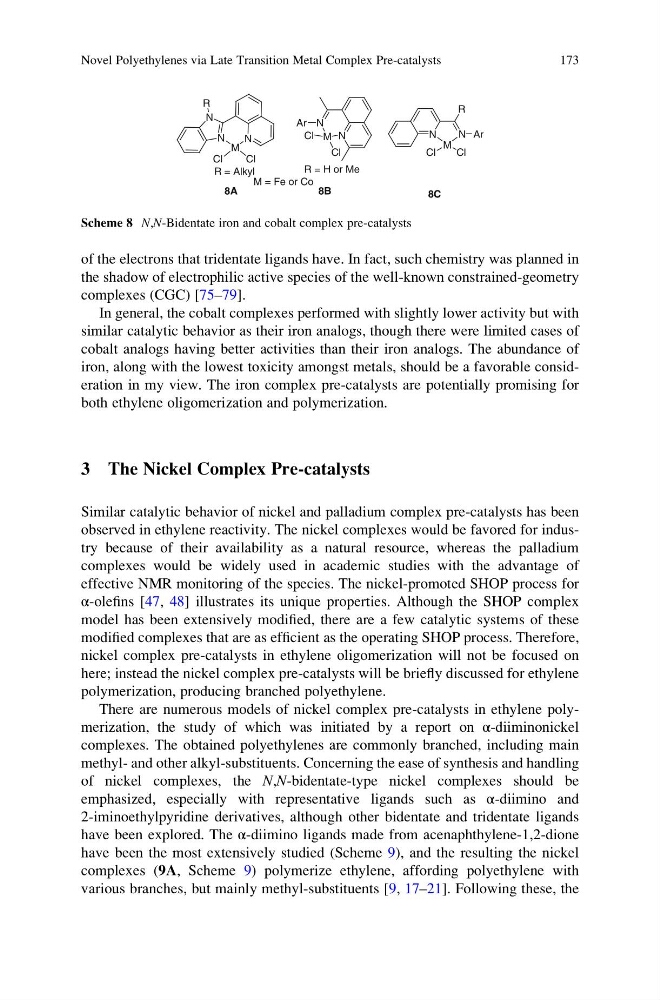
Scheme 8 N,N-Bidentate iron and cobalt complex pre-catalysts
Novel Polyethylenes via Late Transition Metal Complex Pre-catalysts
173
the shadow of electrophilic active species of the well-known constrained-geometry
complexes (CGC) [75–79].
In general, the cobalt complexes performed with slightly lower activity but with
similar catalytic behavior as their iron analogs, though there were limited cases of
cobalt analogs having better activities than their iron analogs. The abundance of
iron, along with the lowest toxicity amongst metals, should be a favorable consideration in my view. The iron complex pre-catalysts are potentially promising for
both ethylene oligomerization and polymerization.
3 The Nickel Complex Pre-catalysts
Similar catalytic behavior of nickel and palladium complex pre-catalysts has been
observed in ethylene reactivity. The nickel complexes would be favored for industry because of their availability as a natural resource, whereas the palladium
complexes would be widely used in academic studies with the advantage of
effective NMR monitoring of the species. The nickel-promoted SHOP process for
α-olefins [47, 48] illustrates its unique properties. Although the SHOP complex
model has been extensively modified, there are a few catalytic systems of these
modified complexes that are as efficient as the operating SHOP process. Therefore,
nickel complex pre-catalysts in ethylene oligomerization will not be focused on
here; instead the nickel complex pre-catalysts will be briefly discussed for ethylene
polymerization, producing branched polyethylene.
There are numerous models of nickel complex pre-catalysts in ethylene polymerization, the study of which was initiated by a report on α-diiminonickel
complexes. The obtained polyethylenes are commonly branched, including main
methyl- and other alkyl-substituents. Concerning the ease of synthesis and handling
of nickel complexes, the N,N-bidentate-type nickel complexes should be
emphasized, especially with representative ligands such as α-diimino and
2-iminoethylpyridine derivatives, although other bidentate and tridentate ligands
have been explored. The α-diimino ligands made from acenaphthylene-1,2-dione
have been the most extensively studied (Scheme 9), and the resulting the nickel
complexes (9A, Scheme 9) polymerize ethylene, affording polyethylene with
various branches, but mainly methyl-substituents [9, 17–21]. Following these, the
N
N
N
R
M
Cl
Cl
R
N
N
Ar
M
Cl
Cl
M = Fe or Co
N
N
Ar
M
Cl
Cl
8A
8B
8C
R = Alkyl
R = H or Me
Scheme 8 N,N-Bidentate iron and cobalt complex pre-catalysts
Novel Polyethylenes via Late Transition Metal Complex Pre-catalysts
173