

1914–1915 when all of his previous work had been published. A second maximum
around 1924–1925 concerns the work of his research group at the ETH.
In 1925–1926 Staudinger moved to Freiburg University and from there on his
papers were more or less all related to polymers and the behavior of this “class of
organic compounds” as Staudinger referred to them. The time of the Second World
War and destruction of his laboratory by war action explains the last minimum
1944–1947. Very few and insignificant papers from his hand appeared from then on
until his retirement in 1951.
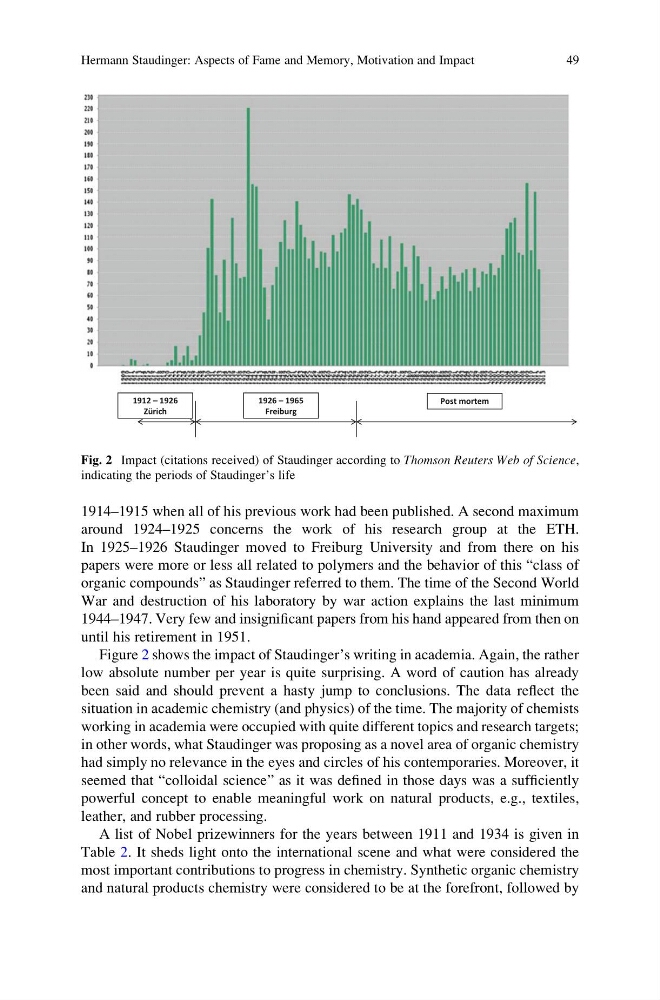
Figure 2 shows the impact of Staudinger’s writing in academia. Again, the rather
low absolute number per year is quite surprising. A word of caution has already
been said and should prevent a hasty jump to conclusions. The data reflect the
situation in academic chemistry (and physics) of the time. The majority of chemists
working in academia were occupied with quite different topics and research targets;
in other words, what Staudinger was proposing as a novel area of organic chemistry
had simply no relevance in the eyes and circles of his contemporaries. Moreover, it
seemed that “colloidal science” as it was defined in those days was a sufficiently
powerful concept to enable meaningful work on natural products, e.g., textiles,
leather, and rubber processing.
A list of Nobel prizewinners for the years between 1911 and 1934 is given in
Table 2. It sheds light onto the international scene and what were considered the
most important contributions to progress in chemistry. Synthetic organic chemistry
and natural products chemistry were considered to be at the forefront, followed by
1912 – 1926
Zürich
1926 – 1965
Freiburg
Post mortem
Fig. 2 Impact (citations received) of Staudinger according to Thomson Reuters Web of Science,
indicating the periods of Staudinger’s life
Hermann Staudinger: Aspects of Fame and Memory, Motivation and Impact
49
around 1924–1925 concerns the work of his research group at the ETH.
In 1925–1926 Staudinger moved to Freiburg University and from there on his
papers were more or less all related to polymers and the behavior of this “class of
organic compounds” as Staudinger referred to them. The time of the Second World
War and destruction of his laboratory by war action explains the last minimum
1944–1947. Very few and insignificant papers from his hand appeared from then on
until his retirement in 1951.
Figure 2 shows the impact of Staudinger’s writing in academia. Again, the rather
low absolute number per year is quite surprising. A word of caution has already
been said and should prevent a hasty jump to conclusions. The data reflect the
situation in academic chemistry (and physics) of the time. The majority of chemists
working in academia were occupied with quite different topics and research targets;
in other words, what Staudinger was proposing as a novel area of organic chemistry
had simply no relevance in the eyes and circles of his contemporaries. Moreover, it
seemed that “colloidal science” as it was defined in those days was a sufficiently
powerful concept to enable meaningful work on natural products, e.g., textiles,
leather, and rubber processing.
A list of Nobel prizewinners for the years between 1911 and 1934 is given in
Table 2. It sheds light onto the international scene and what were considered the
most important contributions to progress in chemistry. Synthetic organic chemistry
and natural products chemistry were considered to be at the forefront, followed by
1912 – 1926
Zürich
1926 – 1965
Freiburg
Post mortem
Fig. 2 Impact (citations received) of Staudinger according to Thomson Reuters Web of Science,
indicating the periods of Staudinger’s life
Hermann Staudinger: Aspects of Fame and Memory, Motivation and Impact
49